

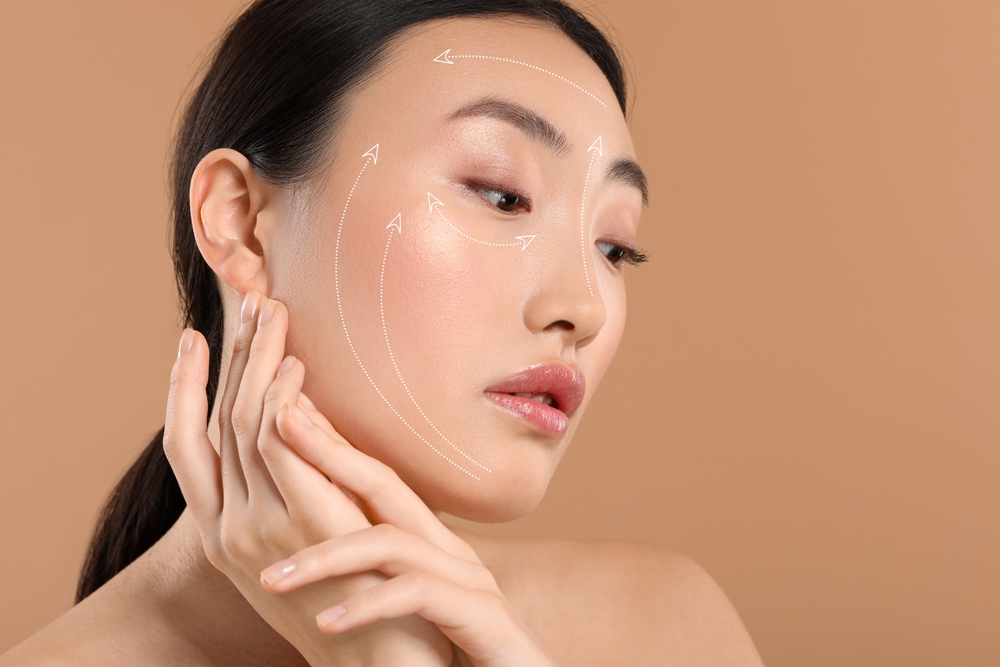
The quest for a youthful countenance used to typically involve the assistance of a scalpel, but we can now look to tools like dissolvable threads, dermal fillers, and energy-based tightening devices. But with all these options at our fingertips, how do we filter out the right product for our face?
Ageing is a common experience, and one of its more overt signs is how much the gravitational pull on our faces becomes more evident over time. Many people may notice this shift before they hit middle age, and it is simply the result of a decline in collagen.


“Our body’s collagen production begins to decrease around the late 20s, which is when skin may start to lose its firmness. Collagen is like a building block of the skin and a critical protein for keeping it firm and smooth,” explained Dr Sam Pradeep, founder and medical director of Glowwis Aesthetic & Medical Clinic, in The Straits Times.
“These effects tend to become more pronounced after the age of 30, often appearing as sagginess, fine lines and wrinkles.”
To combat this, numerous solutions have been invented to help restore what we have lost through the reduction in collagen production, one of which is the facelift.
However, if undergoing a surgical procedure is a cause for consternation, then not to worry – in the realm of aesthetic treatments, the facelift has come very far. From threads and fillers to energy devices, we have a growing arsenal of minimally-invasive tools available to us, all of which promise to “lift”, “tighten”, and “rejuvenate”.
But what do they actually do – and how do you know which is right for you?
Threads: A Mechanical Lift
View this post on Instagram
A thread lift is a non-surgical cosmetic procedure involving medical-grade threads being inserted under the skin to pull it into the desired position. It is deployed to tighten sagging skin, and is typically applied to the eyebrows, nose, cheeks and jawline for a brighter or more defined appearance. Moreover, they trigger a healing effect on the body, stimulating greater collagen production.
These threads come in several different forms, including:
Polydioxanone (PDO)
Lasting between 6 to 12 months, they offer a visible lift, and the triggered increase in collagen can be maintained for up to a year. They are commonly used for subtle contouring, and can improve skin texture.
A common brand is the MINTTM (Minimally Invasive Nonsurgical Thread) Lift – a Korean brand of PDO threads with a patented 360° helical, three-dimensional barbed design, which allows strong anchoring in tissue to lift sagging skin and improve wrinkles.
Poly-L-Lactic Acid (PLLA)
PLLA threads dissolve slightly slower than PDO threads, and can stimulate collagen formation over a longer period.
As the thread dissolves, it also releases lactic acid into the surrounding tissues, revitalising the skin over time.
Polycaprolactone (PCL)
PCL threads are more durable, offering a longer-lasting lift of up to 2 years and extended collagen stimulation. It is also mainly used in treatments where a longer time is required for healing.
Threads are an attractive option for offering immediate results with minimal downtime and little to no visible marks. Furthermore, its ability to activate collagen and elastin production extends the natural effects of this procedure. It is also best for those looking for structural repositioning, rather than simply volume enhancement or superficial tightening.
However, it may still cause temporary swelling or bruising, and requires long-term maintenance as the threads eventually dissolve.
HA Fillers: A Little Volume
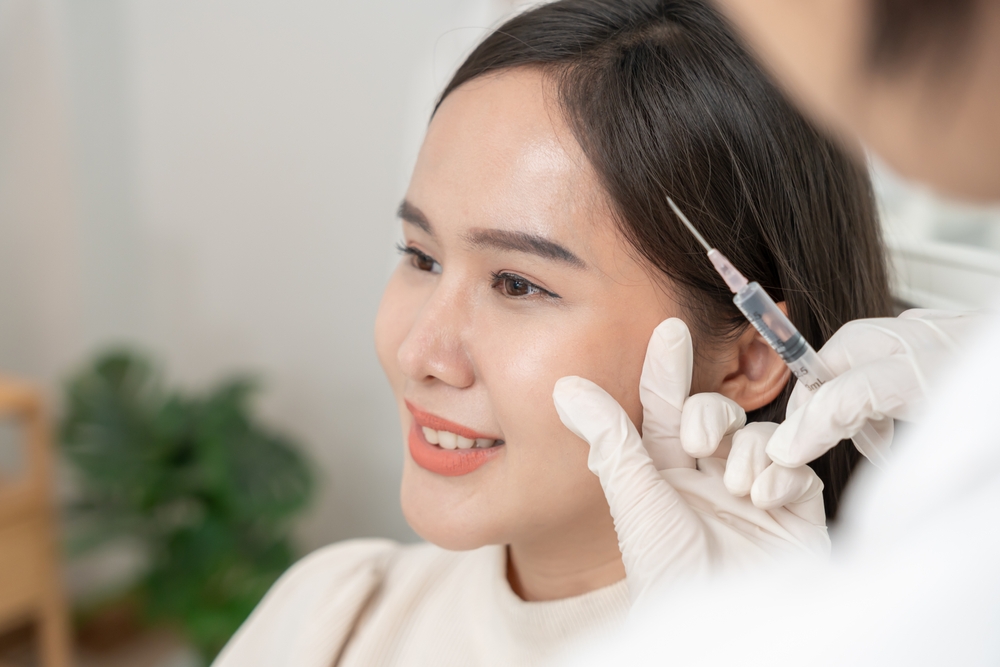
While threads reposition tissue, hyaluronic acid (HA) fillers are gel-like substances injected into the dermis to iron out wrinkles and plump up the skin by adding volume, and it can last between 6 to 12 months depending on the target area.
As a naturally-occurring substance in the skin, hyaluronic acid supports skin hydration and elasticity, but our body produces less of it over time. As such, HA fillers are ideal for addressing the loss in volume and hydration in natural ways.
In particular, HA fillers with high G’ – which refers to how firm the gel is – is very structurally supportive, providing more plumpness to areas of the face that require greater volume restoration or definition, such as the cheeks or chin. They also last longer than softer gels, or fillers with lower G’, although these are more suited for pliable areas like the undereye or lips. In addition, in terms of tissue integration, when injected into the target area, it blends well with the surrounding tissues, offering a smooth and natural appearance and feel.
Similarly to thread lifts, they also offer immediate results with little downtime, but they can result in some bruising and swelling. It is also possible for the filler to be distributed unevenly under the skin, which can result in lumps or asymmetry, though this can be resolved in follow-up appointments.
Well-known HA filler brands include:
- Juvederm – This brand offers a wide range of fillers with varying firmness levels, commonly used for cheeks, lips, and jawline.
- Restylane – Known for its structured gels, Restylane is often chosen for contouring and definition. For instance, the Restylane Lyft is used to fill sagging or hollowed cheeks for a more lifted, youthful appearance.
Combination Injectables
While traditional fillers restore lost volume, newer combination injectables aim to improve both structure and skin quality over time. Combination injectables aim to address both immediate volume loss and longer-term skin quality in one treatment plan.
For instance, Juvelook is a hybrid injectable that combines hyaluronic acid with poly-D,L-lactic acid (PDLLA), a collagen-stimulating compound.
- HA provides immediate hydration and subtle volume
- PDLLA works gradually to stimulate the skin’s own collagen production over time.
This dual mechanism allows for more progressive and natural-looking improvement, rather than relying solely on volume replacement.
As with all injectables, outcomes depend on correct product placement, dilution, and patient selection. Not every face or concern is suited to combination injectables, which is why consultation with an experienced medical professional remains essential.
Energy Devices: Extra Tightening
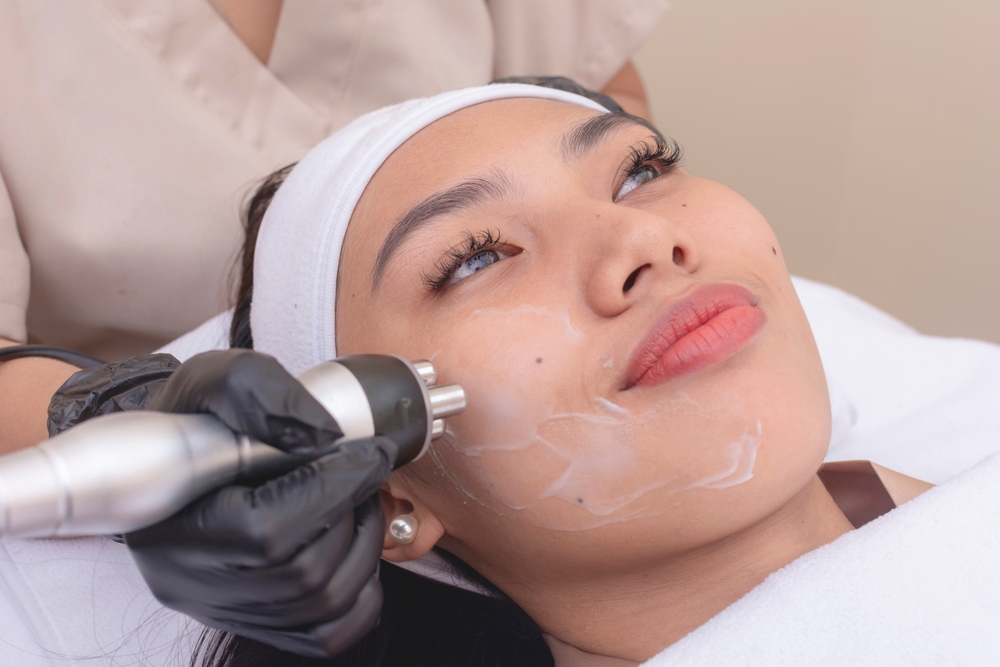
Energy-based devices are a non-invasive alternative for tightening the skin. They include:
Thermage
Thermage treatment uses radiofrequency energy to minimise wrinkles and contour the face. Heat is levelled at the deep dermis to maintain existing collagen and kickstart new collagen formation, and over time helps the face look more rejuvenated without the need for inorganic stretching or plumping.
It works as a long-term solution, with a session needed every 12 to 18 months for maintenance.
HIFU
High-Intensity Focused Ultrasound (HIFU) uses focused ultrasound energy to stimulate collagen, and can penetrate up to 4.5mm beneath the skin. It works to kickstart the skin’s healing process without damaging the surface of the skin. This can also reduce pore size and improve skin texture.
Many patients feel a sense of tightness within the first day, with annual touch-ups recommended to maintain the effects.
Morpheus8
Morpheus8 combines microneedling and fractional radiofrequency to influence collagen production and skin contraction. Similarly to Thermage and HIFU, its effects can last over a year.
These devices are suitable for mild-to-moderate skin laxity or texture issues. Their lifting effects are more subtle, and may not be sufficient for more advanced sagging.
Surgical Options – When More Is Needed
It is important to manage your expectations on the results, so check in with a certified professional on treatment options and maintenance.
While non-surgical options can offer subtle lifting, tightening, or volume restoration, they have limits. In cases of significant skin laxity or advanced ageing, a surgical facelift may still be the most effective option.
A surgical facelift repositions deeper facial structures, removes excess skin, and provides a more comprehensive and longer-lasting correction than minimally invasive treatments. Results can last many years, whereas threads, fillers, and energy devices require ongoing maintenance.
Of course, surgery often comes with higher upfront costs, longer recovery time, and the risks associated with anaesthesia and invasive procedures. Swelling, bruising, and weeks of downtime are expected parts of the healing process.
For this reason, surgical facelifts are typically considered when non-surgical approaches no longer deliver meaningful improvement, or when a patient is seeking a more dramatic and durable result.
Ultimately, the best approach depends on the degree of skin laxity, facial structure, lifestyle considerations, and personal goals. A qualified medical professional can help assess whether non-surgical treatments, surgery, or a combination of both would be most appropriate.
Not sure which facelift option suits your face?
Take Medical Channel Asia’s Aesthetic Quiz to explore treatment approaches based on your concerns, skin changes, and goals.
External References
- Clark, A. (2025, April 22). The Ultimate Guide to Thread Lifts in Singapore (2025). Urban Living. Retrieved from: https://urbanliving.com.sg/aesthetics/face/threadlifts-singapore/
- Cleveland Clinic. (2023, January 7). Thread Lift. Retrieved from: https://my.clevelandclinic.org/health/treatments/24581-thread-lift
- The Straits Times. (2024, November 22). Revitalise your look: How liquid thread lifts help tighten skin and boost collagen production. Retrieved from: https://www.straitstimes.com/life/how-liquid-thread-lifts-help-tighten-skin-boost-collagen-production-glowwis-aesthetic-medical-clinic
- Wongprasert, P., Dreiss, C. A., & Murray, G. (2022). Evaluating hyaluronic acid dermal fillers: A critique of current characterization methods. Dermatologic Therapy, 35(6), e15453. Retrieved from: https://pmc.ncbi.nlm.nih.gov/articles/PMC9285697/

