More Than Skin Deep

More Than Just an Itch

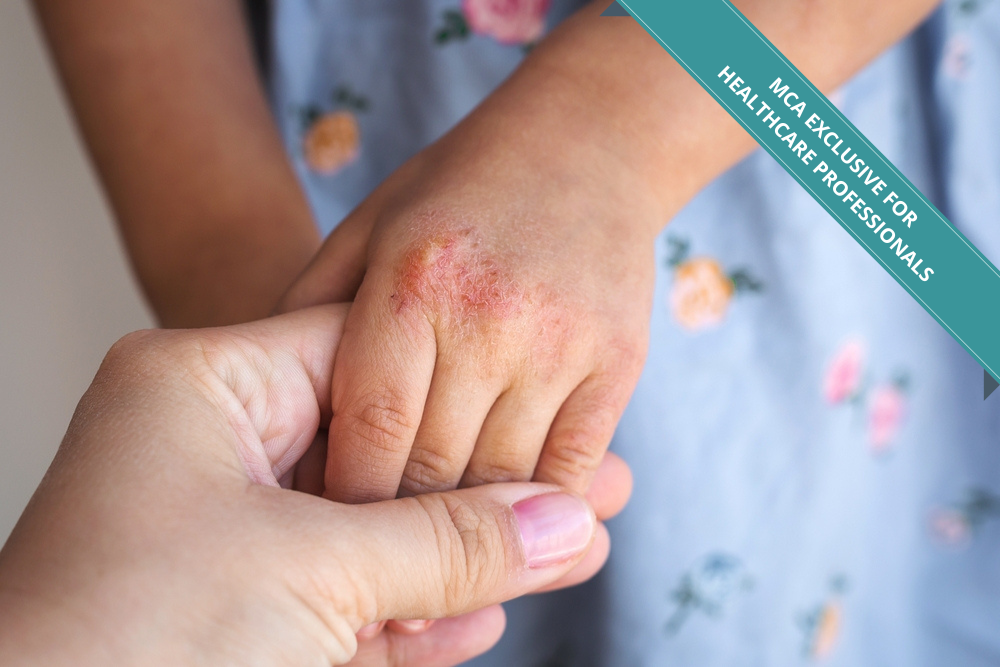
Atopic dermatitis, or eczema, is a chronic condition with invisible consequences – on sleep, relationships, and mental health.

This is what chronic itch feels like...

 Whether you live with eczema or care for someone who does, the challenges are real. 

These shared experiences reveal just how deeply chronic itch affects everyday lives of patients.

The itch is from within. Unbearable.

Anonymous

Patient with eczema

Constant itch — the patient keeps scratching the area until it becomes a wound and eventually bleeds.Constant distraction when the affected areas itch, and a sense of dread because you expect the itch to return once the medication wears off.

Anonymous

Patient with eczema

Constant itch - the patient keeps scratching the area until it becomes a wound and eventually bleeds.

R.T

Parent of patient with eczema

Must scratch until it bleeds and the skin comes off, just to relieve the itch.

G.L

Patient with eczema

I want to crawl out of my skin… When it starts, it’s hard to concentrate on what I’m doing.

W.W

Patient with eczema

It comes suddenly, it’s disturbing, and it hinders sleep at night.

J.C.

Patient with eczema

The itch is from within. Unbearable.

Anonymous

Patient with eczema

Constant distraction when the affected areas are itching, and sense of dread because you expect the itch to return once the medication wears off

Anonymous

Patient with eczema

Constant itch, the patient will be scratching on the spot which it becomes wound and eventually bleed.

R.T

Parent of patient with eczema

Must scratch until it bleeds & skin off to remove the itch

G.L

Patient with eczema

I want to craw through my skins...When it starts, it's hard to concentrate on what I'm doing.

W.W

Patient with eczema

It comes suddenly. It's disturbing. It hinders sleep at night.

J.C.

Patient with eczema

How Itch Happens and Persists

Behind every itch is a complex chain of biological reactions. Understanding the science helps us see why eczema is not just a surface problem – it is a cycle that reinforces itself.

skin barrier breakdown

The Itch Begins

In patients with atopic dermatitis, the skin barrier is compromised, leading to dryness and inflammation. This irritation activates sensory nerve fibres in the skin, which send itch signals to the brain. Unlike a normal itch that fades quickly, this itch is persistent and harder to ignore.

Scratching for Temporary Relief

When we scratch, we temporarily block itch signals by stimulating pain receptors, creating a fleeting sense of relief. However, this relief is short-lived. Scratching damages the skin further, making it more vulnerable to infections and triggering more inflammation.

A Vicious Cycle

As the skin becomes more inflamed and damaged, the nerve endings become even more sensitive. This intensifies the itch, leading to more scratching, and the cycle continues.
Over time, this can lead to thickened skin (lichenification), scarring, sleep disruption, and emotional distress.

There is hope beyond creams and coping

For many adults with moderate to severe eczema, chronic itch does not resolve on its own. Fortunately, medical advances now offer effective ways to manage symptoms and improve quality of life.

Emollients & barrier repair

Strengthens the skin barrier and locks in moisture to reduce dryness and irritation.

Topical steroidal & non-steroidal anti-inflammatory topical medication

Targets skin inflammation to relieve redness, swelling, and itch at the source.

Phototherapy

Uses controlled UV light to calm inflammation and improve skin condition over time.

Immunotherapy

Modulates the immune system to address the underlying causes of severe or persistent eczema.

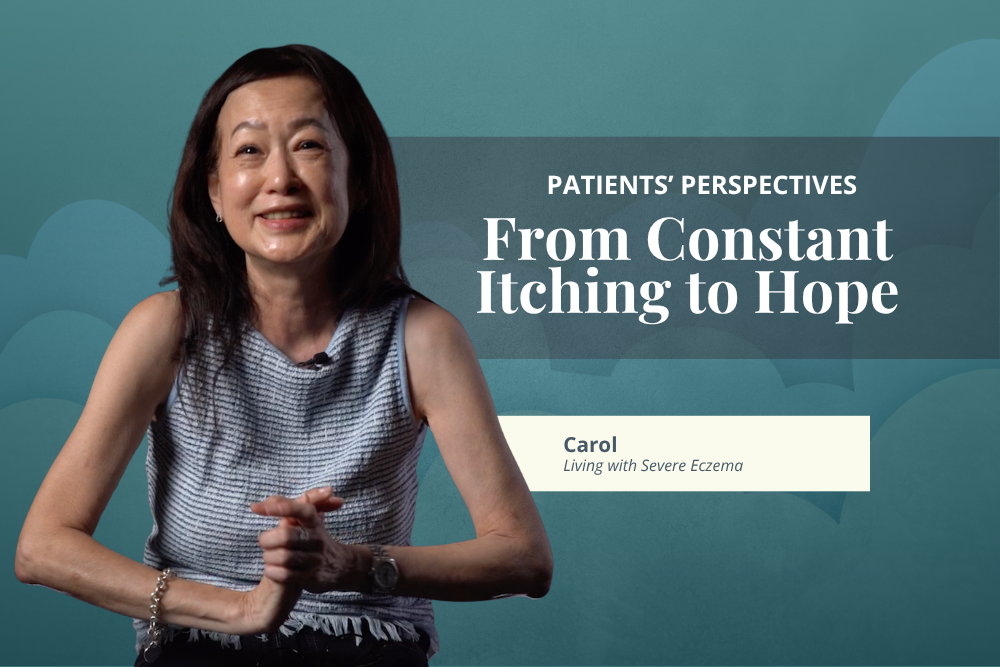
Meet someone who lived with years of silent suffering from chronic itch, and finally found a path forward with the right care.

Resources & Reads

From expert commentary to medical insights, we have curated resources to help you understand and navigate the ups and downs of chronic itch.

Videos

Videos

Articles

Articles

Your Voice Matters!

We are building a collection of stories from people living with eczema and their loved ones.

By sharing your journey, you can help others feel seen, supported, and less alone.

In Partnership With

Copyright © Medical Channel Asia 2024. All rights reserved.
The contents on Medical Channel Asia are for general educational purposes only.
It is not intended to be a substitute for professional medical advice, treatment, or diagnosis.
See additional information.
Select your currency
MYR Malaysian ringgit

Moisturisers & barrier repair

emollient & barrier repair

Maintaining Hydration and Reinforcing Skin Defences

Moisturisers are used in eczema management by maintaining skin hydration and supporting barrier function. People with eczema have a compromised skin barrier, which leads to increased water loss and allows irritants or allergens to penetrate more easily.

Moisturisers help restore and maintain the skin barrier, preserving its structure and appearance by functioning as humectants (to draw in moisture), emollients (to smooth and soften), and occlusives (to seal in hydration and reduce water loss). Some formulations also contain ingredients that help to restore the skin’s natural lipid composition, such as ceramides.

They are available in various forms including creams, ointments, lotions, and gels. 

How to use moisturisers

  • Use your moisturiser at least twice daily, and more often during flare-ups or when skin feels particularly dry.
  • After bathing or showering, gently pat the skin dry with a soft towel and apply your moisturiser straight away to seal in moisture.
  • Spread moisturiser gently in the same direction as hair growth to minimise irritation.
  • Use moisturisers on the entire body, not just visibly inflamed areas.
  • Continue using moisturisers daily, even when your skin condition improves.
  • Use clean tools to avoid contamination – use a spoon for product in a tub, or use pump dispensers.

While moisturisers do not reduce inflammation directly, they are an important part of eczema treatment. For mild eczema, moisturisers may be sufficient on their own. In more severe cases, they are used alongside other anti-inflammatory treatments.

References

  1. Emollients. (2025). Retrieved from https://eczema.org/information-and-advice/treatments-for-eczema/emollients/
  2. Purnamawati, S., Indrastuti, N., Danarti, R., & Saefudin, T. (2017). The Role of Moisturizers in Addressing Various Kinds of Dermatitis: A Review. Clinical medicine & research, 15(3-4), 75–87. https://doi.org/10.3121/cmr.2017.1363

Topical steroids & non-steroidal
anti-inflammatory medication

Topical steroidal & non-steroidal anti-inflammatory topical medication

Controlling Inflammation at the Skin Level

Topical anti-inflammatory medications are used when emollients are not sufficient to control eczema symptoms.

These include corticosteroids and non-steroidal options such as calcineurin inhibitors and phosphodiesterase-4 (PDE-4) inhibitors.

  • Topical corticosteroids reduce inflammation by suppressing the immune response in the skin. They are classified into different potency levels to be used depending on age, severity of the condition, and which area of the body is affected.

  • Non-steroidal options like tacrolimus and pimecrolimus (calcineurin inhibitors) or crisaborole (PDE-4 inhibitor) offer alternatives for long-term use, particularly on sensitive skin areas. These medications also work by modulating immune pathways to reduce inflammation.

Topical medications work locally on the outer layers of the skin. They are effective in treating surface-level inflammation and are suitable for mild to moderate eczema or targeted areas of flare. However, they do not address deeper or systemic immune dysfunction.

In cases of widespread, persistent, or severe eczema, topical treatments may be insufficient, and systemic therapies may be required.

References

  1. InformedHealth.org [Internet]. Cologne, Germany: Institute for Quality and Efficiency in Health Care (IQWiG); 2006-. Eczema: Learn More – Steroids and other topical medications. [Updated 2021 Feb 11]. Available from: https://www.ncbi.nlm.nih.gov/books/NBK424899/
  2. Paller, A. S. et al. (2016). Efficacy and safety of crisaborole ointment, a novel, nonsteroidal phosphodiesterase 4 (PDE4) inhibitor for the topical treatment of atopic dermatitis (AD) in children and adults. Journal of the American Academy of Dermatology, 75(3), 494–503.e6. https://doi.org/10.1016/j.jaad.2016.05.046

Phototherapy

phototherapy

Using Light to Reduce Inflammation and Manage Symptoms

Phototherapy is used for moderate to severe eczema that does not respond adequately to topical treatments. It involves exposing affected skin to controlled doses of ultraviolet (UV) light.

Several types of phototherapy are available. The most common include narrowband UVB (NBUVB), UVA combined with NBUVB, and PUVA (a combination of psoralen and UVA light). Each type has specific indications and treatment protocols.

How Does Phototherapy Work?

This treatment helps by reducing inflammation and slowing the immune response that contributes to eczema. It also restores balance to the skin’s immune system and reduces excessive skin cell turnover. Other potential benefits of phototherapy are still being studied. Phototherapy is widely used not only for eczema, but also for conditions like psoriasis and vitiligo.

Treatment is usually administered in a clinical setting under medical supervision. Sessions typically occur three times a week at the start. Multiple treatments are often needed before noticeable improvement is observed. Once the skin has cleared, maintenance sessions may be used to sustain results.

It is suitable for patients with widespread eczema or for those who wish to reduce long-term use of topical steroids. Risks include premature skin ageing and increased sun sensitivity. It may also be less accessible due to the need for repeated clinic visits.

References

  1. InformedHealth.org [Internet]. Cologne, Germany: Institute for Quality and Efficiency in Health Care (IQWiG); 2006-. Eczema: Learn More – Light therapy, tablets and injections. [Updated 2021 Feb 11]. Available from: https://www.ncbi.nlm.nih.gov/books/NBK424892/
  2. Phototherapy. (2021). Retrieved from https://www.nsc.com.sg/patients-and-visitors/Health-Library/Conditions-And-Treatments/Pages/Phototherapy.aspx

Immunotherapy

Immunotherapy

Targeting Immune Pathways in Severe or Persistent Cases of Eczema

Immunotherapy refers to treatments that act on the body’s immune system to address the underlying inflammation in moderate to severe eczema. Unlike topical treatments that act only on the surface, immunotherapy works systemically to modulate overactive immune responses that drive chronic eczema symptoms. 

Types of Immunotherapies

Traditional systemic treatments include immunosuppressants. These drugs work by dampening overall immune activity and are typically used for short to medium-term control under specialist supervision.

Biologic therapies represent a newer class of treatment that target specific immune pathways involved in eczema. These medications are designed to block key cytokines such as interleukin-4 (IL-4), interleukin-13 (IL-13), and interleukin-31 (IL-31) that contribute to itch, skin inflammation, and immune dysregulation.

By acting more precisely on these pathways, biologics can provide sustained relief with a lower risk of widespread immune suppression.

Who Is Suitable for Immunotherapy?

Immunotherapy is typically considered for individuals with severe eczema that has not responded well to standard treatments. This includes those who experience frequent flare-ups, extensive body involvement, or significant disruption to daily life despite adherence to topical and supportive therapies.

These treatments are prescribed and monitored by dermatologists, with ongoing evaluation to ensure safety and effectiveness over time.

References

  1. Alvarenga, J. M., Bieber, T., & Torres, T. (2024). Emerging Biologic Therapies for the Treatment of Atopic Dermatitis. Drugs, 84(11), 1379–1394. https://doi.org/10.1007/s40265-024-02095-4
  2. Ratchataswan, T., Banzon, T. M., Thyssen, J. P., Weidinger, S., Guttman-Yassky, E., & Phipatanakul, W. (2021). Biologics for Treatment of Atopic Dermatitis: Current Status and Future Prospect. The journal of allergy and clinical immunology. In practice, 9(3), 1053–1065. https://doi.org/10.1016/j.jaip.2020.11.034

Don’t have an account? Click here to register

[ultimatemember form_id="29399"]

If have account, Click here to login