

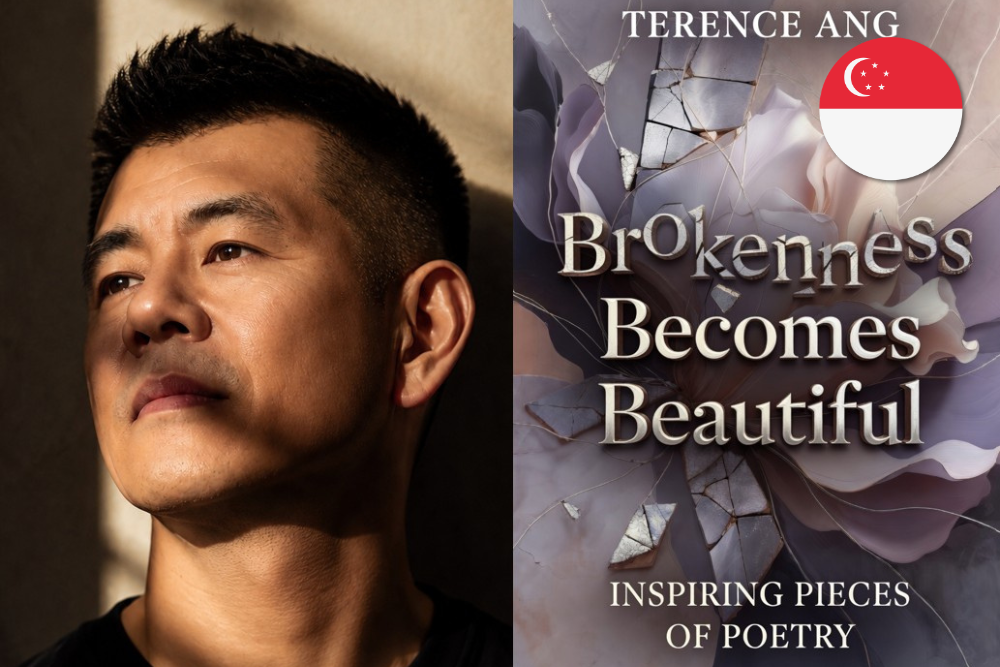
After a 2020 stroke left Terence Ang living with aphasia, the former marketing professional struggled to speak, work, and reconnect with the world around him. Through writing, poetry, and AI voice technology, he slowly found another way to be heard.
For most people, speech is invisible.


Words arrive easily. Conversations move quickly. Thoughts become sentences without effort. Few people stop to think about what it means to be understood.
Terence Ang used to live that way too.
Before his stroke in 2020, the former marketing and creative industry professional spent decades in advertising, retail, events, and communications. His life was fast-paced, demanding, and built around people, ideas, and expression. He was confident, articulate, and driven by achievement.
“I was articulate, expressive, and confident in the way I presented ideas, worked with people, and connected with others,” Terence recalled. “I was driven, goal-oriented, and always trying to stay ahead.”
For more than 30 years, communication had been one of his greatest strengths. Then the stroke happened, and the thing he once relied on most suddenly became difficult.
The stroke left Terence with aphasia, a condition that affects language and communication. Although commonly associated with difficulty speaking, aphasia can also affect reading, writing, listening, and word retrieval.
For Terence, the loss was devastating.
“It was hell,” he said. “I still had thoughts in my mind. I still knew what I wanted to say. But the words would not come out at all, or they would not come out the way I intended.”
Inside, he still felt like himself. Outside, he struggled to express even simple things.
“It felt as if there was an invisible wall between my mind and my mouth,” he said.
When Language No Longer Comes Easily
Aphasia is often misunderstood because it is largely invisible.
People may hear pauses, broken speech, or incorrect words and assume cognitive decline. But the condition does not erase intelligence, emotion, personality, or thought.
“For me, aphasia feels like knowing what I want to say, but being unable to reach the words when I need them,” Terence explained. “The thought is there. The feeling is there. The opinion is there. But the connection between my mind and my speech does not always work smoothly.”
Sometimes words disappeared entirely, or the wrong word emerged. Sometimes speaking simply required more time and energy than before.
The frustration slowly affected more than communication.
“Aphasia affected my confidence, my independence, and my sense of self,” he said. “I felt disconnected from the world I once knew, and from the person I used to be.”
According to rehabilitation physician Dr Moses Koh Minghe, aphasia affects far more than speech alone.
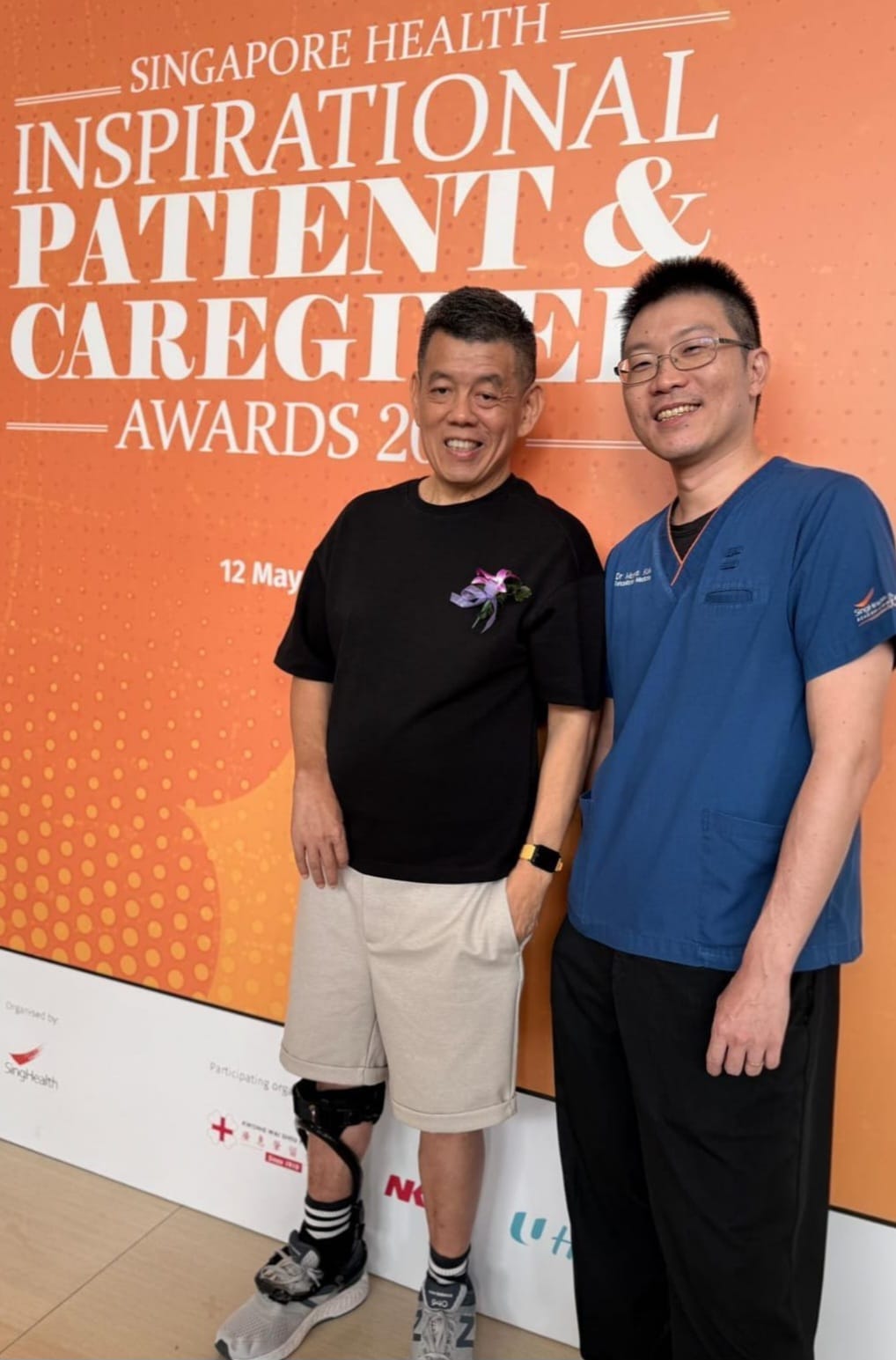
“People often think of aphasia as simply difficulty speaking, but the loss can be much deeper,” he said. “The survivor’s cognition may remain entirely intact. They know exactly what they want to say, but they cannot access the words to say it.”
He compared the experience to being dropped into a foreign country without knowing the language.
“You are still entirely yourself on the inside, but you are completely locked out from communicating with the world around you.”
Dr Koh explained that this communication barrier can gradually dismantle confidence, relationships, and identity.
“The sheer mental and emotional exhaustion of trying to communicate causes many individuals to withdraw socially and avoid interaction altogether,” he said.
Local data cited by Dr Koh suggests that around one in three stroke survivors in Singapore experience aphasia, with many also facing psychological distress and depression within the first six months after stroke.
Relearning Ordinary Life
Recovery after stroke is often portrayed dramatically in movies or inspirational stories. Real rehabilitation, however, is usually much slower and quieter.
For Terence, recovery meant relearning the ordinary.
“After my stroke, it felt like starting from ground zero,” he said.
Basic daily activities such as washing, dressing, feeding, mobility, and communication suddenly required patience and adaptation.
“Some days were better than others. Some days felt painfully slow.”
The emotional recovery was equally difficult.
“There were moments of resentment, helplessness, loneliness, anxiety, anger, sadness, fear, frustration, vulnerability, and depression,” he said. “I had to grieve the person I used to be, while slowly learning to accept the person I was becoming.”
Dr Koh explained that many people misunderstand stroke recovery because they focus only on the early “golden period” of neurological healing.
“The vast majority of true recovery actually happens long after a patient is discharged from hospital,” he said.
Neurological recovery refers to the brain’s physical healing process, which often plateaus within the first few months after stroke. Functional recovery, however, can continue for years as survivors learn new ways to adapt, communicate, and navigate everyday life.
“Rehabilitation never loses its value,” Dr Koh said. “It simply evolves from a biological healing process into a creative, resilient rebuilding of a life.”
For Terence, that rebuilding eventually took an unexpected form.
Finding Another Voice Through Writing
As speech became harder, writing slowly became another way to communicate.
“I stumbled into writing out of frustration,” Terence said. “I needed a way to voice my mind.”
What began as a private coping mechanism gradually transformed into poetry, books, and advocacy work. Writing allowed him to process grief, confusion, hope, and recovery in ways spoken language sometimes could not.
“Writing did not just help me recover what was lost,” he said. “It helped me discover another way to speak.”
His first book, A Cry in the Dark, emerged from the raw emotional aftermath of stroke and aphasia. Later works continued exploring healing, vulnerability, resilience, and transformation.
Over time, readers – including fellow stroke survivors, caregivers, and healthcare professionals – began responding to his work.
“When I shared my story, others felt less alone,” he said.
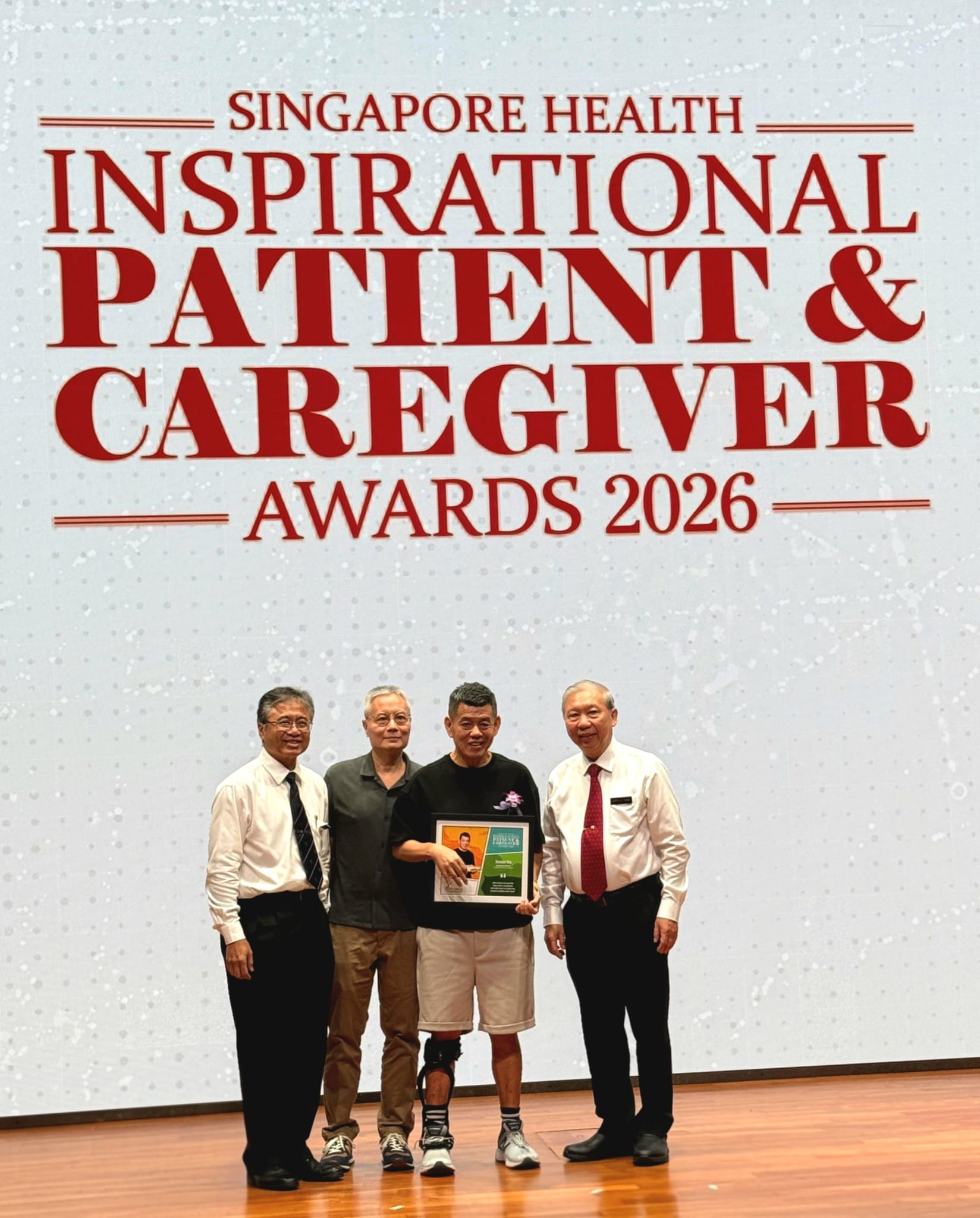
In May 2026, Terence received the Inspirational Patient Award at the SingHealth Inspirational Patient & Caregiver Awards, recognising not only his recovery journey but also his growing role as an advocate for others living with stroke and aphasia.
To Dr Koh, Terence’s creative work represents an important but often overlooked part of rehabilitation.
“While functional recovery is influenced by neurological healing, it is not completely dependent on it.” he said. “Survivors learn to compensate, adapt, and modify either their techniques or their physical environment to perform functional tasks.”
He sees Terence’s transition into writing, poetry, and AI-assisted storytelling as an example of how recovery can evolve beyond medicine alone.
“He shows us that when traditional pathways close, we can build entirely new ways to thrive.” Dr Koh said.
Reclaiming Voice Through AI
Now, another deeply personal project is taking shape.
Terence is preparing to release the audiobook edition of Brokenness Becomes Beautiful, a poetry collection shaped by recovery, healing, and self-discovery.
View this post on Instagram
The audiobook uses AI voice technology from ElevenLabs to create a digital version of his own voice.
Because aphasia makes extended spoken narration difficult, the technology offered another possibility: allowing listeners to hear the poems in a voice that still sounded recognisably his.
“The process was emotional and meaningful,” Terence said. “Hearing my words spoken in a voice that sounded like mine was very poignant.”
For him, voice represents more than sound alone.
“Voice is identity, dignity, and connection,” he said.
The audiobook represents more than a creative experiment with AI voice technology. In many ways, it reflects the larger reality of stroke recovery itself: learning to adapt, reconnect, and find new ways forward after life changes unexpectedly.
The Recovery Journey
For Terence, healing was never simply about returning to the person he once was before stroke and aphasia.
Instead, recovery became a process of rebuilding – slowly discovering new ways to express himself, reconnect with others, and create meaning through the losses he experienced.
“My journey has taught me that brokenness can become beautiful,” he said. “Not because the pain disappears, but because we can find meaning, courage, strength, and hope through it.”
Today, that message has become central to the way he hopes others view life after stroke.
“It may feel frightening, lonely, and unfair.” he said. “But recovery is possible, even if it does not look the way we expected.”
To fellow stroke survivors and people living with aphasia, he hopes they remember that difficulty communicating does not make them any less whole.
“Your voice still matters.” he said. “Even if your words come slowly, even if you need more time, even if communication is difficult, you are still whole. You are still valuable. You are still you.”
And despite everything stroke changed, Terence never stopped searching for ways to connect, create, and keep moving forward.
“The will to never give up, no matter how tough the journey gets, is my tribute to everyone out there fighting their own battles.”

