


Habitual coffee intake was associated with differences in body composition, metabolism and sex hormones, particularly among men.
Coffee drinkers may differ from non-drinkers in ways that a simple body mass index reading cannot reveal.


A Finnish study found that people who drank more coffee tended to have less body fat and more skeletal muscle, despite having a similar BMI to those who drank less. Coffee intake was also associated with several metabolic markers and a distinctive pattern of sex hormones.
The findings were more extensive among men than women. However, they do not establish that drinking coffee produces these biological differences.
What Did the Coffee Study Find?
People in the higher coffee-intake groups had lower total and visceral fat, alongside greater skeletal muscle mass. Their BMI remained broadly comparable with that of people in the lower-intake groups.
Higher coffee intake was also correlated with lower levels of branched-chain amino acids in men and women. Among men, it was linked to several favourable measures of glucose and insulin metabolism.
Coffee consumption was associated with higher total and bioavailable testosterone in men, but modestly lower free testosterone and free androgen index. Some of these hormonal associations remained after the researchers accounted for BMI and selected lifestyle factors.
Study Design
Researchers from the University of Oulu analysed information from 2,264 participants in the Northern Finland Birth Cohort 1966.
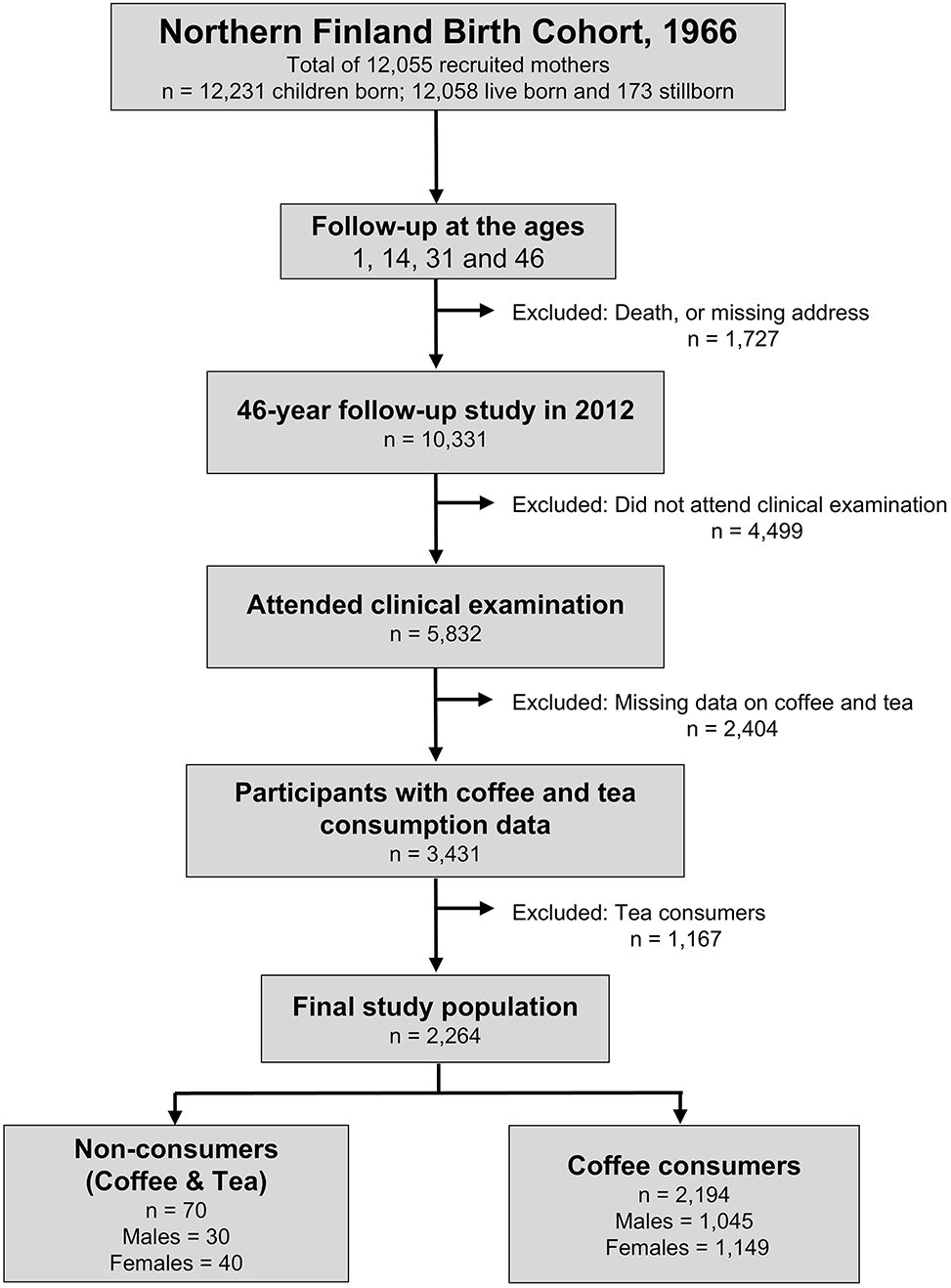
The data came from a follow-up conducted when the participants were 46 years old. Of the final study group, 47%were men.
Participants reported how many cups of coffee they usually drank each day. Researchers placed them into four groups:
- Non-consumers: no coffee
- Low consumers: one to two cups daily
- Moderate consumers: three to four cups daily
- High consumers: at least five cups daily
Only 70 participants did not drink coffee. The remaining 2,194 were coffee drinkers, including 296 low consumers, 822 moderate consumers and 1,076 high consumers.
Filtered coffee was the most commonly reported type. The researchers then examined the participants’ body composition, blood metabolites, cardiometabolic markers and sex hormones.
Did People Who Drank More Coffee Have Less Fat?
The higher-intake groups had lower body fat percentages, lower total fat mass and smaller areas of visceral fat. They also had greater skeletal muscle mass.
Meanwhile, BMI, waist circumference and waist-to-hip ratio were broadly similar across the groups.
In other words, two people with similar BMI readings could still have different proportions of fat and muscle. This finding also highlights why BMI alone may not reveal the full picture of a person’s body composition.
Furthermore, body composition was estimated using bioelectrical impedance analysis. This indirect method can be influenced by hydration and other factors, so the results should be interpreted cautiously.
The study also cannot confirm that coffee produced the leaner body composition. People who drink more coffee may differ from other participants in ways that were not fully measured.
Metabolic Differences
Higher coffee consumption was linked to lower blood levels of branched-chain amino acids, or BCAAs, in both men and women. These include leucine, isoleucine and valine.
BCAAs are essential nutrients found in protein-rich foods. They are not inherently harmful. However, persistently elevated circulating levels have been associated in previous research with insulin resistance and a higher risk of type 2 diabetes.
Among men, greater coffee intake was also correlated with lower fasting insulin and more favourable measures of insulin sensitivity. Women showed fewer associations.
Most of these metabolic correlations were small. They should not be interpreted as proof that coffee prevents insulin resistance or type 2 diabetes.
Testosterone
Men who drank more coffee showed a distinct hormonal pattern.
After accounting for BMI and several lifestyle factors, each additional daily cup of coffee was associated with higher total testosterone, bioavailable testosterone and sex hormone-binding globulin, commonly called SHBG.
At the same time, coffee intake was associated with modestly lower calculated free testosterone and a lower free androgen index. This apparent contradiction may be partly explained by SHBG. This protein attaches to sex hormones in the blood. Higher SHBG can raise measured total testosterone while reducing the proportion that circulates freely.

The pattern was less extensive among women. Higher coffee intake was associated with higher SHBG, lower free testosterone and a lower free androgen index. It was not significantly associated with total or bioavailable testosterone.
The researchers did not investigate whether these hormonal differences caused symptoms or produced any specific health effects.
Coffee Is Part of the Picture, Not the Answer
Coffee is such an ordinary part of daily life that it is easy to forget how biologically complex it is. Millions of people drink it every day, yet researchers are only beginning to unravel how it may relate to metabolism, body composition and hormones.
Still, this study is not a reason to start counting extra cups. If you are hoping to improve your metabolic health or manage symptoms associated with low testosterone, the findings do not show that coffee is the answer…yet?
Keep enjoying your morning brew – just do not expect it to replace movement, a balanced diet or proper medical care!

