

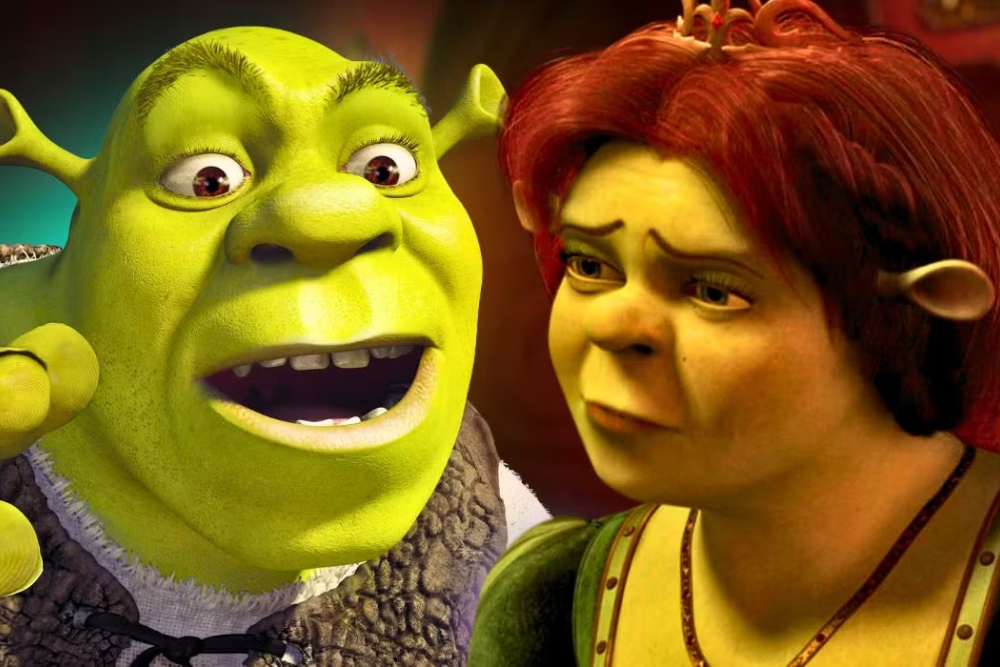
Remember Shrek? Green ogre. Lives in a swamp. Would really prefer it if everyone left him alone.
Hardly the obvious romantic lead. Yet he falls in love with Princess Fiona, who turns out to be living under a curse that transforms her into an ogre every night. When true love’s kiss leaves her permanently in ogre form, she worries that she was supposed to become beautiful.


Shrek tells her she already is.
A fairly sweet message about love and beauty, really. Nobody needs to become conventionally attractive to deserve a happy ending.
Naturally, the internet has taken this story somewhere else.
Enter Shrekking: dating someone you consider less physically attractive than yourself because you expect them to treat you better. The thinking goes that they will be more grateful, more devoted and less likely to stray. After all, they should know how lucky they are!
What an ungenerous reading of a film whose romantic hero was an ogre and whose villain was a lord with a castle.
Beyond doing Shrek dirty, the trend raises a question worth asking out loud: can dating someone you consider less attractive actually protect you from heartbreak?
A Less Attractive Partner Will Appreciate You More… Right?
It’s not the most surprising conclusion to come to. Perhaps the last person you dated was gorgeous and spectacularly lacklustre in every other department. Or, you are tired of competing for attention, decoding messages and wondering whether someone is keeping their options open.
After enough disappointment, maybe my physical standards are too high can start to sound like a practical adjustment. Maybe that someone will text back, make an effort, or even be excited to be with you…because you’re doing a favour dating them?
These are perfectly reasonable things to want, but are you sure you can identify that person by their face? A less conventionally attractive person can still be inconsiderate, while a very attractive person can still be kind, loyal and emotionally available.
There is also something uncomfortable about starting a relationship with the private conviction that you are looking down on their appearances. Imagine finding out that your partner chose you partly because they thought you could never do better. Suddenly, “you are so lucky to have me” sounds considerably less affectionate.
Why Might Dating “Down” Feel Safer?
A meta-analysis of longitudinal research found that social relationships and self-esteem predicted each other over time, with small effects in both directions. How we feel about ourselves and how we experience our relationships can influence one another.
If they have fewer options, perhaps they will be less likely to leave.
Perhaps then, the idea that they want you makes you feel better about yourself? Wanting reassurance is understandable, but when you attempt to obtain it through a perceived imbalance, how real is this reassurance?
And What If You Get “Shrekked”?
The internet even has a term for when this supposed strategy fails: getting “Shrekked”. You date someone you consider less attractive, expecting better treatment, and end up disappointed anyway.
Now there are two grievances: they hurt you, and you feel you lowered your standards for nothing.
But which standards did you lower? If you became more flexible about height, hair or having a certain “look”, that was never a guarantee of kindness in return. And if you overlooked dishonesty or inconsistency because someone seemed like a safer bet, those were the standards worth keeping.
The disappointment can be real even when the expectation was flawed. Nobody deserves poor treatment. But nobody owes you extra devotion because you consider yourself the better-looking partner, either.
What Actually Predicts A Satisfying Relationship?
Relationship research offers a more useful starting point than attractiveness rankings.
A study involving 11,196 couples across 43 longitudinal datasets, published in PNAS, examined which factors most reliably predicted relationship quality.

The strongest relationship-specific predictors included perceived partner commitment, appreciation, sexual satisfaction, perceived partner satisfaction and conflict. In simpler terms: 1) whether you believe your partner wants the relationship, 2) whether you appreciate them, and 3) how you experience life together.
To form and cultivate a satisfying relationship (beyond how everyone looks in the mirror, considering asking:
- Do you feel appreciated by your partner?
- Can you discuss a problem with them?
- Are you both invested in making the relationship work?
What Does Emotional Security Look Like In Practice?
Healthy relationships emphasis respect, support, honest conversations and listening as ways to strengthen relationships and protect mental wellbeing.
In daily life, consider what happens when you express a need. Can you say that something upset you? Can you disagree without being belittled? Is there room for both people’s boundaries?
Being open to a different kind of partner may broaden your dating life. However, believing someone should be grateful to have you is a shaky foundation for a relationship. If fears about rejection or your self-worth are persistently affecting daily life, a psychologist or counsellor can help you explore them.
You deserve to feel valued, and so does the person sitting across from you.

