

About one in three Singapore residents has high blood pressure, and many feel perfectly well. Here is what pushes the numbers up, and the everyday changes shown to bring them down.
You can live with high blood pressure for years and feel completely well. Most people only find out at a health screening, or at a clinic visit for something else.


That story is common in Singapore. The National Population Health Survey 2024 found that 33.8% of residents had hypertension, the medical term for high blood pressure, in 2023 to 2024. Worldwide, an estimated 44% of adults aged 30 to 79 with hypertension do not know they have it.
The good news is that doctors understand the main causes well. Several of them are within your control.
TLDR
- High blood pressure means readings of 140/90 mmHg or higher, measured on more than one occasion.
- In most adults, it has no single cause. It builds up over years from age, genes, salt, weight, inactivity, alcohol and smoking.
- In a smaller group, another condition drives it, such as kidney disease, a hormone problem, sleep apnoea or certain medicines.
- Changes to diet, salt, weight, exercise and alcohol can each lower the top number by roughly 4 to 11 mmHg.
What Counts as High Blood Pressure?
High blood pressure is a reading of 140/90 mmHg or higher on more than one occasion. The first number, called systolic pressure, is the pressure in your arteries when your heart beats. The second, diastolic pressure, is the pressure between beats.
Singapore’s national guidance defines normal blood pressure as below 130/80 mmHg. Readings in between count as high-normal. Your own target may differ, so ask your doctor which number you should aim for.

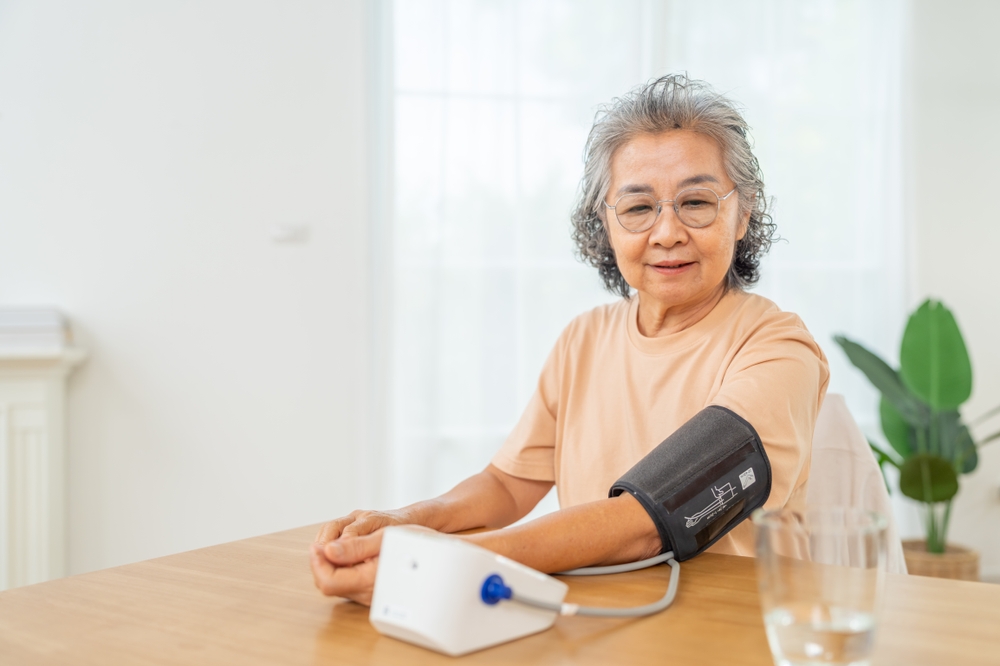
One high reading is not a diagnosis. Stress, coffee or rushing to an appointment can all push a single reading up. Checking with a home monitor gives your doctor a fuller picture, and it helps to know how to use and read a blood pressure meter.
What Causes High Blood Pressure in Most People?
For most adults, high blood pressure has no single cause that a doctor can point to. Doctors call this primary, or essential, hypertension, and it tends to develop slowly over many years.
Instead, several risk factors add up. You cannot change some of them, such as getting older or having a family history of high blood pressure. Others are linked to daily habits:
- Too much salt. Sodium makes your body hold on to extra water, which raises the pressure inside your blood vessels.
- Excess weight and too little activity.
- Smoking and heavy drinking.
- Stiffer arteries. Fatty deposits build up in the artery walls over time, a process called atherosclerosis.
Salt deserves a closer look in Singapore. The National Nutrition Survey 2022 found that residents eat about 3,600mg of sodium a day. That is far above the recommended limit of 2,000mg a day, which is about one teaspoon of salt. Much of it comes from sauces and seasonings in food eaten outside the home.
Can Another Condition Cause High Blood Pressure?
Yes. In a smaller group of people, another health problem causes the high blood pressure. Doctors call this secondary hypertension, and it often appears more suddenly than the primary type.
There are several possible causes:
- kidney problems, including damage from diabetes and other forms of chronic kidney disease
- hormone disorders, such as aldosteronism or an overactive or underactive thyroid
- sleep apnoea, where breathing stops and starts during sleep
- some medicines, including certain pain relievers, birth control pills and decongestants
This matters because treating the underlying problem can help bring blood pressure down. If your readings rise suddenly, tell your doctor about any medicines or supplements you take.
How Can You Lower Your Blood Pressure?
Everyday changes can lower blood pressure by a meaningful amount. A summary of American heart guidelines lists these average drops in systolic pressure for adults with hypertension:
- Eating a DASH-style diet, rich in fruit, vegetables, wholegrains and low-fat dairy: about 11 mmHg
- Regular aerobic exercise, 90 to 150 minutes a week: about 5 to 8 mmHg
- Cutting sodium by at least 1,000mg a day: about 5 to 6 mmHg
- Losing excess weight: about 5 mmHg
- Limiting alcohol to two drinks a day for men and one for women: about 4 mmHg
These are averages from studies, so your own results may differ.
In Singapore, small swaps make a start. When you eat out, ask for less salt and sauce, and leave the soup or gravy. Aim for at least 150 minutes of light to moderate activity a week, which works out to about 30 minutes a day on most days.
Lifestyle changes are not always enough. If your doctor prescribes medicine, take it as prescribed, and do not skip or share doses.
Why Does It Matter if You Feel Fine?
High blood pressure rarely causes symptoms, so measuring it is the only way to know. Left uncontrolled, it can damage your heart, brain and kidneys over time. That raises the risk of heart attack, kidney disease and stroke.
Very high readings, usually 180/120 mmHg or above, can cause severe headaches, chest pain, breathing difficulty or changes in vision. Get medical care straight away if this happens. In Singapore, call 995 in an emergency.
Frequently Asked Questions
Can Stress Cause High Blood Pressure?
Stress can push your blood pressure up and is a recognised risk factor. Reducing stress is part of the lifestyle advice for hypertension in Singapore, alongside exercise, weight loss and less salt.
How Often Should I Check My Blood Pressure?
If you already have hypertension, plan on a check at least twice a year, or more often if your doctor advises. If you have not been diagnosed, ask your family doctor how often you should be screened.
Can High Blood Pressure Go Away?
When another condition causes it, treating that condition may lower your blood pressure. Primary hypertension usually needs long-term care through lifestyle changes, and sometimes medicine.
Can Blood Pressure Be Too Low?
Yes. Low readings can cause dizziness in some people. Our guide to low blood pressure explains its causes and treatments.
References
- Health Promotion Board, Singapore. Less Salt, More Taste: a national movement to reduce sodium in dishes. Available from: https://www.hpb.gov.sg/newsroom/less-salt-more-taste-a-national-movement-to-reduce-sodium-in-dishes/ [accessed 24 November 2026].
- HealthHub, Ministry of Health Singapore. What is hypertension? Available from: https://www.healthhub.sg/live-healthy/understanding-hypertension [accessed 24 November 2026].
- Mayo Clinic. High blood pressure (hypertension): symptoms and causes. Available from: https://www.mayoclinic.org/diseases-conditions/high-blood-pressure/symptoms-causes/syc-20373410 [accessed 24 November 2026].
- Mayo Clinic. Secondary hypertension: symptoms and causes. Available from: https://www.mayoclinic.org/diseases-conditions/secondary-hypertension/symptoms-causes/syc-20350679 [accessed 24 November 2026].
- Ministry of Health, Singapore. National Population Health Survey 2024 shows Singaporeans are adopting healthier lifestyles, but rising obesity is a concern. Available from: moh.gov.sg [accessed 24 November 2026].
- Primary Care Pages. Healthier SG chronic care protocol: hypertension. Last updated 8 March 2024. Available from: https://www.primarycarepages.sg/healthier-sg/care-protocols/chronic-care-protocols/hypertension [accessed 24 November 2026].
- Whelton PK, Carey RM, Aronow WS, et al. 2017 ACC/AHA/AAPA/ABC/ACPM/AGS/APhA/ASH/ASPC/NMA/PCNA guideline for the prevention, detection, evaluation, and management of high blood pressure in adults. Hypertension. 2018;71(6):e13–e115. Table of non-drug interventions reproduced at: https://pmc.ncbi.nlm.nih.gov/articles/PMC8351755/table/T7 [accessed 24 November 2026].
- World Health Organization. Hypertension [fact sheet]. 25 September 2025. Available from: https://www.who.int/news-room/fact-sheets/detail/hypertension [accessed 24 November 2026].

