


Could a quick heart scan show who really needs statins? A major trial found fewer people were prescribed the pills, but the apparent success came with an important catch.
Should you take a statin because a calculator says your heart is at risk? Or should doctors first look for signs of disease inside your arteries?


A major trial tested both approaches: a heart scan led to far fewer statin recommendations, yet both groups had the same rate of major cardiovascular events (2.7%).
However, too few heart attacks, strokes and other events occurred for researchers to prove that the scan-based approach protected patients as well as a traditional risk calculator.
Why Is It So Difficult To Decide Who Needs Statins?
Statins lower cholesterol and can reduce the risk of heart attacks and strokes. Their benefits are well established for people who already have cardiovascular disease or face a high risk of developing it.
The decision becomes less clear for someone who feels well and has never had a heart attack or stroke.
Doctors usually estimate that person’s risk using factors such as age, cholesterol, blood pressure and smoking. The result helps them judge whether a statin is likely to offer enough benefit.
However, a risk score remains an estimate. Some people who appear healthy may already have plaque building up inside their arteries. Others may be advised to take medicine even though their short-term risk is relatively low.
Even a normal” cholesterol result may not show the full picture. Doctors also consider family history, diabetes, smoking and other health factors.
A Scan That Reveals Hidden Heart Plaque
A coronary artery calcium, or CAC, scan is a short CT scan of the heart. It looks for calcium deposits in the coronary arteries, which supply blood to the heart muscle.
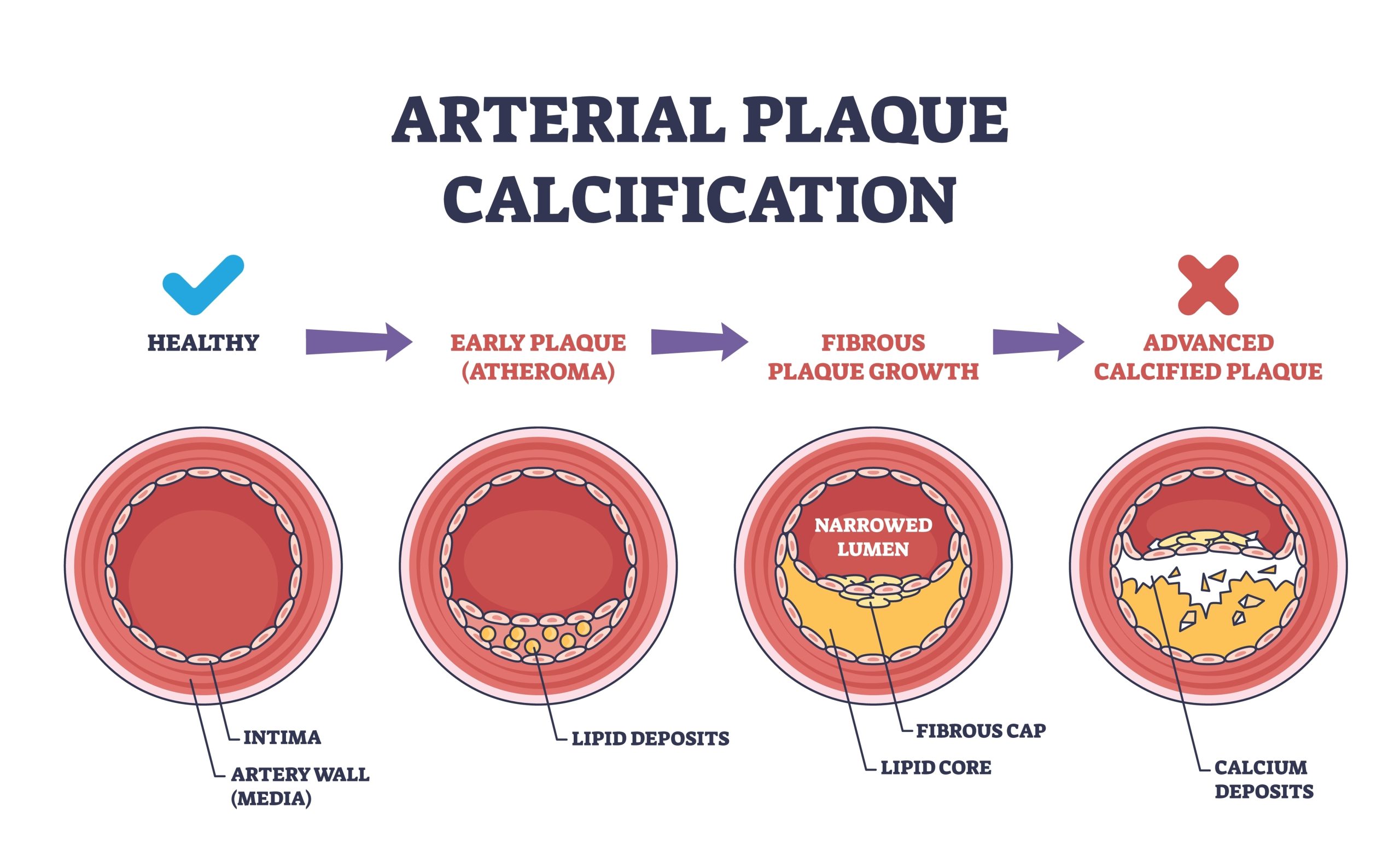
Calcium in these arteries is a sign that coronary plaque has developed. In general, a higher score suggests more calcified plaque and a higher future risk of heart disease.
The test does not require an injection or contrast dye. According to the American Heart Association, the scan usually takes around 10 to 15 minutes and uses a low dose of radiation.
A score of zero means no calcified plaque was detected. This can be reassuring, but it does not guarantee that the arteries are clear. This is because the scan may not detect soft plaque that has not yet hardened.
Inside The CorCal Outcomes Trial
The CorCal Outcomes trial involved 5,772 adults from the United States. Their average age was 64, and 51% were women.
None had known atherosclerotic cardiovascular disease, diabetes or previous statin treatment.
Researchers randomly assigned participants to receive statin advice based on one of two methods. One group was assessed using the pooled cohort equations, a calculator that estimates cardiovascular risk from traditional risk factors. The other group was assessed using a CAC scan.
The advice was not a prescription. Patients and their doctors still made the final treatment decision.
The scan changed who was advised to start medicine. Participants assessed with the traditional calculator received a statin recommendation more than three times as often as those assessed using coronary calcium.
The Identical Result With A Statistical Catch
After an average of 4.2 years, major cardiovascular events had occurred in 2.7% of each group.
The trial counted heart attacks, strokes, death from any cause and procedures used to restore blood flow through narrowed or blocked arteries.
At first glance, the identical figures suggest that both approaches worked equally well. However, the trial did not prove this. Researchers had designed the study as a non-inferiority trial, to show that scan-guided care was not unacceptably worse than calculator-guided care.
Fewer cardiovascular events occurred than expected. With fewer events to compare, the researchers could not confidently rule out a meaningful difference between the two approaches.
The European Society of Cardiology described the results as useful for planning a larger trial. They are not proof that calcium scans should replace standard risk assessment.
There is another limitation. The study used an older US risk calculator. Updated American guidelines now recommend a newer tool called PREVENT for many primary prevention decisions.
Read More: PREVENTing Tomorrow’s Heart Disease Starts With Better Risk Prediction (For HCPs only)
Seeing Plaque May Change Patient Behaviour
The biggest difference appeared in how patients responded to the advice.
Among people advised to take a statin, 62% in the scan group followed the recommendation. Only 23% in the calculator group did the same.
Seeing plaque on a scan may make an invisible risk feel more real, versus a percentage calculated from blood pressure and cholesterol, which can seem distant. An image showing calcium inside the heart’s arteries offers visible evidence that disease has already begun.
However, the study did not establish exactly why adherence improved. The figures also apply only to people who received a statin recommendation, rather than everyone in each group.
Taking cholesterol medicine consistently matters, because treatment works best when patients follow the plan discussed with their doctor.
Asia’s Heart Risk Is Far From Small
The question of who needs cholesterol-lowering treatment is highly relevant in Asia.
It is estimated that 36.8 million people in ASEAN were living with cardiovascular disease in 2021. Ischaemic heart disease affected about 2,071 people per 100,000, making it the region’s most common cardiovascular condition. High LDL cholesterol was also among the leading contributors to cardiovascular deaths.
High cholesterol is widespread even in relatively affluent health systems. Singapore’s recent 2019–2020 National Population Health Survey found that 39.1% of residents aged 18 to 74 had high blood cholesterol. More than half of those affected had not previously been diagnosed. The prevalence increased with age, from 15.7% among people aged 18 to 29 to 62.8% among those aged 70 to 74.
Treatment gaps have also been recorded. A Malaysian study of over 11,000 adults found that only 10.5% of participants with a high predicted cardiovascular risk and 17.1% of those with diabetes were taking lipid-lowering medicine. Among participants who already had cardiovascular disease, 74.2% were not taking such medication. Staying in a rural area and drawing lower incomes were associated with a reduced likelihood of receive treatment.
What The Findings Mean For Asia
The CorCal trial took place in the United States and excluded people with diabetes and known cardiovascular disease. Its results may not apply directly across Asia, where diabetes rates, smoking patterns, healthcare access and cardiovascular risks differ considerably.
A CAC scan may help when a patient and doctor remain uncertain about starting a statin. It is unlikely to add much when the treatment decision is already clear.
The scan is also not designed to investigate chest pain. Anyone with new or persistent chest discomfort, breathlessness, sweating, fainting or pain spreading to the arm or jaw needs prompt medical assessment.
Current guidelines support selective use of CAC scans when a statin decision remains uncertain. A result should be interpreted alongside cholesterol levels, blood pressure, age, smoking, diabetes and family history.
People already taking statins should not stop their medicine because of a calcium score without speaking to their doctor.
The CorCal Outcomes findings were presented at ESC Congress 2026. Full peer-reviewed outcome results were not available at the time of writing.

