


A new ESC guideline changes how heart failure is classified and expands treatment options. The practical message for patients is not to chase a new drug, but to make sure their treatment plan is complete and regularly reviewed.
Heart failure guidelines changed substantially in 2026, but patients do not need to memorise a new alphabet of medical abbreviations. They do need to understand one important idea: heart failure treatment is becoming earlier, broader and more personalised.


How Is Heart Failure Treatment Changing in 2026?
The European Society of Cardiology released its new heart failure guideline on 28 August 2026. One of the headline changes is the way doctors classify heart failure according to left-ventricular ejection fraction, or LVEF — a measurement of how much blood the left ventricle pumps out with each contraction.
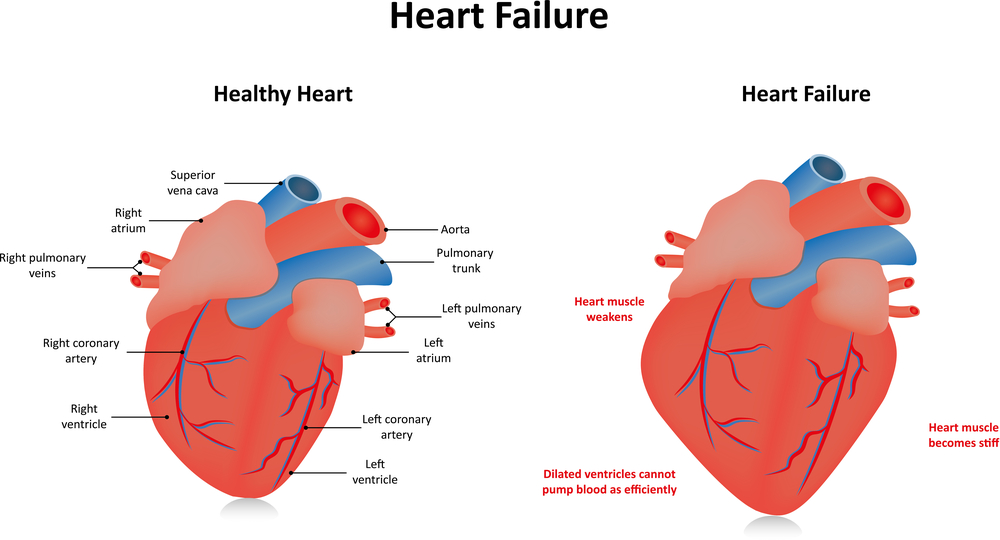
Previously, many patients with an LVEF of 41% to 49% were labelled as having heart failure with mildly reduced ejection fraction, or HFmrEF. The new ESC guideline removes that middle category. Heart failure with reduced ejection fraction, HFrEF, now includes LVEF below 50%, while heart failure with preserved ejection fraction, HFpEF, begins at 50%.
Why does that matter? Because treatment evidence has increasingly shown that the old numerical boundaries did not always match biology. A person with an EF of 45% is not automatically a completely different type of patient from someone with an EF of 39%.
Treatment Options for Heart Failure
The second major change is that mineralocorticoid receptor antagonists, or MRAs, now receive a strong recommendation in chronic heart failure regardless of ejection fraction. Medicines in this class can be very useful, but they are not casual add-ons. Kidney function and potassium usually need monitoring, and the correct choice depends on the individual patient.
A third change is especially relevant in Asia, where obesity and diabetes are increasingly common. For selected patients who have symptomatic heart failure with preserved EF and obesity, the new guideline says semaglutide or tirzepatide should be considered. These medicines are better known for diabetes and weight management, but trials have also shown improvements in symptoms, exercise capacity and quality of life in certain people with obesity-related HFpEF.
This does not mean everyone with heart failure should ask for an injection. It means obesity is being recognised as part of the disease process in some patients rather than merely a lifestyle issue sitting beside it.
Heart Failure Prevention Starts Early
The fourth change is a stronger focus on prevention. The new ESC approach uses stages A through D. Stages A and B include people who may not yet have symptomatic heart failure but already have important risk factors or structural heart abnormalities.
For patients, this is a useful shift. Heart failure does not suddenly appear on the day someone develops swollen legs or wakes at night struggling to breathe. The pathway may begin years earlier with uncontrolled high blood pressure, diabetes, obesity, kidney disease, coronary artery disease or damage to the heart muscle.
Preventing progression can therefore be part of heart failure treatment long before a hospital admission occurs.
What Does Decompensated Heart Failure Mean?
The fifth change is language. The guideline increasingly uses the term “decompensated heart failure” rather than simply “acute heart failure”. This reflects what doctors often see: worsening heart failure may develop gradually, with increasing weight, swelling, fatigue and breathlessness over several days rather than as a single sudden event.
Some less severe cases may be managed through structured outpatient care, but patients should not interpret this as a reason to delay medical attention. Severe breathlessness, chest pain, fainting, confusion, blue lips or rapidly worsening symptoms remain reasons to seek urgent care.
Are Patients Missing Heart Failure Treatments?
There is another issue that matters as much as the guideline itself: many eligible patients still do not receive all evidence-based treatment.
A 2026 multicentre study from seven public hospitals in Singapore found that only 29% of eligible patients with HFrEF were receiving all four major guideline-directed drug classes at discharge in 2022. Treatment gaps were especially notable for MRAs and SGLT2 inhibitors.
This is not unique to Singapore. Heart failure treatment is complicated. Low blood pressure, kidney disease, frailty, side effects, drug costs and follow-up gaps can all limit therapy. Medicines may also be started at low doses and require repeated review.
What Should Patients Ask About Their Heart Failure Treatment?
For patients, the practical response is not to compare prescriptions on social media. It is to ask better questions at the clinic.

What type of heart failure do I have? What is my latest ejection fraction? Are there evidence-based treatments I am eligible for but not receiving? If a medicine was stopped, why? When should kidney function or potassium be checked? Do my blood pressure, diabetes, weight, kidney disease or heart rhythm need better control? What symptoms should make me return earlier?
In countries with national insurance systems or restricted formularies, access may also differ between hospitals and health systems. Guidelines describe what evidence supports; local availability determines what can be delivered today. Patients should discuss alternatives rather than stopping treatment or buying medicines independently.
As a cardiologist, I would emphasise one final point. New guidelines can create excitement around new drugs, but the biggest gains often come from getting the basics right: the correct diagnosis, the right combination of proven therapies, adherence, monitoring, vaccination when appropriate, blood-pressure control, exercise or cardiac rehabilitation where suitable, and early response to worsening symptoms.
Heart failure care in 2026 is no longer defined by one tablet or one ejection-fraction number. It is a long-term treatment strategy.
The guideline has changed. The most useful next step is to make sure the patient’s care plan changes when the evidence says it should — safely, deliberately and with proper follow-up.
This article is for general health education and does not replace an individual medical consultation. Patients should not start, stop or change heart-failure medication without discussing it with their treating clinician.
References
- 2026 ESC Guidelines for the management of heart failure. European Society of Cardiology, 28 August 2026. https://www.escardio.org/guidelines/clinical-practice-guidelines/all-esc-practice-guidelines/heart-failure/
- AHA/ACC/ESC/WHF Second Universal Definition of Heart Failure. 2026. https://www.ahajournals.org/doi/10.1161/CIR.0000000000001455
- Treatment gaps in guideline-directed medical therapy for HFrEF in Singapore: multicentre retrospective cohort study. 2026. https://pmc.ncbi.nlm.nih.gov/articles/PMC12983904/

