


Losing a quarter of your body weight sounds like the headline. In a major trial recently published, however, another finding deserves attention: some participants had their doses reduced because they were losing more weight than they wanted, or had reached a threshold set by researchers.
That raises a question rarely heard amid the excitement over weight-loss injections: when is enough enough?


The TRIUMPH-1 findings suggest that increasingly powerful obesity medicines may require a more personal definition of success. The goal could become finding the dose that delivers the health improvements someone needs, rather than pursuing the largest possible drop on the scales.
What Did The Trial Find?
The TRIUMPH-1 study, published in The New England Journal of Medicine, involved 2,339 adults without diabetes. Participants had obesity, or overweight with at least one related health complication.
They received weekly injections of retatrutide at assigned doses of 4 mg, 9 mg or 12 mg, or a placebo, for 80 weeks. Everyone received advice on healthy eating and physical activity.
In the main analysis, average weight loss reached 25% in the 12 mg group (average weight loss reached 25% in the main analysis, and up to 28.3% among those remaining on treatment), compared with 3.9% with placebo. Just over one in five participants in the highest-dose group lost at least 35%.
These results accounted for treatment discontinuation and certain changes in treatment. They were not simply an average among people who completed every injection.
Retatrutide acts on three hormone receptors: GLP-1, GIP and glucagon. These pathways influence appetite and metabolism.
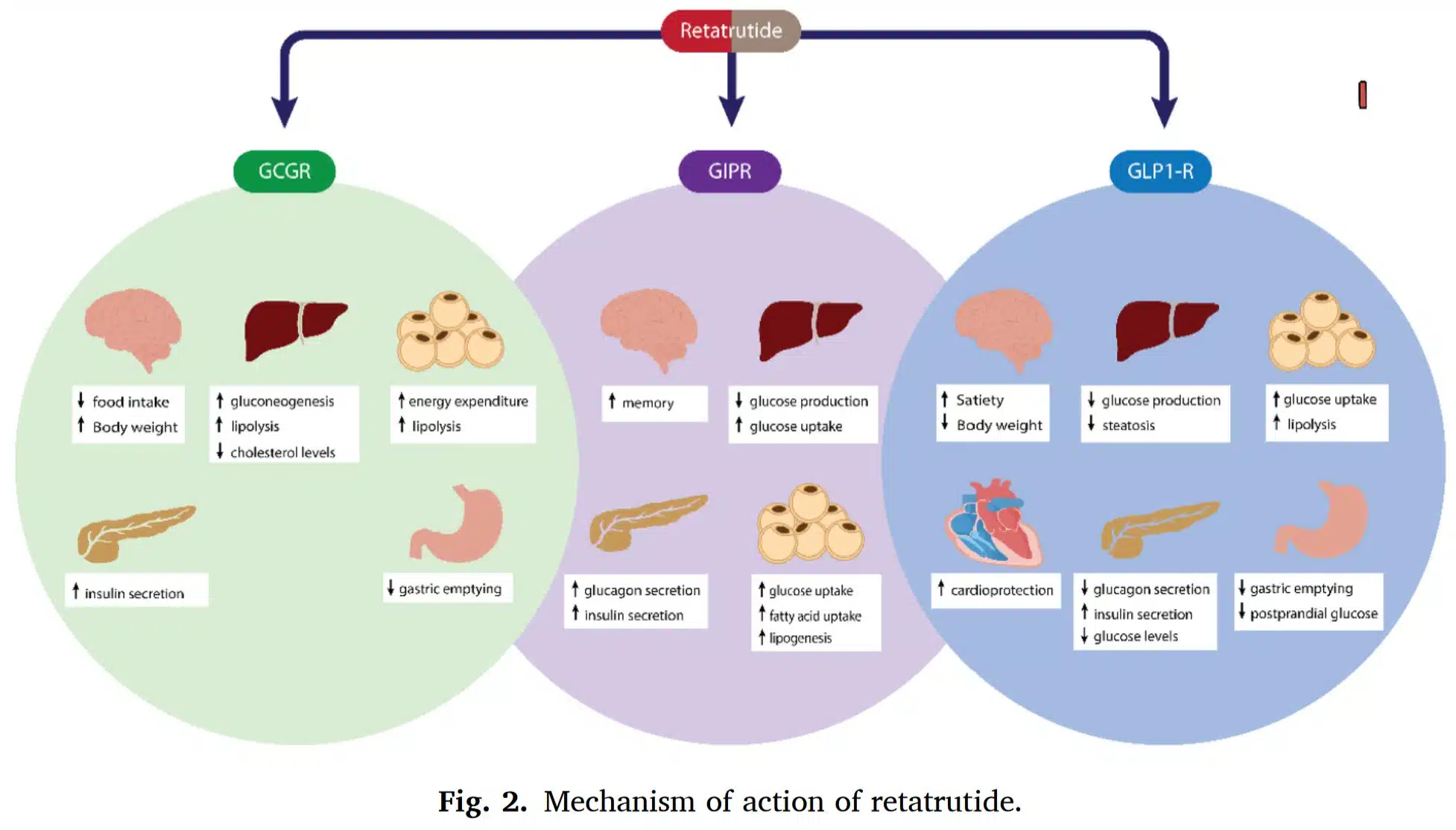
GLP-1 helps reduce appetite and slows the movement of food out of the stomach, making people feel fuller for longer. Both GLP-1 and GIP help the pancreas release insulin when blood sugar rises. GIP also influences appetite and how the body handles fat.
Glucagon adds another dimension. Best known for prompting the liver to release stored sugar, it can also increase energy expenditure. Targeting all three pathways combines effects on food intake and energy use, helping explain the interest in retatrutide as an obesity treatment.
Why Did Some Participants Need A Lower Dose of Retatrutide?
The trial allowed permanent dose reductions for many possible reasons:
- if participants were not eating or drinking enough
- reached a body mass index (BMI) of 22 or below
- experienced weight loss they or their investigator considered excessive
- experiencing gastrointestinal side effects during the first 20 weeks.
Permanent dose reductions occurred in 7.5% of the 4 mg group, 18.4% of the 9 mg group and 22.5% of the 12 mg group. Those percentages cover all reasons for dose reduction.
Separately, 5.3% of participants assigned to 12 mg even stopped treatment because their weight loss was considered sufficient or excessive. This truly challenges the assumption that every additional kilogram lost represents a better result.
BMI Calculations And What It Means
A healthy Body Mass Index (BMI) ranges from 18.5 to 22.9 based on Asian guidelines (Singapore), or 18.5 to 24.9 on the standard international scale. In TRIUMPH-1, the threshold of BMI ≤22 was set to allow researchers to reduce treatment.
BMI also cannot tell the whole story. It does not distinguish muscle from fat or establish how healthy an individual is. Health assessments need to look beyond weight and height, including what someone is losing as their weight falls.
While TRIUMPH-1 paper did not report changes in body composition, other research has examined this more closely: a substudy of the STEP 1 trial for semaglutide used DEXA scans to compare fat and lean mass before and after 68 weeks of treatment. Such findings help clinicians understand what sits behind the number on the scales: how much weight loss comes from fat, and how much from lean tissue. This can inform discussions about nutrition, strength and treatment goals, although lean mass measurements alone do not establish how much muscle or strength someone has lost.
Additionally, context matters: weight-related health risks can emerge at lower BMIs in Asian populations. A trial threshold should therefore not become a universal personal target.
Best Dose ≠ Highest Dose?
Instead of an approach centred on the maximum dose a patient can tolerate, there is a shift towards exploring the minimum effective dose needed to reach that patient’s treatment targets.
The question becomes: what are we trying to improve, and how much of the medication or treatment is needed to get there?
That could mean not only looking at weight, but also blood pressure, physical function and other obesity-related conditions. TRIUMPH-1 found improvements in several health measures, including knee pain from osteoarthritis and sleep apnoea in participants with those conditions.
A lower dose is not automatically the right dose for everyone, either. The useful principle is to match treatment to the individual’s response and needs.
Side Effect Profile of Retatrutide
Side effects remain part of the consideration when it comes to treatment therapies. Common with GLP-1 therapies, nausea, diarrhoea, constipation and vomiting were reported. These were generally mild or moderate, and occurred mostly while doses were increasing.
Retatrutide also showed other side effects. These included a mild, transient increase in heart rate (averaging around 6 beats per minute) and instances of dysesthesia (increased skin sensitivity or tingling).
Serious adverse events were reported in 10.5% of the 12 mg group and 5.5% of the placebo group. These figures include events occurring during treatment, but they may or may not be attributed to the medication.
Study Limitations
First, retatrutide was compared with placebo, not other established weight-loss medicine. The study therefore cannot establish whether it works better or is safer than other molecules like semaglutide or tirzepatide – as extrapolations are not conclusive.
Participants also had an average starting BMI of 40, and only around 2% had a BMI below 30. None had diabetes. The results reported may therefore not translate directly to these people not represented in the study, ie. those with lower starting weights or those with diabetes.
The paper did not report changes in body composition, leaving uncertainty about how much weight loss came from fat versus lean tissue. It also did not establish the best way to maintain results after treatment ends.
Cardiovascular outcomes is something of great clinical interest for GLP-1 medications – and definitely a hot topic for retatrutide, but longer studies are needed to assess cardiovascular outcomes. The ongoing TRIUMPH-Outcomes trial, estimated to complete in 2029, is examining retatrutide’s effects on major cardiovascular events and kidney outcomes, helping establish whether its weight-loss benefits translate into longer-term health benefits.
Takeaway
For someone already taking a prescribed weight-loss medicine, difficulty eating or drinking enough, persistent side effects, or weight loss beyond an agreed target deserves a review with their clinician. Dose changes should be made with that clinician.
The question raised by this trial will outlast its headline numbers: once a medicine can produce substantial weight loss, how do we decide what is enough for each person?
Other treatments are advancing too, including CagriSema, an investigational combination of semaglutide and the appetite-regulating drug cagrilintide, which recently delivered encouraging late-stage trial results. As obesity medicines become more powerful, finding the right treatment target for each patient may matter just as much as how many kilograms a drug can help them lose.

