

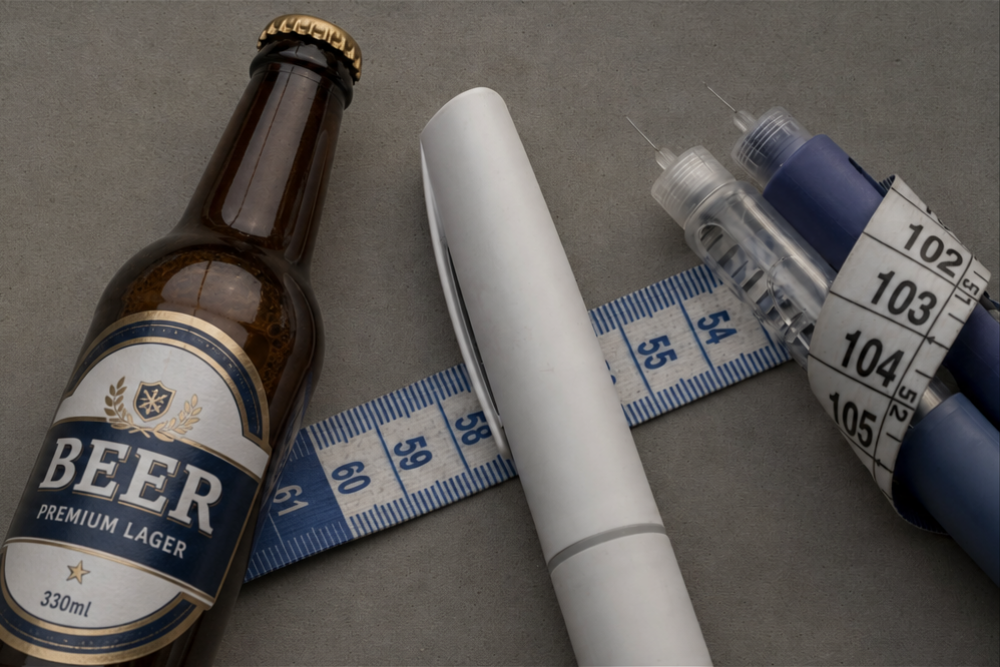
GLP-1 drugs such as semaglutide may reduce alcohol cravings and heavy drinking. New trials offer hope, but researchers warn that these medicines remain unproven addiction treatments.
Some people taking semaglutide have reported a curious change. Alongside eating less, they find themselves leaving wine unfinished, declining another beer or simply thinking about alcohol less often.


Comment
by
u/gregfromglm from discussionin
Semaglutide
These accounts first gained attention on social media, where users described their desire to drink fading after starting GLP-1 receptor agonists such as Ozempic or Wegovy. What sounded like an unexpected side effect has since become a serious field of addiction research.
Animal experiments, health-record studies and early human trials now suggest that GLP-1 drugs may influence alcohol craving and consumption. Yet researchers remain cautious: semaglutide is not an approved treatment for alcohol use disorder, and the evidence is still developing.
The bigger story may not be whether Ozempic becomes the next addiction drug. It is what these medicines reveal about craving itself.
Why Might a Diabetes Drug Affect Alcohol Cravings?
GLP-1 is a hormone released by the gut after eating. It helps the pancreas regulate blood sugar, slows digestion and signals fullness.
Medicines such as semaglutide imitate this hormone but remain active far longer. They were developed for type 2 diabetes and later became prominent treatments for obesity.
Their effects, however, extend beyond the stomach and pancreas. GLP-1 receptors are also found in areas of the brain involved in motivation, reward and decision-making.
That could explain why many patients describe a reduction in “food noise”: the persistent thoughts, negotiations and urges surrounding food. Scientists are investigating whether the same process can soften the motivational pull of alcohol.
This does not necessarily mean that alcohol becomes unpleasant. Instead, the urge to continue drinking may weaken. A person might still order a drink but feel satisfied after less.
View this post on Instagram
Addiction Involves “Wanting”
Addiction is often misunderstood as poor discipline. Modern neuroscience paints a more complicated picture.
Researchers distinguish between “liking” a reward and “wanting” it. Liking refers to the pleasure someone experiences. Wanting is the motivational force that draws the person towards the reward.
In addiction, these systems can become disconnected. Someone may no longer enjoy alcohol as much as before, yet still experience an intense drive to obtain and consume it. Alcohol-related sights, smells, places and routines can also become powerful cues.
GLP-1 drugs may influence parts of this reward circuitry and alter dopamine signalling. The precise mechanism in humans remains unsettled, but the possibility offers a biological explanation for reports of quieter cravings.
Crucially, it also reinforces a message long established in addiction medicine: alcohol use disorder is a medical condition, not a moral failure.
What Did the First Human Trial Find?
The evidence did not begin with dramatic human success.
In a 2022 randomised trial, over 120 people receiving treatment for alcohol use disorder were given weekly exenatide, an older GLP-1 medicine, or a placebo alongside cognitive behavioural therapy.
Overall, exenatide did not reduce heavy drinking days more than placebo. That was a disappointing primary result.
However, brain imaging produced an intriguing clue. Participants receiving exenatide showed less activation in reward-related brain regions when viewing alcohol cues. A subgroup analysis also suggested possible benefits among participants with obesity, although such secondary findings require caution.
The trial showed why social media stories cannot substitute for controlled research. A drug can appear to affect the brain without producing a clear clinical benefit across an entire study group.
Has Semaglutide Delivered Stronger Results?
A small US phase 2 trial published in JAMA Psychiatry in 2025 provided the first prospective evidence for semaglutide.
The trial involved 48 adults with alcohol use disorder who were not seeking treatment. After nine weeks, those receiving low-dose semaglutide consumed less alcohol during a laboratory drinking session than those receiving placebo.
Semaglutide also reduced weekly alcohol craving, drinks consumed per drinking day and some measures of heavy drinking. It did not significantly change every outcome: average drinks per day and the number of drinking days were unaffected.
The study was small, brief and used relatively low doses. Only 25 participants contributed data to the post-treatment laboratory drinking comparison. Its findings are therefore promising rather than definitive.
A larger Danish trial published in The Lancet in 2026 studied weekly semaglutide in people with alcohol use disorder and obesity. It reported greater reductions in total alcohol consumption and heavy drinking days than placebo over 26 weeks.
Together, the trials suggest that semaglutide may not stop every drinking occasion. Its more noticeable effect could be helping some people drink less once they begin.
Why Are Researchers Still Cautious?
Several important questions remain unanswered.
Researchers do not yet know whether reduced cravings persist after treatment ends. GLP-1 drugs often require long-term use for weight management, and alcohol-related urges could return when medication stops.
It is also unclear who benefits most. Body weight, drinking pattern, addiction severity and individual biology may all influence response.
Blinding poses another difficulty. Nausea, reduced appetite and weight loss may allow participants to guess whether they received semaglutide or placebo. That awareness could alter behaviour or expectations.
There are also safety and access concerns. GLP-1 medicines can cause gastrointestinal side effects and are unsuitable for some patients. Using them without medical supervision, or obtaining them from unregulated sellers, creates additional risks.
Evidence for smoking, cannabis, cocaine, gambling and other compulsive behaviours is even less mature. Findings in animals, health records or small subgroups should not be presented as proof that GLP-1 drugs treat addiction broadly.
Alcohol Use Disorder Is Treatable
The excitement surrounding semaglutide should not obscure treatments already available.
Depending on the country and the patient, medicines such as naltrexone, acamprosate and disulfiram may be used alongside psychological and social support. Treatment does not always require immediate abstinence; reducing heavy drinking can also improve health.
Yet access remains strikingly poor. The World Health Organization estimates that 400 million people aged 15 and older live with an alcohol use disorder. Where treatment data are available, only a small minority are in contact with services.
This gap matters across Asia, where stigma, cost, limited specialist services and fear of judgement may prevent people from seeking help.
Semaglutide may eventually join the treatment toolkit. For now, nobody should start, stop or repurpose a GLP-1 drug for alcohol use without speaking to a qualified clinician. People who drink heavily or may be physically dependent should not suddenly stop without medical advice, as alcohol withdrawal can be life-threatening.
The most important insight is already clear: cravings are not evidence of weak character. They arise from biological, psychological and social forces that can be treated. Whether GLP-1 medicines become part of that treatment is now a question for larger, longer trials.

