

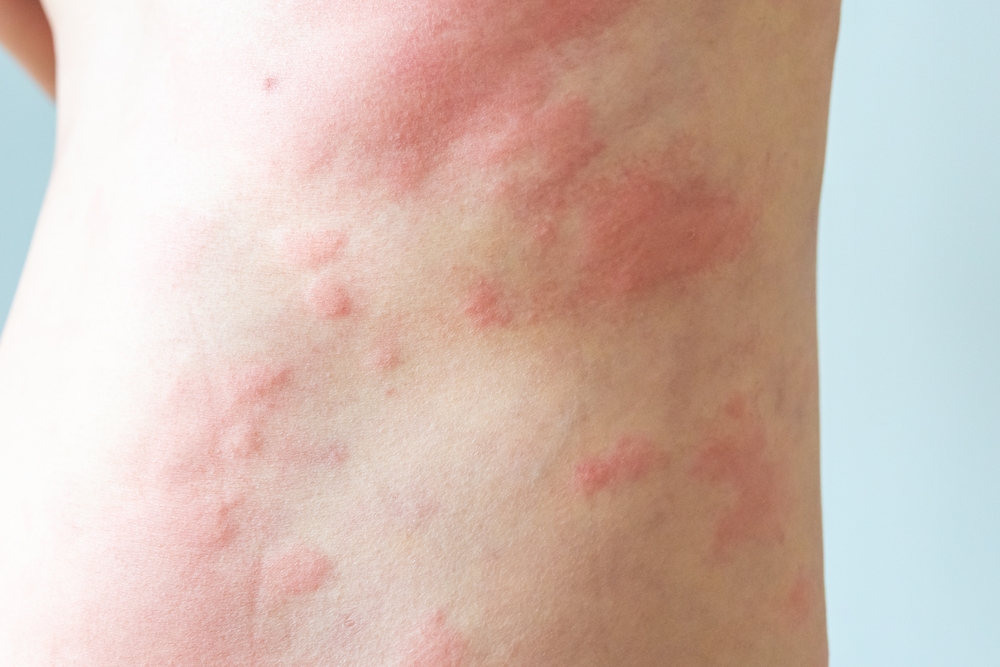
You have changed your diet, switched detergents and replaced your skincare, yet the hives keep coming back. When there is no obvious trigger, the search for an allergy can become frustrating – and may overlook a condition called chronic spontaneous urticaria (CSU).

For World Urticaria Day on 1 October, we asked Dr Phoon Yee Wei, Senior Consultant Dermatologist and Dermatologic Surgeon, and Medical Director at Ascensus Skin – Ascensus Health Specialist Centre, Novena, why recurring hives deserve a closer look, how they can affect daily life and when treatment needs a review.


Why Might Recurring Hives Not Be An Allergy?
Q: Many people change their diet, detergent or skincare when hives keep returning. Why might an allergy not be the explanation, and what could be happening instead?
Dr Phoon: Many people with recurring hives assume they have an allergy and start changing their diet, detergent or skincare to find the trigger. But a typical allergic reaction usually follows a clearer pattern: it happens soon after exposure to a specific trigger, and the same trigger tends to cause a similar reaction again.
When hives keep coming back without that relationship to a consistent trigger, blindly avoiding foods or changing products may not provide an effective solution. If the hives continue to recur regularly for six weeks or more without an obvious trigger, it could point to chronic spontaneous urticaria, or CSU, which is not usually due to a typical allergy.
What Is Chronic Spontaneous Urticaria?
Q: What is CSU, and how do doctors distinguish it from other causes of hives?
Dr Phoon: CSU is a chronic skin condition where hives, deeper swelling known as angioedema, or both keep recurring for six weeks or longer, often without a clear trigger. Unlike a typical allergy, there may not be one specific food, product or environmental exposure that consistently brings the hives on.
Doctors usually distinguish CSU from other causes of hives by looking closely at the history and pattern of symptoms rather than relying on one single test. They look at:
- when the hives started;
- how often they return;
- how long individual episodes last;
- whether swelling occurs; and
- whether there is a consistent link to a particular food, medicine or other exposure.
In practice, the story behind the hives is often just as important as what the rash looks like on the day of the consultation.
How Can CSU Affect Everyday Life?
Q: Beyond the itch, how can CSU affect patients’ everyday lives, and what impact tends to be overlooked?
Dr Phoon: CSU can affect much more than the skin. When hives and swelling keep returning, they can disrupt sleep, concentration, work and everyday activities. Over time, repeated flare-ups and poor sleep can take a toll on energy levels, productivity and confidence, while visible symptoms may make some people withdraw from social activities. The unpredictability can also be difficult. Patients may not know when the next flare will happen, how severe it will be, or whether swelling will develop.

What is often overlooked is how easily people can become used to living with these symptoms. If hives have been recurring for months or years, persistent itch or disrupted sleep can start to feel ‘normal’. That is why, when we assess CSU, we look not only at how often the hives appear, but also at how much the condition is impacting on a patient’s quality of life.
When Should You Seek Medical Advice?
Q: When should someone with recurring hives seek medical advice, and what should they record or bring to their consultation? Which symptoms require urgent attention?
Dr Phoon: If hives keep returning for six weeks or more, or are disrupting sleep, work or daily life, that is a good time to seek medical advice. Atypical symptoms of perceived ‘hives’ such as: individual rash lasting for 24 hours or longer, causing pain more than itch, associated bruised-like discoloration or accompanied symptoms such as fever or joint pains will deserve further evaluation. Because hives can disappear fade before you reach the clinic, photos taken during a flare can be very useful.

A simple symptom diary can also help. Things to note down include:
- when the hives appear;
- how long they last;
- whether there is swelling;
- any possible triggers; and
- how the symptoms are affecting you.
These details often give doctors a much clearer picture than a single consultation alone.
What If Initial Treatment Does Not Control Symptoms?
Q: How is CSU managed, and what options are available in Singapore when initial treatment does not adequately control symptoms?
Dr Phoon: CSU is managed step by step, with treatment adjusted according to how well symptoms are controlled. We usually start with antihistamines to control hives and itch, then review how well the patient is responding. If symptoms continue, the dose can be adjusted in line with treatment guidelines, and further treatment options can be considered if control remains inadequate.
The goal is not simply to have fewer flare-ups. We want patients to achieve complete or near-complete symptom control; what I often describe as ‘zero hives, zero itch’. If hives are still returning frequently, disturbing sleep or getting in the way of daily life, that may be a sign the current treatment is not doing enough. Speak to your doctor about whether your symptoms are adequately controlled and whether your treatment plan needs to be reviewed.
Dr Phoon Yee Wei is a Senior Consultant Dermatologist and Dermatologic Surgeon, and Medical Director at Ascensus Skin – Ascensus Health Specialist Centre, Novena. Before entering private practice, he served as Head of the Dermatology Service at Sengkang General Hospital. He completed his specialist training in Dermatology at the National Skin Centre and Singapore General Hospital.
For more information on chronic spontaneous urticaria (CSU), visit iseeu.com.sg.

