

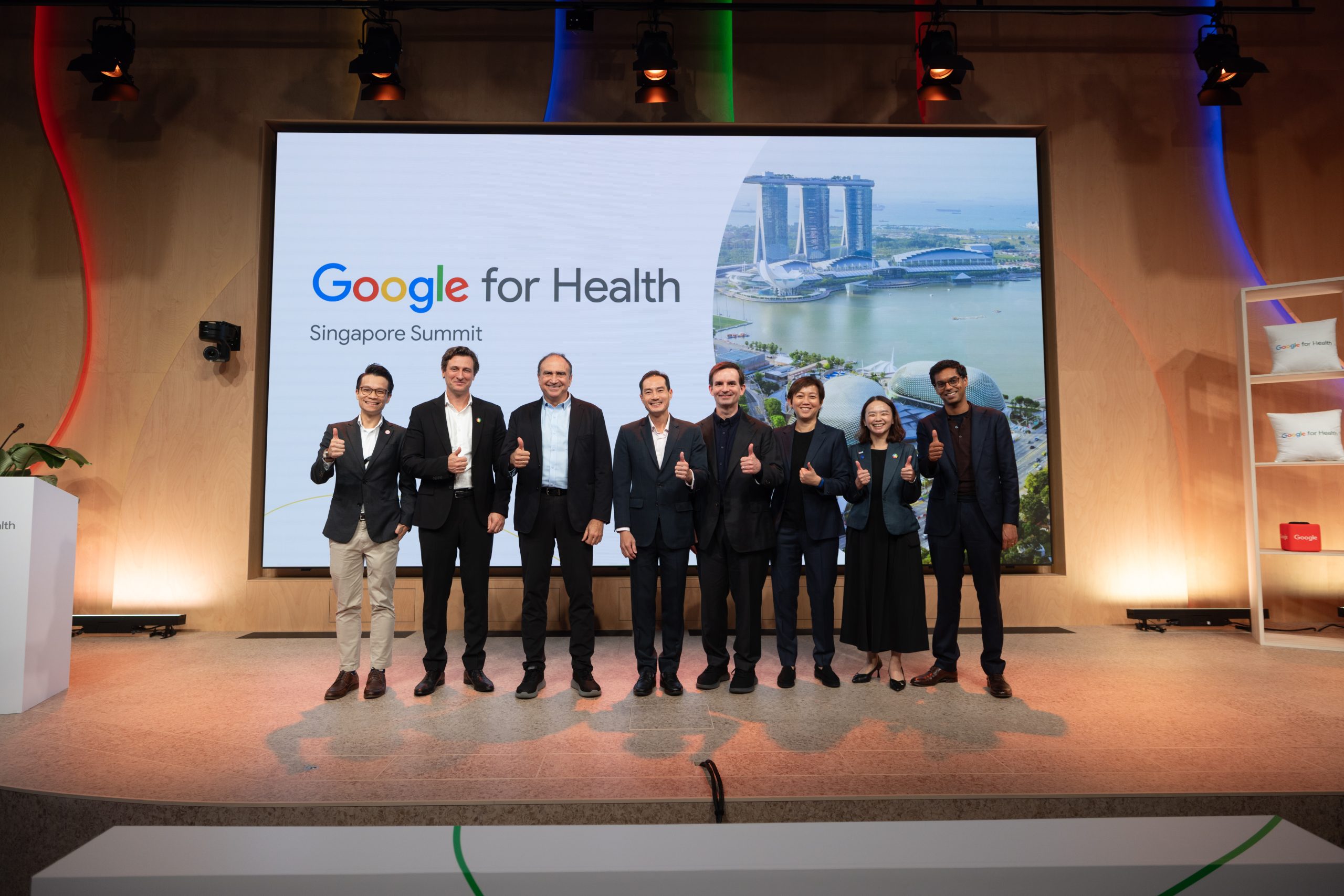
Google is expanding its healthcare AI partnerships in Singapore, with plans to evaluate an AI co-clinician, develop preventive health coaching and establish a local research hub.
An AI tool that helps doctors navigate medical evidence. A health coach that encourages residents to attend screening. Predictive models that could help healthcare teams identify communities needing support earlier.


These are among the initiatives Google announced at its inaugural Google for Health Summit in Singapore on 29 October, expanding its collaboration with the country’s healthcare and research institutions.
The new partnerships bring together Google DeepMind, Google Cloud, the National University Health System (NUHS) and NHG Health. Google is also establishing a research hub in Singapore, adding local scientists and software engineers to its global research network.
Together, the announcements outline a wider role for AI across healthcare: supporting decisions in the consultation room, strengthening prevention in the community and helping researchers develop the next generation of tools.
NUHS To Evaluate AI Support For Doctors with Co-Clinicians
For doctors, keeping up with medical evidence is an ongoing task. Clinical guidelines and research can inform decisions, but finding and interpreting relevant information takes time.
Google DeepMind is working with NUHS to initiate trusted tester evaluations of an AI co-clinician as a decision-support tool in routine outpatient practice.
The tool will help doctors with clinical queries by synthesising information from existing guidelines and medical literature. Independent clinicians will assess its responses against established clinical criteria, examining accuracy, safety and usefulness.
Speaking at the summit, Dr Alan Karthikesalingam, Principal Scientist and Research Director at Google DeepMind, said translating AI’s potential into practical care requires developing tools around clinicians’ needs and integrating them into the doctor–patient relationship. He pointed to blinded evaluations involving hundreds of physicians, which he said showed a preference for responses from AI systems carefully grounded in scientific evidence.
“So an immediate focus, therefore, for us, has now been to bring these powerful systems and research carefully how they can actually meet the needs of those clinicians.”
The NUHS evaluation will examine how useful this support could be in routine outpatient practice. Google’s longer-term ambition is to explore new models of care under clinician oversight, but the immediate task is more specific: establishing whether the AI can provide reliable, relevant support for the questions doctors encounter in everyday care.
Read Also: Can AI Give Doctors Back Time To Care?
NHG Health Targets Screening Uptake And Frailty Prevention
Beyond the consultation room, Google Cloud and NHG Health are working on a Population Health Digital Transformation Programme to help identify health risks earlier and support residents in taking preventive action.
The programme connects two components: a predictive model that identifies risks across population groups, and an AI-enabled Health Coach on NHG HealthBot that provides contextual lifestyle advice and preventive guidance.
The predictive model will combine NHG Health’s de-identified population health database with Google’s geospatial tools and aggregated, non-personally identifiable signals, including climate, environmental, search and behavioural information. These insights will help forecast risks such as chronic diseases and frailty across smaller population groups.
The Health Coach, powered by Google’s Gemini Enterprise for Customer Experience platform, will turn those insights into more personalised engagement. Its initial priorities are screening uptake and frailty prevention, with a longer-term aspiration to integrate with national health platforms.
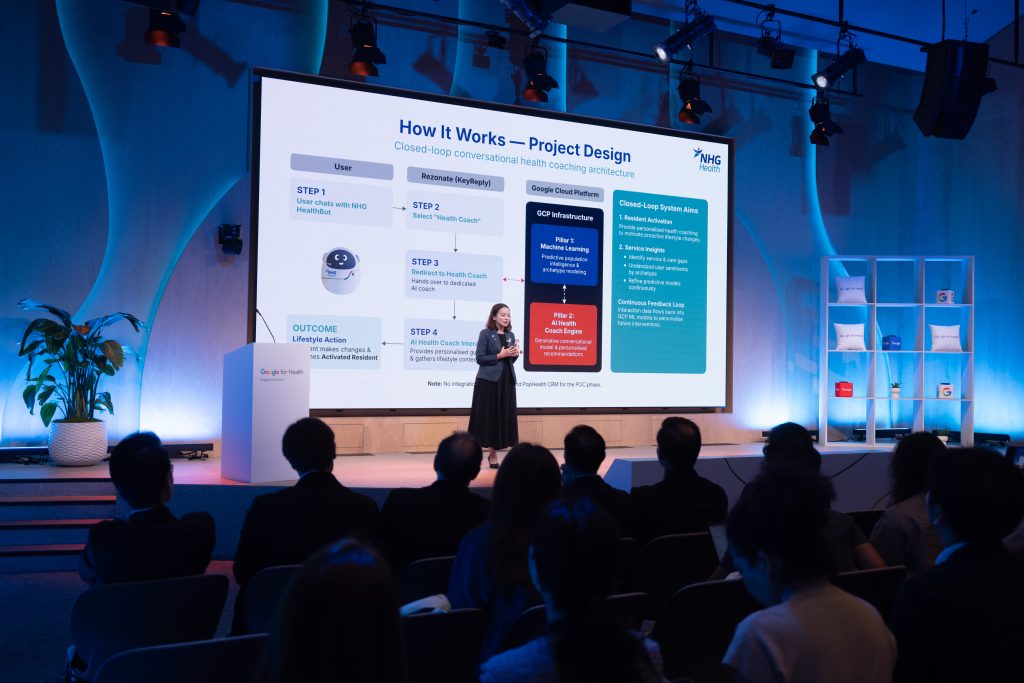
Speaking at the summit, Ong Jing Fang, Chief Operating Officer of NHG Population Health, explained that identifying residents who could benefit from screening is only part of the task. Healthcare teams also need to understand why someone has not attended, whether because of competing responsibilities, concerns or other barriers.
Conversations with the Health Coach could help uncover that context and shape more relevant follow-up. For frailty prevention, the proposed approach could extend outreach to seniors, offer appropriate guidance and direct those needing further assessment to community healthcare teams.
“For NHG Health and Google, our aspiration is simple,” she said. “Meet people where they are, make every contact count. Use intelligence to identify them to make a difference. Those conversations understand the person behind the data and use technology to extend to reach our human care, because together, we can add years of healthy life.”
The programme aims to connect those conversations with action. Anonymised interactions will help refine the predictive models over time, creating a feedback loop between identifying needs, engaging residents and improving support. The practical goal is to help healthcare teams reach people earlier, with guidance they can act on in their everyday lives.
Read Also: Are We Doing Enough To Keep Singapore’s Seniors Moving?
Google To Establish A Singapore Research Hub
Alongside the healthcare partnerships, Google Research is establishing a local team focused on making advanced AI more efficient and supporting scientific talent.
The hub will work with Google’s global teams and collaborate with institutions including the National University of Singapore and Nanyang Technological University.
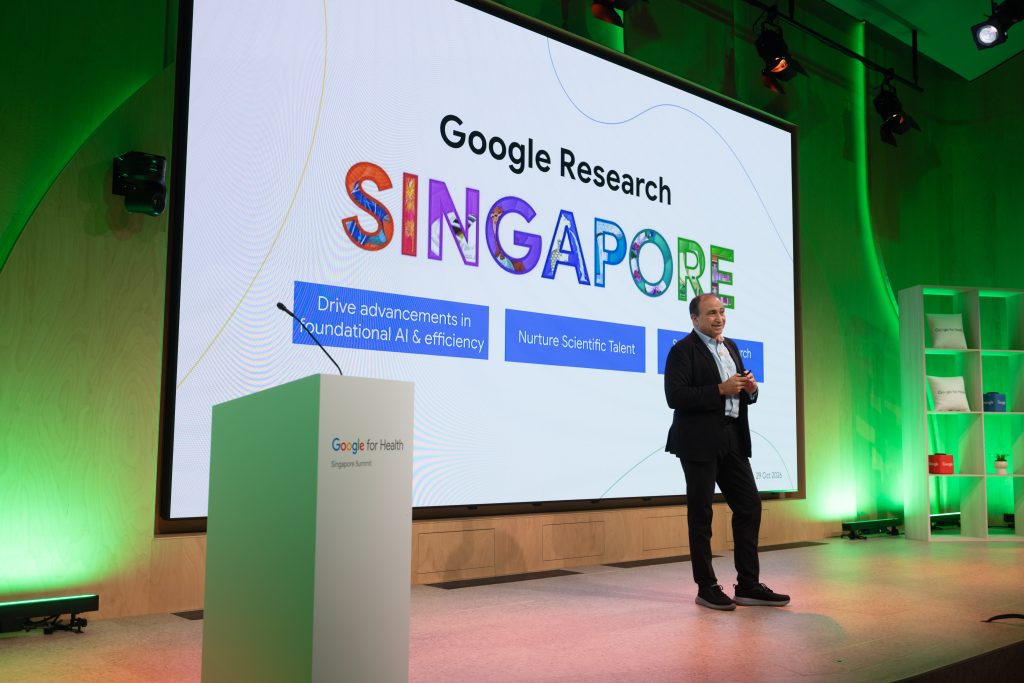
“Singapore brings together world-class research institutions, a forward-looking national AI strategy and a healthcare system ready to put AI to work,” said Dr Yossi Matias, Vice President, Google and General Manager, Google Research.
Google also plans to expand its existing health research in Singapore, including the use of open models such as MedGemma for developing healthcare applications. These models provide a starting point for developers to build tools that understand medical text and images, with further validation needed for their intended use.
These models provide a foundation for the local healthcare ecosystem to develop secure, customised applications while retaining control over its data. The aim is to support tools adapted to local healthcare needs, alongside the research and expertise required to develop them.
Beyond clinical care, Google.org and Google DeepMind have joined the Philanthropy Asia Alliance’s Health for Human Potential Coalition with a $7 million funding contribution. As part of this commitment, $1 million from the alliance will support PathGen, a public health intelligence platform developed through the Asia Pathogen Genomics Initiative.
Google also announced the launch of the Google AI for Healthcare Professionals Certificate, an online programme focused on using AI for administrative tasks and continuous learning.
Turning These Plans Into Better Care for Singaporeans
The announcements build on the National AI Partnership established with the Singapore Government in May. Their success, however, will depend on what happens when the technology meets everyday healthcare practice.
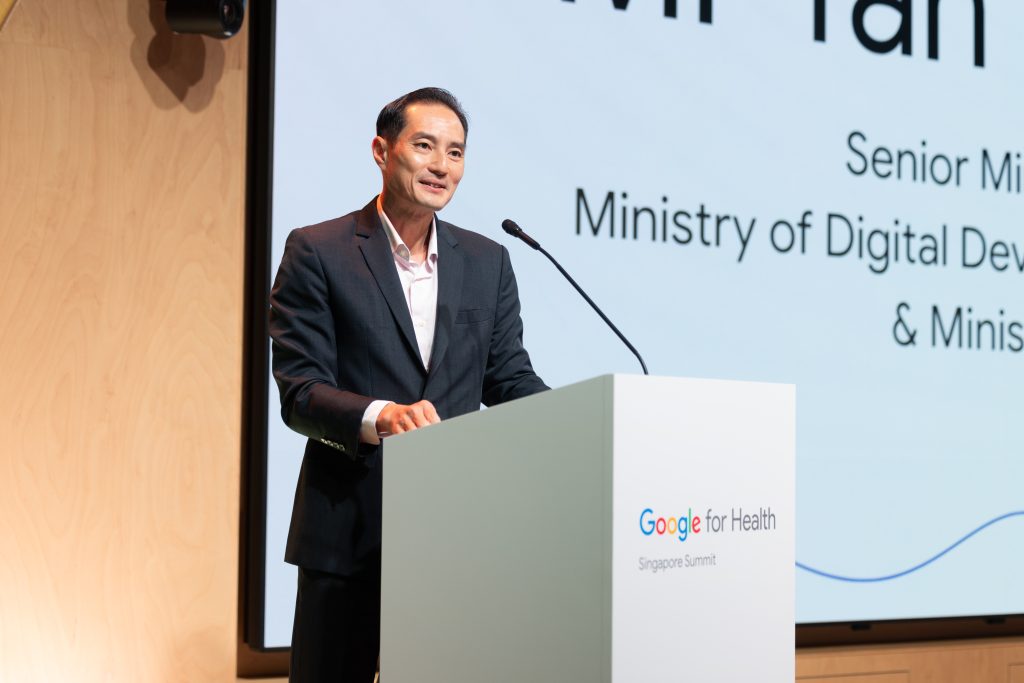
At the summit, Mr Tan Kiat How, Senior Minister of State for Digital Development and Information and for Health, highlighted the need to connect AI capabilities with clinical workflows, professional judgement and evidence of value.
In his address, he linked the announcements across scientific discovery, clinical care and population health, emphasising that increasingly capable AI must be connected to a health system able to use it effectively.
“A powerful model does not automatically produce better health,” he said.
Singapore’s connected health information, digital infrastructure and healthcare institutions provide great foundations for the collaborative work with Google – but equally important are the professionals who can judge when to trust AI, when to question it and when to override it.
For Singapore, the ambition is to develop and evaluate these approaches within its healthcare system, then establish which lessons could be applied in other parts of the world. The measure of success, he said, should be improvements that patients, caregivers and healthcare professionals can recognise: earlier intervention, more personalised support, smoother care journeys and better tools for those delivering care.
Photos courtesy of Google Singapore.

