

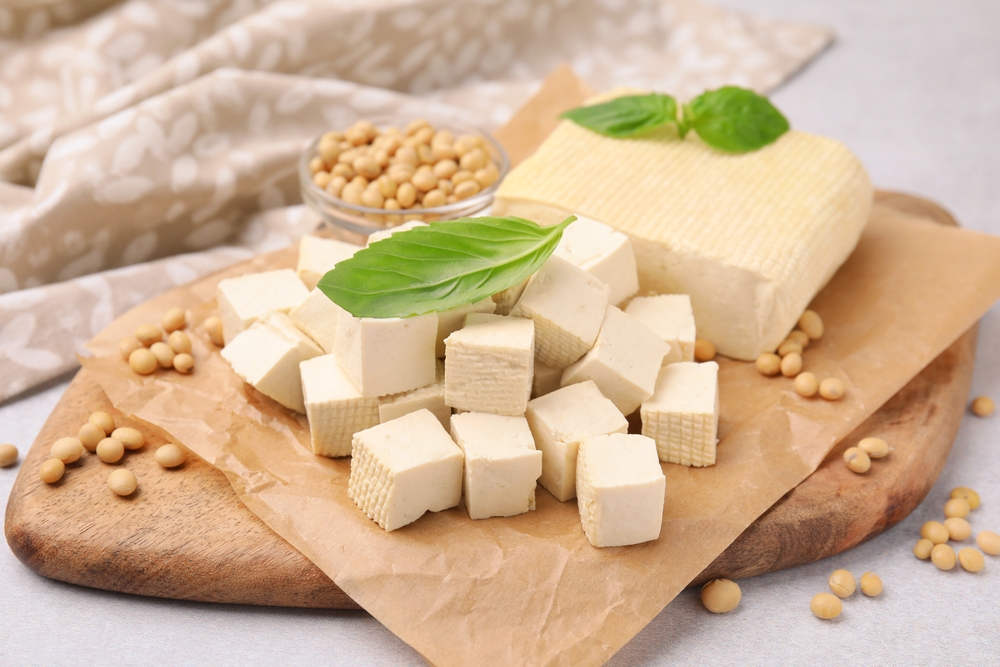
A Cambridge scoring system rated tofu the best of 20 high-protein foods for health, cost and the planet. Here is what that means for the tofu on your plate in Singapore and across Asia.
- A University of Cambridge researcher scored 20 high-protein foods on health, affordability, availability and environmental impact. Tofu scored highest (36 of 40 points); cheddar cheese scored lowest (13).
- The score compares foods per 100 g of protein. It does not test whether eating tofu makes people healthier.
- Singapore’s HealthHub already counts tofu as a complete plant protein. How it is cooked, and what it replaces, still matters.
For many families in Singapore, tofu is not a health trend. It is the soft beancurd in a bowl of yong tau foo, the tau kwa beside the rice at an economy rice stall and the silken cubes in miso soup. So it may come as a quiet surprise that a scientist in Cambridge has just named it the best protein source of all.
In a perspective paper published in Frontiers in Sustainable Food Systems in July 2026, Dr Chris Macdonald of the University of Cambridge introduced the BPI Score, a system that rates high-protein foods on both human health and environmental impact.
Of the 20 foods he assessed, tofu came first with 36 out of 40 points. Cheddar cheese came last with 13.
Does that make tofu a “superfood”?
How Did Tofu Beat Beef, Salmon and Eggs?
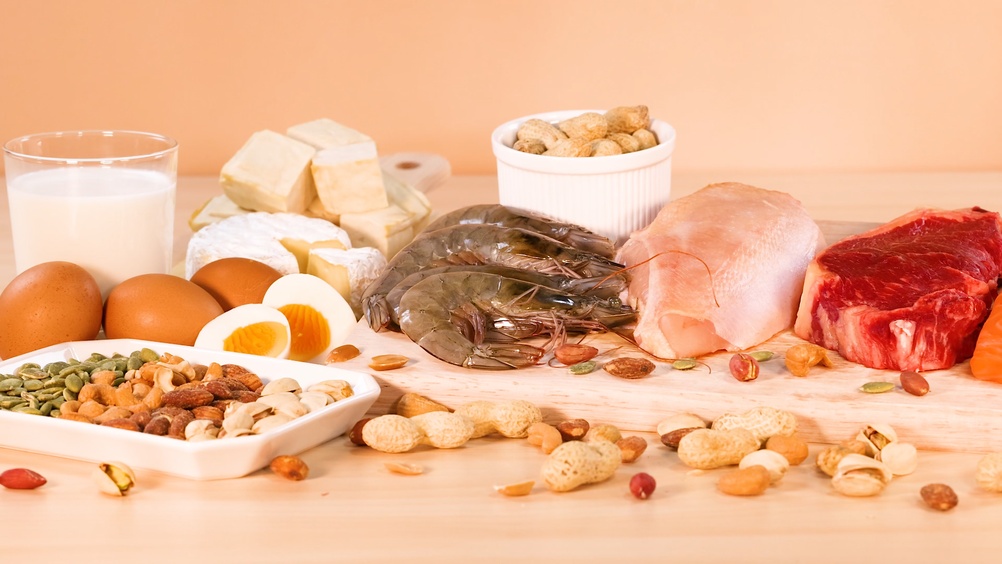
Tofu “won” because it scored at or near the top in every area the BPI Score measures, rather than excelling in only one, as many foods do when judged on a single measure. The score is named after the Better Protein Institute, the research organisation Macdonald founded to study protein sources.
The score has two halves.
- The Planet Score, worth up to 16 points, uses published data on greenhouse gas emissions, water pollution, land use and freshwater use.
- The People Score, worth up to 24 points, looks at sodium, saturated fat and cholesterol, whether the food is a complete protein, and how affordable and widely available it is.
Every food was compared per 100 g of protein rather than per serving, which is an important distinction because the amount of food needed to supply that protein varies widely.
On that basis, producing 100 g of protein from tofu was linked to 0.61 kg of greenhouse gas emissions, compared with 64.19 kg for beef. Tofu also needed about 2 square metres of land, against about 211 square metres for beef.
Tofu earned the maximum 16 Planet points as well as the highest People Score, with 20 points. The four highest-scoring foods overall (tofu, chia seeds, beans and quinoa) were all plant-based. The four lowest (mozzarella, lamb, beef and cheddar) were all animal-based.
A “Complete” Protein
What does it mean for a protein to be “complete”?
A complete protein contains all nine essential amino acids, the building blocks of protein that the body cannot make on its own and must get from food. In the BPI Score, tofu received full marks for this, while most other plant foods did not. Every animal-based food on the list was complete.
Why does that matter? When we eat protein, the body breaks it down into amino acids and uses them to build the proteins it needs to digest food, grow and repair tissue. Several of the essential amino acids also have specialised jobs of their own:
- Leucine is the strongest known trigger for muscle protein synthesis, the process by which the body builds and repairs muscle.
- Tryptophan is the only raw material the body can use to make serotonin, a brain chemical involved in mood, and it is also used to make melatonin, the hormone that regulates sleep.
- Phenylalanine can be turned into tyrosine, which the body uses to make thyroid hormones, adrenaline and the skin pigment melanin.
Because the body cannot make these amino acids itself, running short of even one can hold back the building of new proteins. This matters more with age. Research on older adults shows that ageing muscle responds less strongly to essential amino acids, which is one reason My Healthy Plate advises adults aged 50 and above to aim for three servings of protein a day to slow the loss of muscle mass.
That does not mean every meal must contain a complete protein. Macdonald himself notes that eating a variety of incomplete plant proteins can still supply enough of all nine essential amino acids. What tofu offers is convenience: all nine in a single, familiar food.
Study Limitations
The BPI Score is a way of comparing foods, not evidence that eating tofu prevents disease, because the paper did not follow people over time or measure health outcomes such as heart attacks or cancer.
Additionally, affordability was based on prices at a single UK supermarket chain, and food availability was also assumed. Of course, costs and access can look very different in other supermarket chains and different regions. A food’s position could therefore look different in Singapore or Kuala Lumpur.
Furthermore, the simple zero-to-four grading also sorts foods into broad bands, which can hide how large or small the real gaps between them are.
Luckily, Asians Love Their Soy
Studies in Asian populations give a more mixed but broadly reassuring picture. The Singapore Chinese Health Study followed 63,257 Chinese adults aged 45 to 74 in Singapore, whose typical soy intake was equal to about 87 g of tofu a day.
Soy intake was not significantly associated with the risk of dying from cardiovascular disease – and soya appears to even have a small benefit on LDL cholesterol and triglycerides, a type of fat in the blood.
Breast cancer is the concern many readers raise, because soy contains isoflavones, plant compounds with a structure similar to the hormone oestrogen. According to the American Institute for Cancer Research, population studies have found no increased risk for breast cancer survivors who eat soy foods, and limited evidence points to better survival among women who eat moderate amounts. That evidence concerns soy foods, not concentrated isoflavone supplements.
Be Careful How Your Soy is Prepared
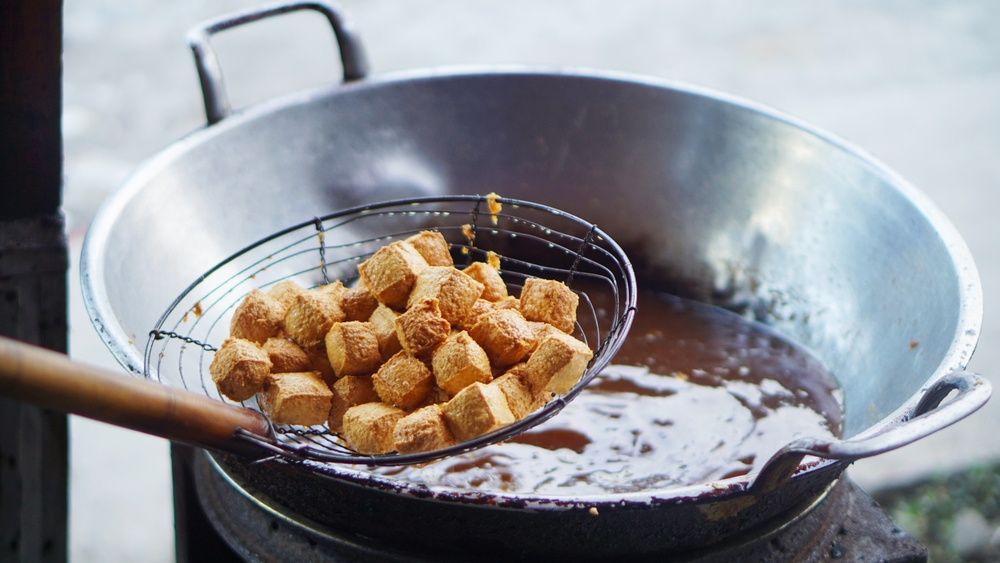
The BPI Score of the study assessed tofu as an ingredient, not a plate of deep-fried tau pok or hotplate tofu in thick gravy. Consider steaming, boiling or stir-frying with less oil so you can consume your healthy protein while keeping sodium, fat and sugar manageable.
So, Is Tofu a Superfood?
If any protein has earned the title, the BPI Score suggests it might be tofu. Few foods manage to be kind to the body, the wallet and the planet all at once, and the humble beancurd came out on top on all three.
For many of us in Asia, though, this may not really feel like a breakthrough. Our grandmothers were ladling tofu into soups and stir-fries long before it was ranked against steak and salmon in a Cambridge study. It seems the treasure was sitting in our pantry all along
Of course, no single food can carry a whole diet, however impressive its scorecard. Good health still comes from variety: plenty of vegetables, wholegrains and a mix of protein sources across the week.
But if you are looking for an easy place to start, try swapping one of your usual protein servings for tofu. Add silken tofu to a healthy Asian breakfast, pick the tau kwa at the economy rice stall or let steamed tofu stand in for meat at dinner. Your body, your budget and the planet may all be quietly grateful.
Frequently Asked Questions
Is Tofu Healthier Than Chicken?
Tofu ranked above chicken breast in the BPI Score, but that score combines health with cost and environmental measures. How the food is cooked, and the rest of the meal, other aspects of your diet and health should be considered alongside a numerical ranking of the two protein sources.
How Much Tofu Can I Eat in a Day?
Generally speaking, half a package (170 g) of soft beancurd counts as one serving of protein, and it is advisable for adults to have two to three protein servings a day. The American Institute for Cancer Research describes one to two servings of soy foods a day as moderate. If you have a medical condition, check with your doctor or dietitian.
Can I Eat Tofu After Breast Cancer?
Population studies have found no increased risk for breast cancer survivors who eat soy foods. This applies to foods such as tofu, not to isoflavone supplements. Speak to your cancer care team about your own diet.
Is Fried Tofu a Healthy Choice?
Deep-frying adds fat, so it is recommended to prepare the tofu via steaming, boiling or stir-frying with less oil.
Does Tofu Contain All the Essential Amino Acids?
Yes. Tofu is a complete protein, meaning it contains all nine essential amino acids. Most other plant proteins in the BPI Score were not complete.
References
- Macdonald C (2026). What are the best sources of protein? Introducing the BPI Score. Front. Sustain. Food Syst. 10:1677796. https://doi.org/10.3389/fsufs.2026.1677796 (perspective paper)
- HealthHub: Soya, the unique plant protein. https://www.healthhub.sg/live-healthy/soya_unique_plant_protein
- HealthHub: My Healthy Plate. https://www.healthhub.sg/programmes/nutrition-hub/eat-more
- Talaei M et al. (2014). Dietary soy intake is not associated with risk of cardiovascular disease mortality in Singapore Chinese adults. J Nutr 144(6):921–8. https://pubmed.ncbi.nlm.nih.gov/24699802/ (checked from the abstract)
- American Institute for Cancer Research: Soy. https://www.aicr.org/cancer-prevention/food-facts/soy/

