

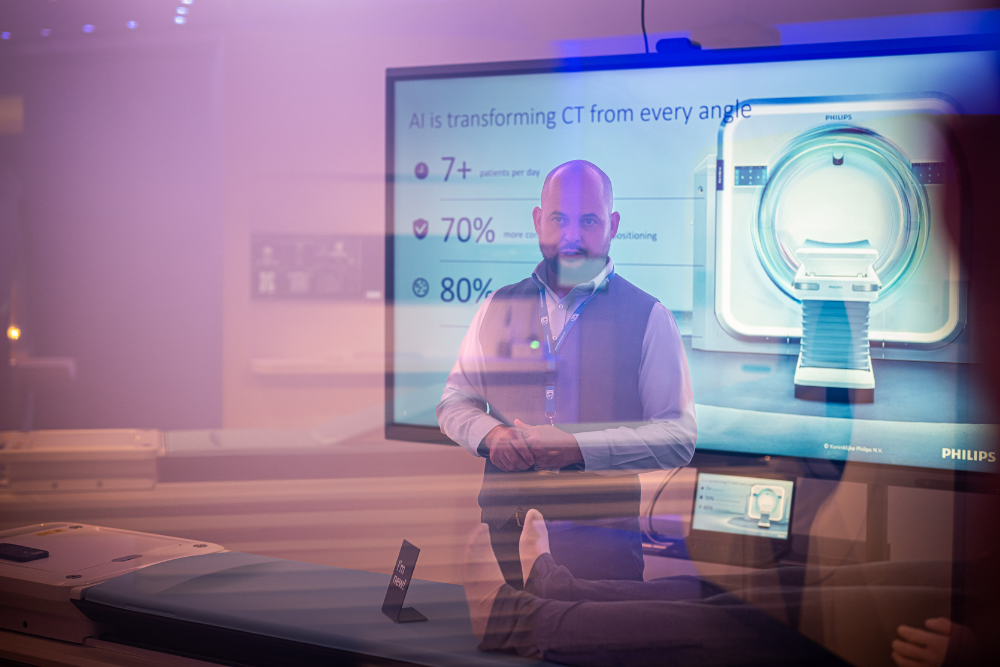
Artificial intelligence is already reshaping hospitals around the world, not by replacing doctors, but by helping them work faster, smarter and with more time for patients. Medical Channel Asia visited Philips’ Innovation Campus in Eindhoven to see what this transformation looks like behind the scenes.
Most conversations about artificial intelligence in healthcare begin with a familiar question: will AI replace doctors?


Walking through Philips’ Innovation Campus in Eindhoven, it quickly became clear that this is the wrong question.
Instead of replacing clinicians, today’s healthcare AI is taking on a different role. It plans MRI scans before patients enter the scanner. It highlights subtle abnormalities that deserve a second look, analyses millions of heartbeats to identify the few that matter. AI even helps doctors navigate catheters inside a beating heart and guides healthcare workers performing obstetric ultrasounds in remote communities.
Patients may never realise AI played a role in their care, and that is the point.
Medical Channel Asia visited Eindhoven to explore how one company is embedding artificial intelligence across the patient journey. While the demonstrations showcased different technologies, they all pointed towards the same shift: AI is becoming less about replacing clinical expertise and more about giving healthcare professionals something they are running out of – time, confidence and capacity.
Healthcare Has Become Data-Rich, Not People-Rich
Healthcare has never generated more information.
Every scan and every measurement in the electronic medical record adds another layer of data for clinicians to interpret. Advances in medical technology have given doctors unprecedented visibility into the human body, but they have also created an enormous volume of information that must be reviewed, prioritised and acted upon.
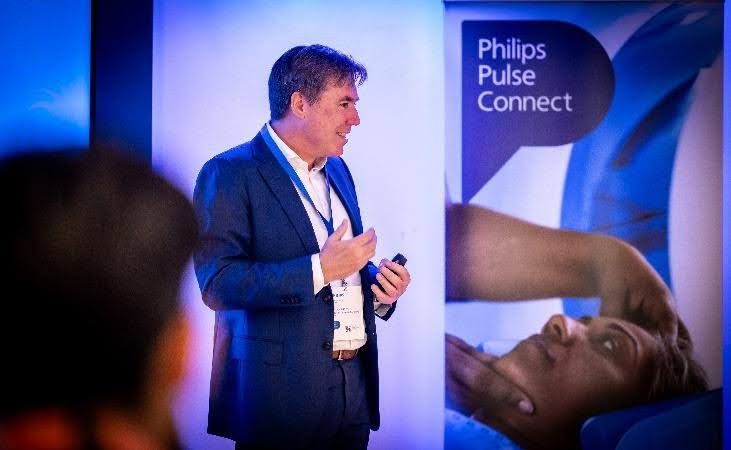
With so much data, Patrick Mans, Global Head of Data and AI at Philips comments “The next challenge is helping clinicians make sense of it.”
“Clinicians need all of that information presented in a way that allows them to make decisions immediately.”
At the same time, healthcare systems are facing mounting pressure. Populations are ageing, chronic diseases are becoming more common, and workforce shortages continue to strain hospitals around the world. According to the World Health Organization, the global shortage of healthcare workers is projected to reach around 11 million by 2030, with low- and lower-middle-income countries expected to be hardest hit.
For clinicians, the challenge is no longer simply gathering information. It is making sense of that information quickly enough to deliver timely, high-quality care.
The Role of AI
Rather than making diagnoses independently, many of today’s AI applications focus on reducing the cognitive and administrative burden on clinicians. They help organise information, automate repetitive tasks, surface findings that deserve closer attention and support decision-making in increasingly complex clinical environments.
That shift is already being reflected in hospitals adopting AI-enabled tools.
The Future Health Index 2026, commissioned by Philips, surveyed more than 2,000 healthcare professionals and over 20,000 patients across ten countries. Among clinicians using AI in their practice, 71% reported improved workflow efficiency, while half said they were able to care for more patients, seeing a median of eight additional patients each week. Nearly two-thirds also reported greater confidence in clinical decision-making, and 64% said AI had reduced the time they spent on routine administrative work.
Together, the findings suggest that AI’s greatest contribution may not be replacing clinicians, but helping them navigate a healthcare system where both patient demand and clinical complexity continue to grow.
AI Is Solving Different Problems Across the Hospital
Although the demonstrations at Philips’ Innovation Campus spanned everything from radiology and cardiology to maternal health, they shared a common goal: helping clinicians solve practical problems they encounter every day.
Lack of Time
Bert van Meurs, Chief Business Leader of Precision Diagnosis at Philips, believes the challenge has shifted beyond diagnosis: “The challenge is no longer finding disease. The challenge is: How do we treat more patients, expand access, and democratize expertise?”
Cardiac MRI is considered one of the most comprehensive ways to assess the heart, but it is also one of the most technically demanding imaging examinations to perform. Preparing a scan often requires dozens of manual steps, with operators manually planning imaging planes and adjusting scan parameters.
The company is working towards reducing a conventional cardiac MRI examination from around one hour to just 15 minutes, with AI helping to automate patient positioning, image planning, scan acquisition and reporting. During the demonstration, Gwenael Herigault, Global MR Clinical Leader at Philips showed how AI could reduce cardiac planning from 130 clicks to just three, while enabling 80% of examinations to be planned with a single click.
Shorter examinations are not simply about convenience. By reducing scan times and simplifying complex workflows, hospitals can potentially image more patients each day while making cardiac MRI more accessible beyond highly specialised centres.
Information Overload
Patrick Mans, Global Head of Data and AI at Philips, summed up the challenge: “Simply giving clinicians access to enormous amounts of information isn’t enough. They need meaningful insights.”
In CT imaging, AI assists with image reconstruction, patient positioning and anatomical recognition, allowing clinicians to extract richer diagnostic information while reducing repetitive manual work. For example, AI can help to process scans, label and present the images exactly as the radiologist wants to see them for a faster diagnosis. The radiologist no longer has to scroll through the images every single time just to count the ribs manually.
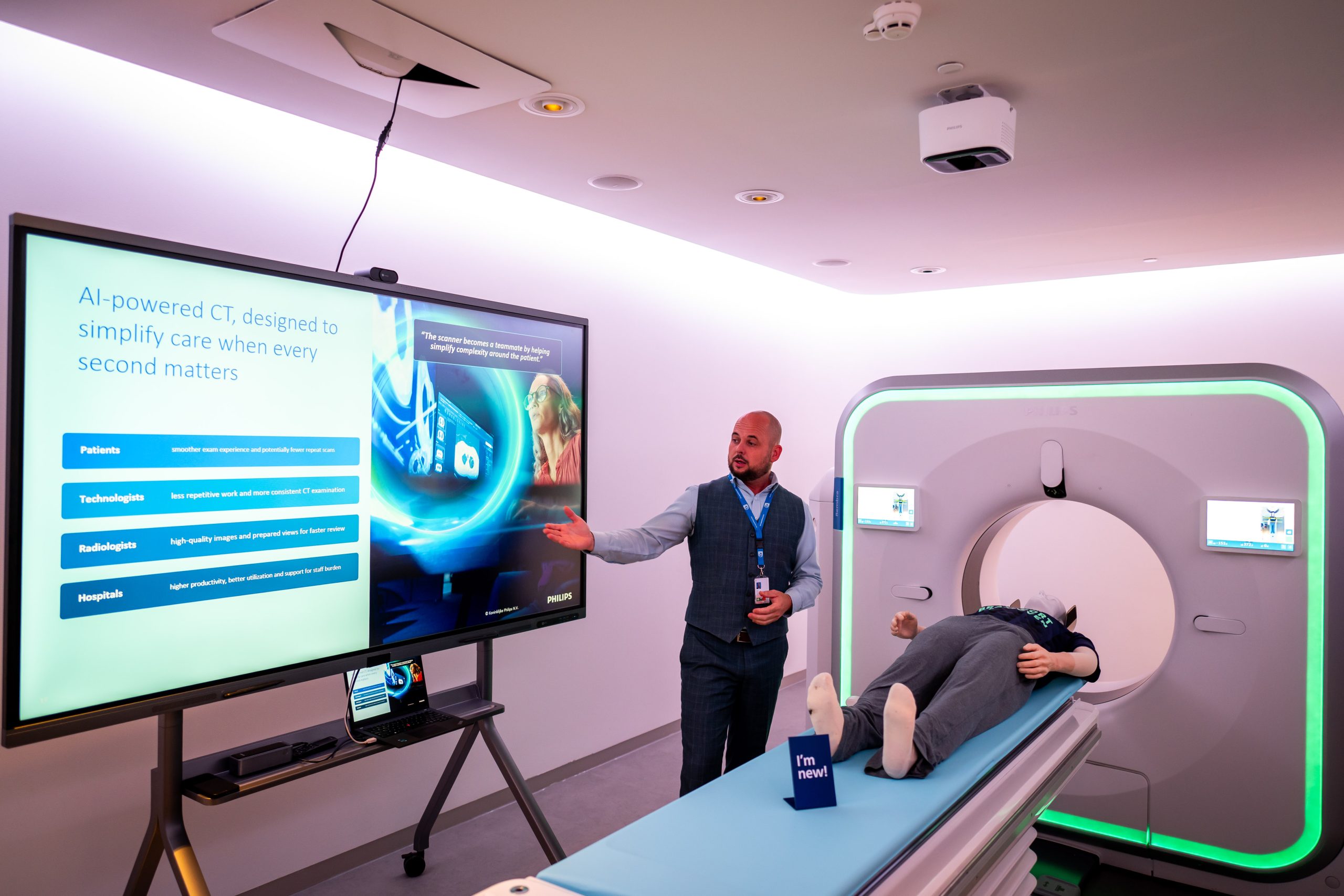
Demonstrating the CT workflow, Bas Stam, Philips Business Development Manager CT/AMI, pointed to one of its simplest advantages. “That saves time…It eliminates unnecessary manual work.”
During long-term ECG monitoring, AI analyses millions of heartbeats recorded over several days,
To illustrate the scale of the problem, Remmelt de Geus, Philips Modality Sales Specialist AM&D, offered a simple analogy: “Imagine filling this entire room with tiny ECG recordings. That’s how much data we collect.”
“A human simply cannot review all of that efficiently.”
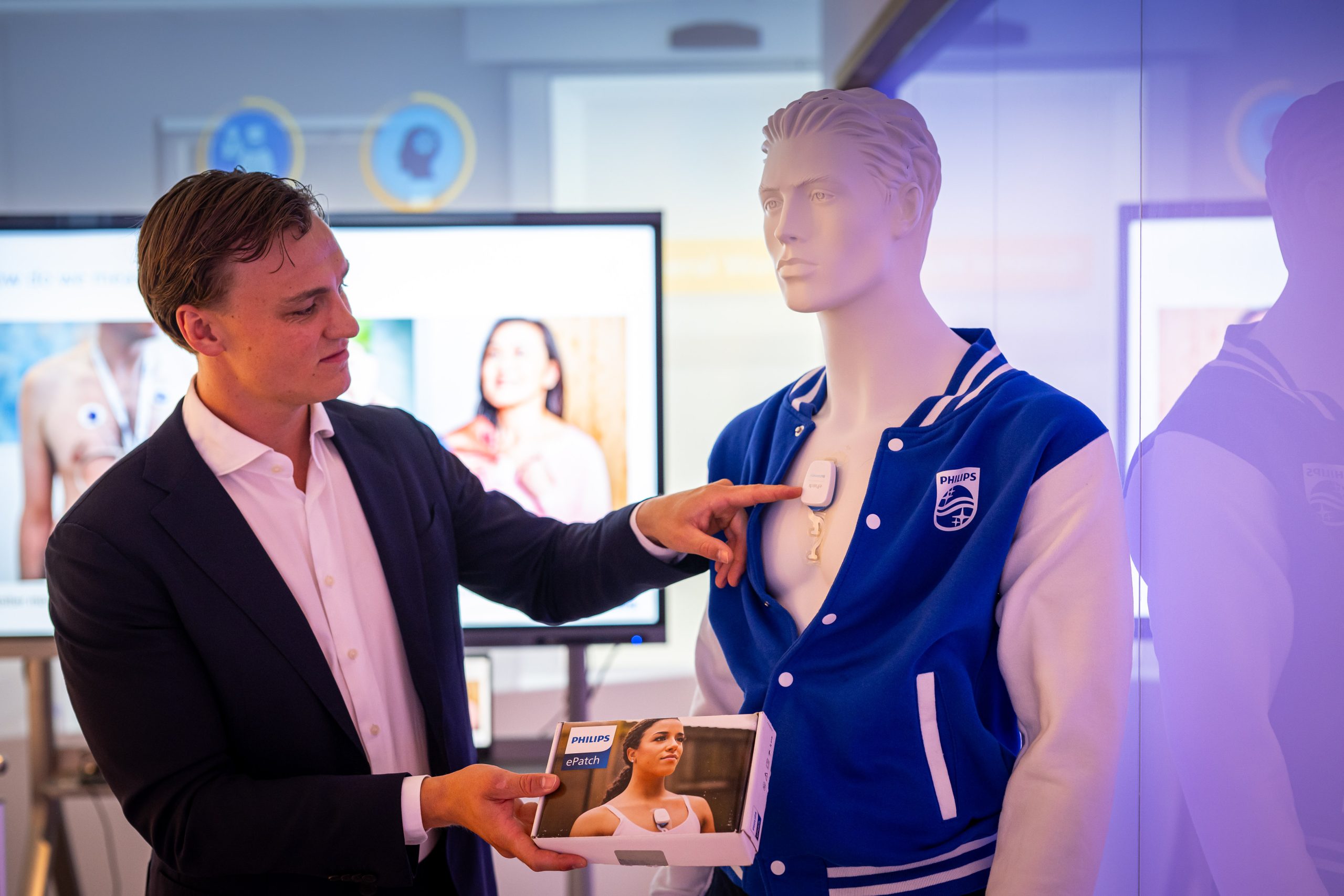
With the power of AI, Philips built a platform to analyse every heartbeat, only highlighting the clinically significant events for the physician’s review.
Rather than replacing specialist interpretation, these tools help clinicians focus their attention where it matters most.
Access
Before Dr Carla Goulart Peron became Chief Medical Officer at Philips, she was a young doctor learning how to perform obstetric ultrasound.
“There was an ultrasound machine available,” Dr Carla recalled. “The problem was that I didn’t yet know how to use it properly.”
Around half of the world’s population still lacks adequate access to obstetric ultrasound. In many low- and middle-income countries, the problem is not only the lack of availability of ultrasound machines, it is also the shortage of trained professionals who know how to perform and interpret the examination.
To tackle this, Philips demonstrated an AI-guided handheld ultrasound system designed specifically for frontline healthcare workers such as nurses and midwives. Instead of requiring years of ultrasound training, the software guides users through the examination step by step using real-time visual feedback, prompting them to adjust the probe whenever it detects incorrect positioning.
Once the scan is complete, the AI automatically analyses the acquired data and generates key screening information, allowing healthcare workers to determine whether the pregnancy appears low-risk or should be referred for a comprehensive diagnostic ultrasound.
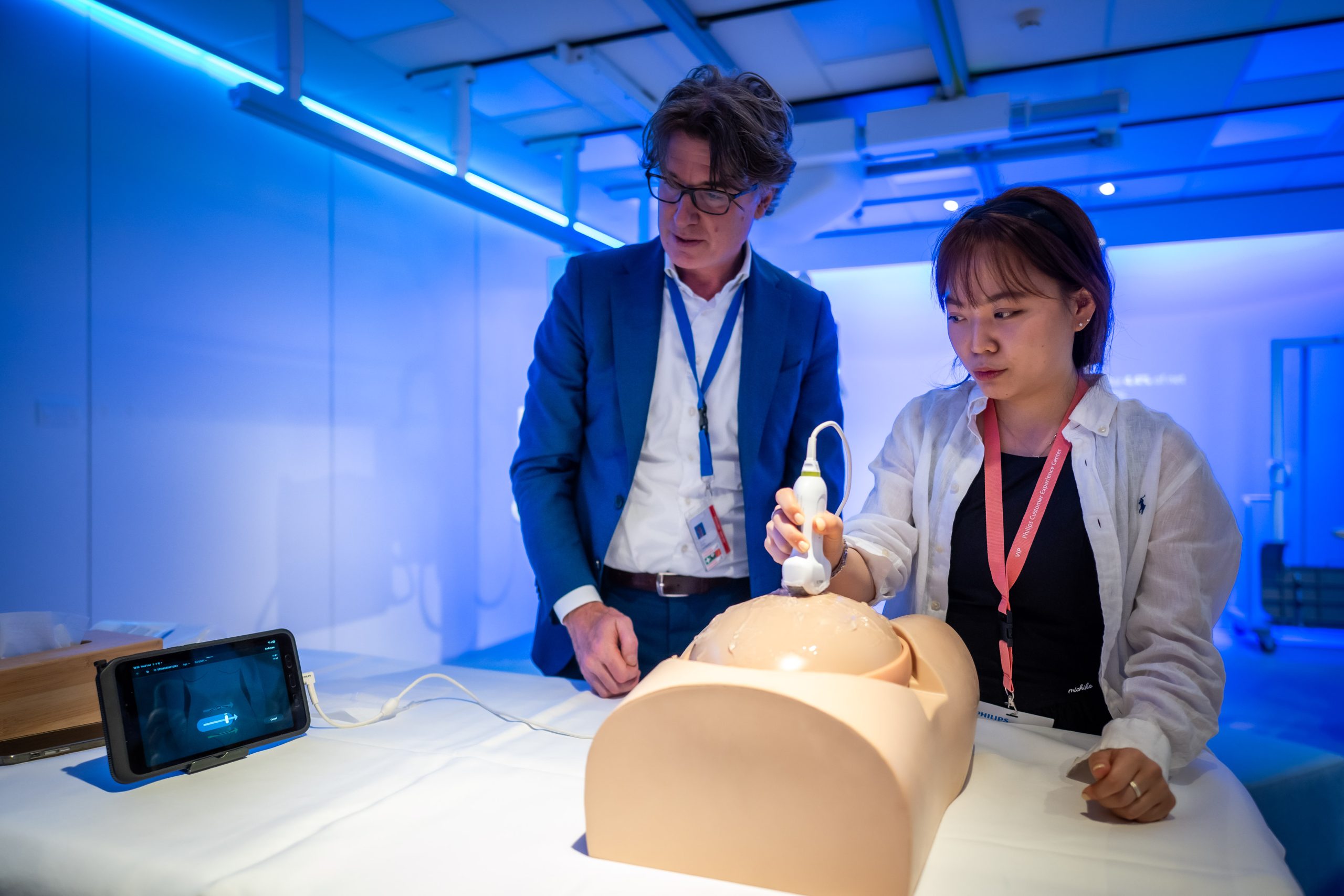
As he demonstrated the system, Jeroen Maas, Philips Director of Access to Care Technology & Partnerships, explained: “Through AI-guided workflow, someone…with no ultrasound training and no clinical background…can perform a reliable pregnancy screening examination.”
Confidence in Complex Procedures
Some of the most exciting applications of AI are found in the operating room.
Repairing a leaking heart valve through a minimally invasive catheter procedure is one of cardiology’s most technically demanding interventions. Working inside a beating heart, clinicians rely entirely on live X-ray and ultrasound to guide every movement.
As Niels Melman, Senior Director of Product Management Clinical Suites at Philips, explained, “You can think of our imaging systems as the eyes of the clinical team.”
By continuously identifying the position and trajectory of the repair device, AI provides another layer of visual information that helps multidisciplinary teams navigate these complex procedures with greater confidence.
Read our full feature on how AI is helping clinicians navigate one of medicine’s most challenging procedures.
Building Trust in Healthcare AI
As AI becomes more deeply embedded into healthcare, one message remained consistent: AI is designed to support clinicians, not replace them.
In the autonomous cardiac MRI workflow, AI can automatically position the patient, plan imaging views and suggest scan parameters, but radiographers remain responsible for reviewing and approving the examination before it begins.
Similarly, during long-term ECG monitoring, AI may analyse millions of heartbeats and highlight recordings that warrant attention, but the final diagnosis still rests with the cardiologist reviewing those findings. Even during minimally invasive heart valve repair, AI provides guidance on the position and trajectory of the repair device, while every treatment decision remains firmly in the hands of the multidisciplinary heart team.
“One principle is absolutely fundamental to Philips. The human always remains in control.” Patrick emphasised.
Unlike consumer AI tools that can occasionally produce incorrect or fabricated responses, clinical AI is developed, validated and regulated for specific medical tasks.
The Future Health Index 2026 found that while clinicians are increasingly optimistic about AI, they also want greater oversight and education. Nine in ten healthcare professionals (90%) said it remains essential to keep a human involved in AI-assisted care, while 86% believe AI-generated outputs should always be reviewed by a clinician before being used in patient care.
As AI becomes more deeply embedded into healthcare, earning clinicians’ trust may prove just as important as improving the technology itself. The future of healthcare AI will not be determined solely by smarter algorithms, but by how well those tools fit into clinical workflows while preserving the judgement, accountability and expertise of the people using them.
The Biggest Change May Be Invisible to Patients
Rather than replacing clinicians, many of today’s AI applications focus on reducing repetitive work, improving consistency and helping healthcare teams navigate increasingly complex decisions.
The future of healthcare AI is not be about replacing clinicians at all. Instead, it is about removing the small but significant barriers that stand between clinicians and patients, and giving healthcare professionals back something they desperately need: more time, greater confidence and the capacity to care for more people.

