

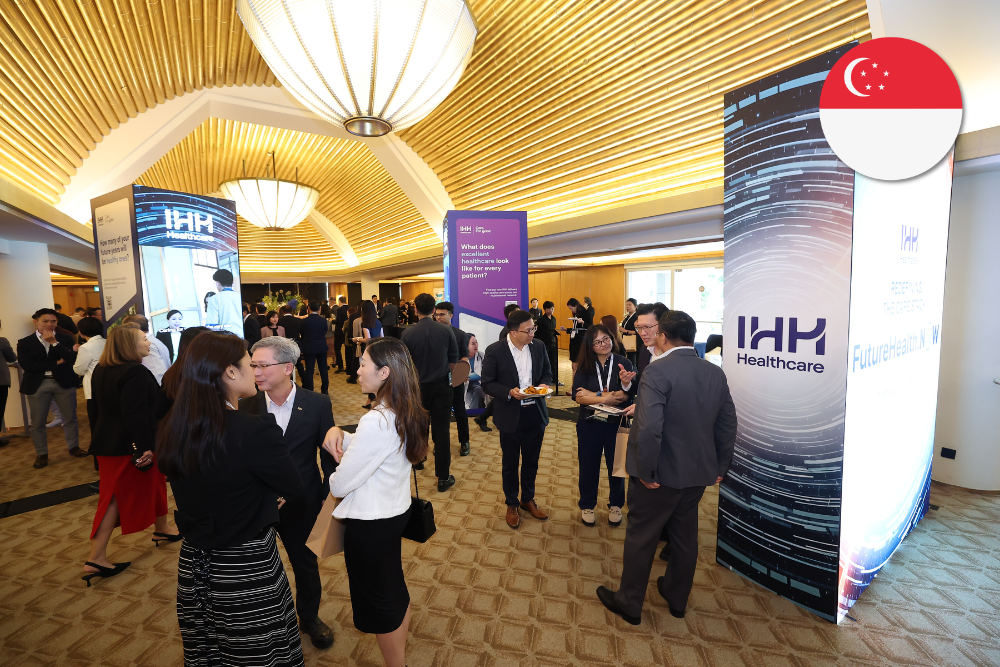
Artificial intelligence, precision medicine and preventive healthcare dominated discussions at IHH Healthcare’s FutureHealth.Now 2026. But perhaps the biggest shift was philosophical: moving healthcare beyond treating disease towards helping people stay healthy for longer.
For decades, healthcare has largely been judged by how well it treats illness.


Hospitals have become increasingly sophisticated at diagnosing disease, performing complex surgeries and delivering life-saving treatments. However, as populations continue to age, a new question is emerging. What if the future of healthcare is measured not by how well we treat disease? Instead, what if it is measured by how long we can help people avoid it altogether?
View this post on Instagram
That question sat at the heart of FutureHealth.Now 2026, IHH Healthcare’s flagship regional leadership conference held in Singapore. The conference brought together more than 300 leaders from healthcare, technology, government, finance and investment. In addition, the conference explored how artificial intelligence, precision medicine and new care models could help healthcare systems become more affordable, accessible and personalised.
This year, the theme is “Redefining the Care Stack”, which saw discussions ranged from the future of cancer care and AI implementation to healthcare affordability. Yet perhaps the clearest reflection of the conference’s central message came not from a panel discussion. Instead, it came from the launch of Healthspan – IHH Healthcare Singapore’s new clinically led longevity and wellness programme.
Looking Beyond Lifespan to Healthspan
Opening the launch of Healthspan, Dr Peter Chow, Chief Executive Officer of IHH Healthcare Singapore, reflected on how healthcare has evolved over the years.
“Healthcare systems around the world have been doing a great job at treating illness, repairing damage and helping people recover,” he said. “But today we know that Singaporeans and people across the world are living longer than ever. Longevity itself is not the sole goal.”
Instead, he argued, healthcare should aim to reduce a person’s “sick span”, the years spent living with illness or disability, and increase the number of healthy years people can enjoy.
“Our real aspiration is for people to enjoy more good years of life with the energy to pursue their passions, contribute meaningfully to society and spend good time with loved ones.”
That philosophy underpins Healthspan. Beyond detecting disease during routine health screening, the programme aims to help individuals understand how they are ageing. Moreover, it helps identify health risks earlier and makes personalised interventions before disease develops.
“It is a very simple yet very powerful shift in healthcare,” Dr Chow said. “From being primarily reactive to becoming increasingly preventive, predictive and personalised.”
Unlike many wellness programmes, Dr Chow emphasised that Healthspan will be clinically led, evidence-based and fully integrated within IHH Healthcare Singapore’s existing network of hospitals, specialists and primary care clinics.
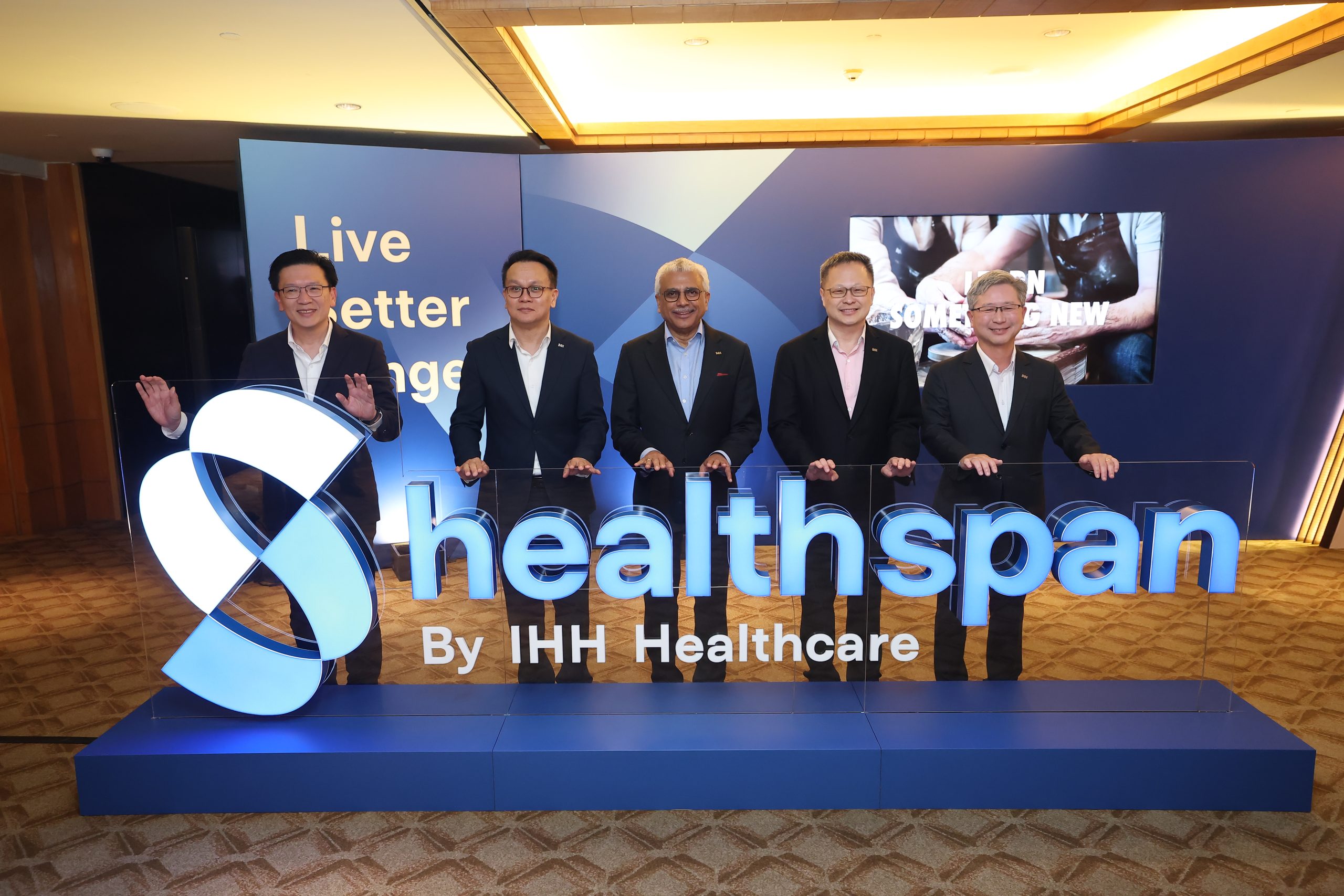
Following Dr Chow’s address, IHH Healthcare Singapore’s leadership gathered on stage to unveil the Healthspan installation, drawing applause from the audience as the programme was officially launched.
A Connected Journey Rather Than a One-off Health Screening
Healthspan is designed less as a single screening package and more as a continuous health management journey.
Individuals may begin through Parkway Shenton family medicine clinics before accessing specialist services across IHH Healthcare Singapore’s broader network when needed.
Preventive screening, advanced diagnostics, genomic health, specialist consultations, rehabilitation, nutrition, exercise medicine and ongoing monitoring are intended to function as one connected ecosystem. They are not intended as isolated services.
The programme is supported by IHH’s integrated network comprising four private hospitals, more than 50 clinics and over 1,500 multidisciplinary specialists. This allows patients to move seamlessly between preventive care, optimisation and clinical intervention as their needs evolve. Rather than offering generic advice after a health check, the goal is to continuously refine an individual’s health strategy as new information becomes available.
Can Your Biological Age Differ From Your Actual Age?
Among Healthspan’s first offerings is AgeQ™, a biological age assessment a biological age assessment developed by Singapore precision medicine company Lucence. This moves beyond simply counting birthdays.
While chronological age measures the number of years a person has lived, biological age attempts to estimate how well the body is functioning relative to that age.
The assessment analyses seven routine blood biomarkers using a proprietary longevity algorithm before comparing them against a database of more than 300,000 individuals. In this way, it generates an AgeQ score.
For an Asian audience, this is particularly notable.
Much of the research underpinning longevity and biological ageing has historically relied on predominantly Western populations. However, AgeQ’s reference database provides a more regionally relevant benchmark for biological ageing.
Rather than diagnosing disease, the assessment is designed to identify subtle patterns that may indicate accelerated ageing or increased future health risks. Therefore, interventions can begin earlier.
Dr Chow described the programme as helping people “turn insight into action” through advanced diagnostics, biomarker analysis, physician interpretation and personalised recommendations.
Prevention, AI and Precision Medicine point in the same direction
The launch of Healthspan reflected many of the themes repeatedly raised throughout FutureHealth.Now.
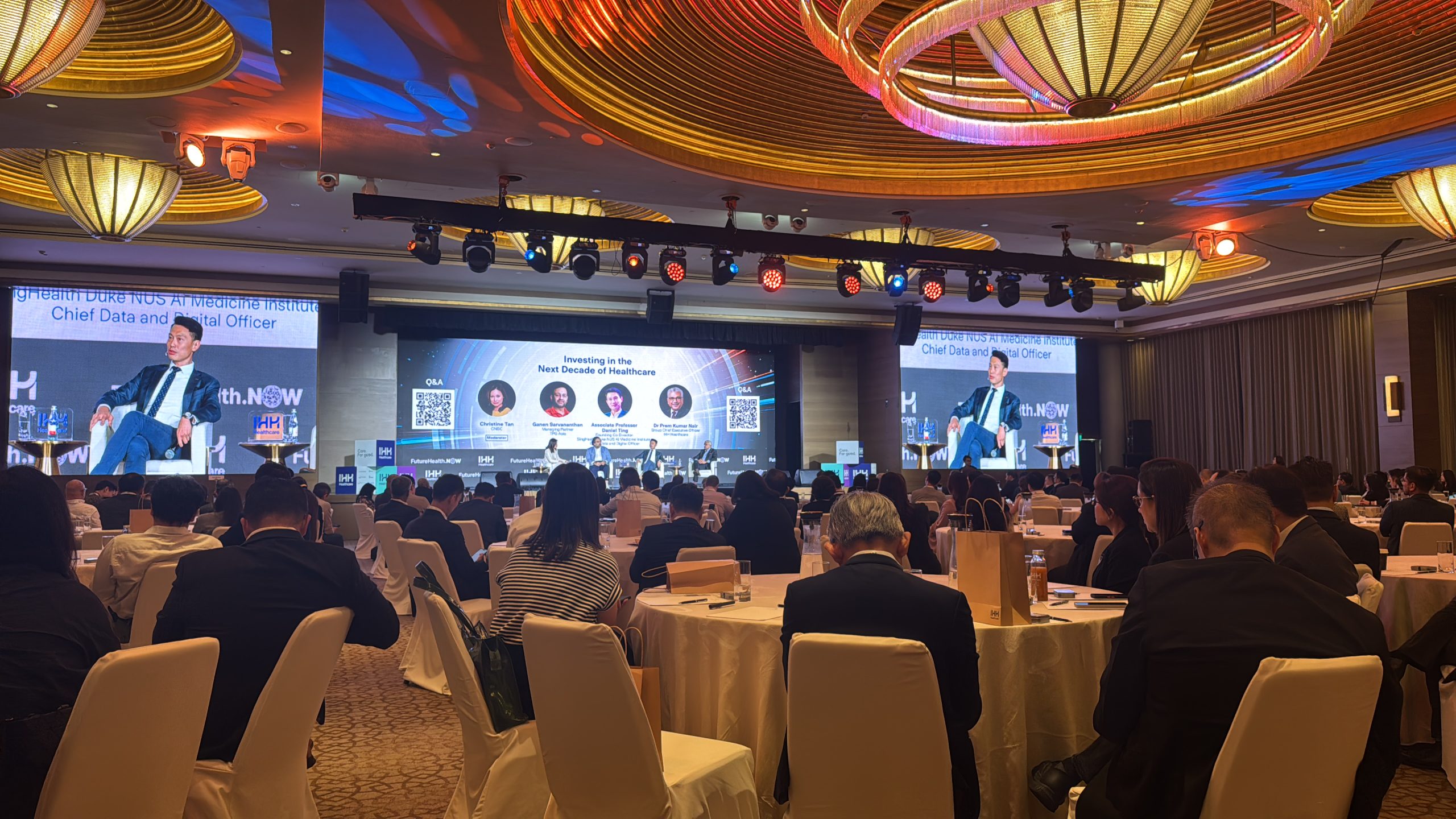
During the opening panel, Dr Prem Kumar Nair, Group Chief Executive Officer of IHH Healthcare, suggested that if he had US$1 billion to invest in healthcare tomorrow, much of it would go towards ambulatory care, genomics, cancer prevention and longevity medicine. He would direct this investment rather than simply building more hospitals.
“The healthcare of the future is going to be the reverse of the pyramid of what we have today,” he said, pointing towards more specialised outpatient care and earlier intervention.
Artificial intelligence also featured prominently across the conference.
Jonathan Sugihara, Head of AI Success Engineering at OpenAI, suggested that AI’s greatest strength may lie in uncovering connections that clinicians or researchers might otherwise miss.
By synthesising enormous volumes of medical knowledge, clinical notes and research, AI could identify relationships that accelerate both diagnosis and scientific discovery.
In oncology, Mark Middleton, Group Chief Executive Officer of Australia’s ICON Group, shared examples of AI already transforming care.
AI-assisted radiotherapy planning has reduced hours of manual contouring while improving accuracy. Ambient AI documentation tools are saving clinicians significant administrative time, with one Australian pilot reducing documentation workload by around 20 hours each week.
Middleton also described AI tools capable of interpreting prescriptions received through handwritten notes, emails, text messages and messaging platforms. These tools can automatically support dispensing workflows.
At the same time, he cautioned healthcare organisations against adopting AI indiscriminately.
“Do the homework.” He said, tongue-in-cheek. “Do not go down the rabbit hole chasing AI for every single thing.”
A Broader Shift in Healthcare
Throughout FutureHealth.Now, discussions ultimately converged around the same idea: Healthcare is becoming more proactive, personalised and connected.
Artificial intelligence is helping clinicians uncover patterns, reduce administrative burden and support better-informed decisions. In addition, precision medicine is enabling care to be tailored to an individual’s biology. Preventive programmes such as Healthspan are encouraging earlier interventions before disease develops.
Together, these shifts point towards a healthcare model that intervenes earlier, predicts risk more accurately and supports healthier ageing across a person’s lifetime.

