


Singapore recently became the vibrant heart of Asia’s digital health world. Smart Health Asia 2026 took over the Sands Expo & Convention Centre, bringing together thousands of leaders and innovators. For two days, the halls were filled with conversations about how to truly modernise healthcare across our diverse region.
The first ever Smart Health Asia event held at the Marina Bay Sands Expo & Convention Centre brought together over 3,000 visitors, who attended and held nearly 2,000 business meetings. People came from all over the Asia-Pacific and beyond to discuss leadership and investment in digital health. Despite the different backgrounds, one question unified everyone: how can such a diverse region move toward a digital future together?


A Region Racing to Catch Up
The numbers tell a story that is hard to ignore. Experts expect the Asia-Pacific digital health market to reach nearly US$500 billion by 2033. Our region already sees a huge chunk of global investment in this space. We are also facing a major demographic shift. By 2050, one in four people here will be over 60 years old. This adds immense pressure to our healthcare systems.
Even with this growth, adopting digital tools isn’t always easy. Currently, only about 25% of hospitals in countries like China and Singapore use digital solutions for tasks like diagnosis or remote monitoring. Closing this gap between what we want and what we actually do was a major theme at the conference.
Putting People, Not Technology, at the Centre
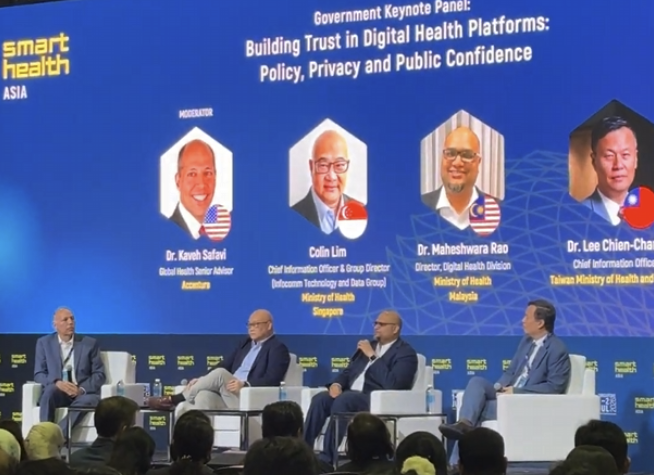
During the Government Keynote Panel, senior digital health leaders from Singapore, Taiwan, and Malaysia talked about a vital issue: public trust. They agreed that building trust is not about the technology itself. Instead, it is about focusing on the people who use it.
Mr Colin Lim, Chief Information Officer and Group Director for the Infocomm Technology and Data Group at Singapore’s Ministry of Health, emphasises “How we basically develop trust is putting people in the centre — again, making sure that the solution, whatever systems that we use, AI solutions that we use, we put not technology in the centre, but people in the centre.”
The panel emphasised that systems must be designed around human needs. This is critical in Southeast Asia, where digital literacy varies so much. Even here in Singapore, advanced tools do not automatically win everyone over. These solutions must actually make a tangible difference in a patient’s daily life.
Voices From Singapore’s Healthcare Systems and Partners
Local clinicians found great value in comparing notes with their international peers. For many, it was a rare chance to look beyond our own borders to learn from how other countries make healthcare safer and more cost-effective. These sessions highlighted that while every country is unique, many of our challenges are the same.
“The trend that I am seeing is that we see a lot of speakers who are articulating and showing examples of their proof of concept and pilots, which are very encouraging,” Dr. Samuel Chong, Healthcare Industry Leader for Asia at T-Systems, said.
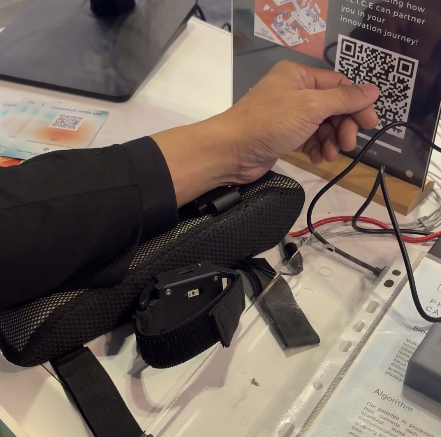
While the energy was high, there was also a healthy dose of realism. Many speakers shared exciting pilot projects, which is a great start. However, some tech partners cautioned that there is still a gap between a successful pilot and a fully mature solution, and the foundational work must still be done.
Ultimately, both perspectives point to the same regional challenge: we need to build systems that are technically sound and properly governed, all while keeping the patient at the centre of the design rather than the platform.
Innovation on the Show Floor
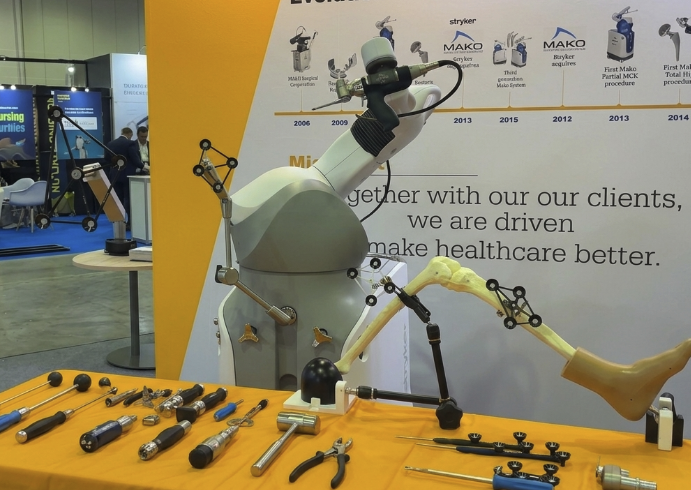
The exhibition floor was packed with real-world advancements. Major partners like Stryker showed off AI-assisted tools designed to help surgeons during operations. There were also incredible homegrown innovations from Singapore General Hospital. These included smartphone apps for screening infants and new ways to monitor heart health without expensive supplies.
For a deeper look at these technologies, watch the event highlight video for the full interviews:
Looking Ahead: The 2027 Expansion
There were many key themes throughout the event. Government leaders emphasised people-centred trust. Tech partners highlighted important governance gaps. Meanwhile, local clinical innovations stood side-by-side with global MedTech giants. All this suggests a shift in the region. We are moving away from isolated pilot projects and heading toward the connected, insight-driven infrastructure that will define the region’s future.
The debut of Smart Health Asia signals the start of a growing international event series. The next Smart Health Asia will take place on July 7th and July 8th, 2027, featuring the premiere of Smart Pharma Asia, which will integrate pharmaceutical innovation with the HealthTech, MedTech, and digital health landscapes.
Read More

