

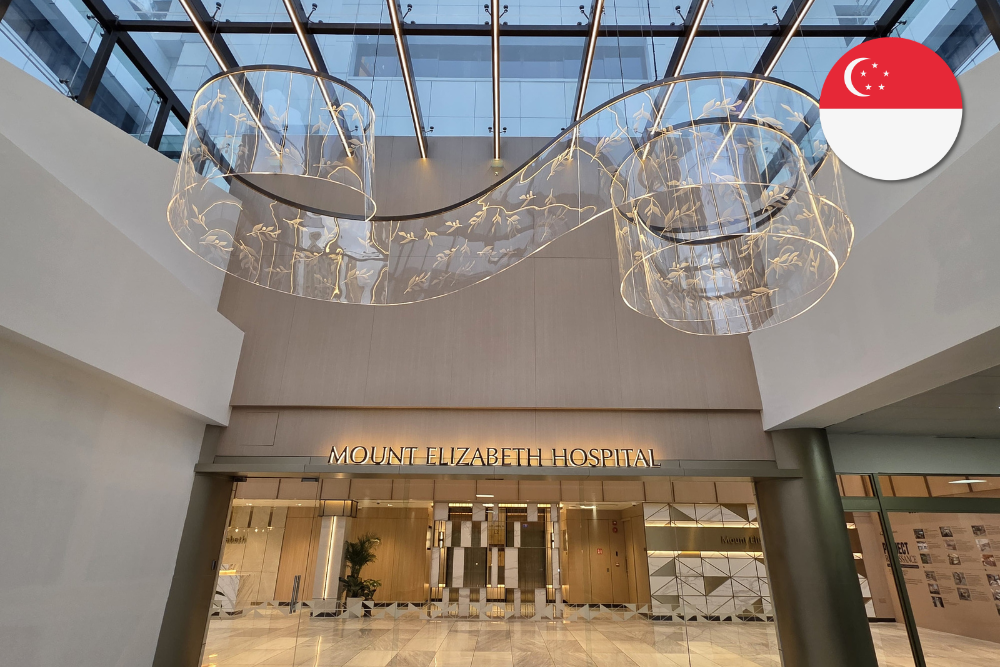
Mount Elizabeth Hospital’s recently completed S$350 million transformation goes beyond infrastructure, spotlighting how clinical design and digital systems may shape safer, faster patient care.
A hospital stay is rarely just about treatment. It is also about movement — between wards, departments, scans, procedures — and the often invisible delays that come with it.


View this post on Instagram
With the completion of its S$350 million campus transformation, Mount Elizabeth Hospital is stepping into a new phase of care delivery. While the redevelopment marks its most significant overhaul since opening in 1979, the changes reflect a deeper shift in how hospitals are being designed today. There is now a growing focus on reducing inefficiencies, improving patient flow, and delivering better clinical outcomes.
It is a shift shaped not just by infrastructure, but by evolving patient needs.
Around 30% of Mount Elizabeth Hospital’s patients are international, reflecting Singapore’s role as a regional medical hub. Against this backdrop, the hospital has been reconfigured to support increasingly complex, high-acuity cases. In such cases, speed, coordination, and precision become critical.
Can Hospital Design Reduce Delays and Improve Recovery?
Traditionally, hospital workflows have relied heavily on movement. Patients are transferred between departments for dialysis, imaging, monitoring, or procedures. Each transfer introduces not only time delays, but also potential risks, from miscommunication during handovers to physical strain on patients.
Mount Elizabeth Hospital’s redesign attempts to address this at a structural level.
Rooms are now equipped with in-ward dialysis capabilities and continuous telemetry monitoring, allowing suitable patients to receive treatment within their care units rather than being repeatedly moved across departments.
Clinical adjacencies (the placement of related services near one another) have also been reconfigured to minimise unnecessary transfers and delays. Even the hospital’s physical layout reflects this intent. A specially configured 100-metre corridor now connects key parts of the building. Additionally, 14 new lifts are designed to better separate patient, staff, and service movement – an often overlooked factor in safety, privacy, and efficiency.
The implications are significant. Fewer transfers may translate to improved safety and shortened lengths of stay due to:
- Reduced risk of handover errors
- Lower infection exposure
- Faster access to care interventions
While these may seem like operational details, they point to a broader shift in thinking. Hospital design is no longer just about space, it is about how that space supports clinical decision-making and patient recovery.
Why Complexity Is Driving a New Kind of Hospital Design
Modern healthcare is becoming more complex. Patients are older, conditions are more layered, and care increasingly involves multiple specialists working together.
The redesigned Mount Elizabeth Hospital has been purpose-built with this in mind – to support faster diagnosis, earlier intervention, and closer collaboration across multidisciplinary teams.
Key changes include expanded clinical capacity with additional single-bed rooms. There is also a consolidated operating theatre complex that brings day surgery, major operating theatres, and critical care services into closer proximity.
An integrated radiology complex further centralises diagnostic capabilities, with direct connectivity to inpatient wards and urgent care areas.
Together, these changes reflect a move towards reducing fragmentation. Now, diagnosis, intervention, and recovery are more tightly coordinated rather than spread across disconnected parts of the hospital.
Mr Yong Yih Ming, Chief Operating Officer of IHH Healthcare Singapore and Chief Executive Officer of Mount Elizabeth Hospital, noted, the transformation was shaped by the realities of how complex care is delivered today.
“That trust shaped how we re-examined our infrastructure, workflows and digital systems, ensuring they are aligned with the realities of how complex care is delivered today, and equipped to support how that care will be delivered in the future. More importantly, this transformation enables us to deliver better outcomes while creating sustainable long-term value for our patients.”
What Happens When Hospital Systems Run on Real-Time Data?
If physical design shapes how patients move, digital systems increasingly determine how efficiently care is delivered behind the scenes.
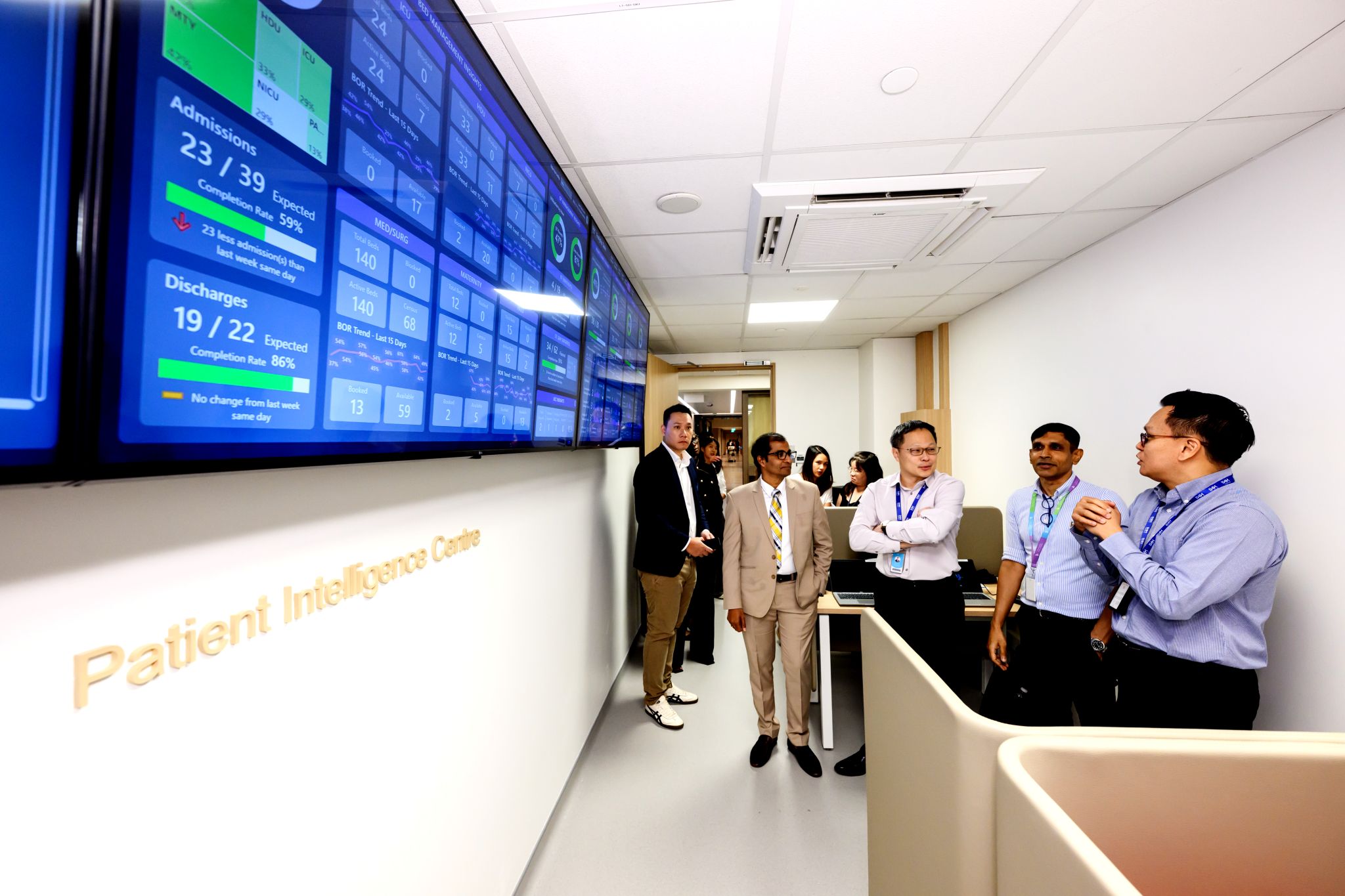
As part of its transformation, Mount Elizabeth Hospital has introduced a Patient Intelligence Centre (PIC), which integrates bed management, operating theatre scheduling, and endoscopy planning using live operational data.
This allows teams to actively manage patient flow and resource allocation across the hospital — a shift from reactive to more coordinated, real-time decision-making.
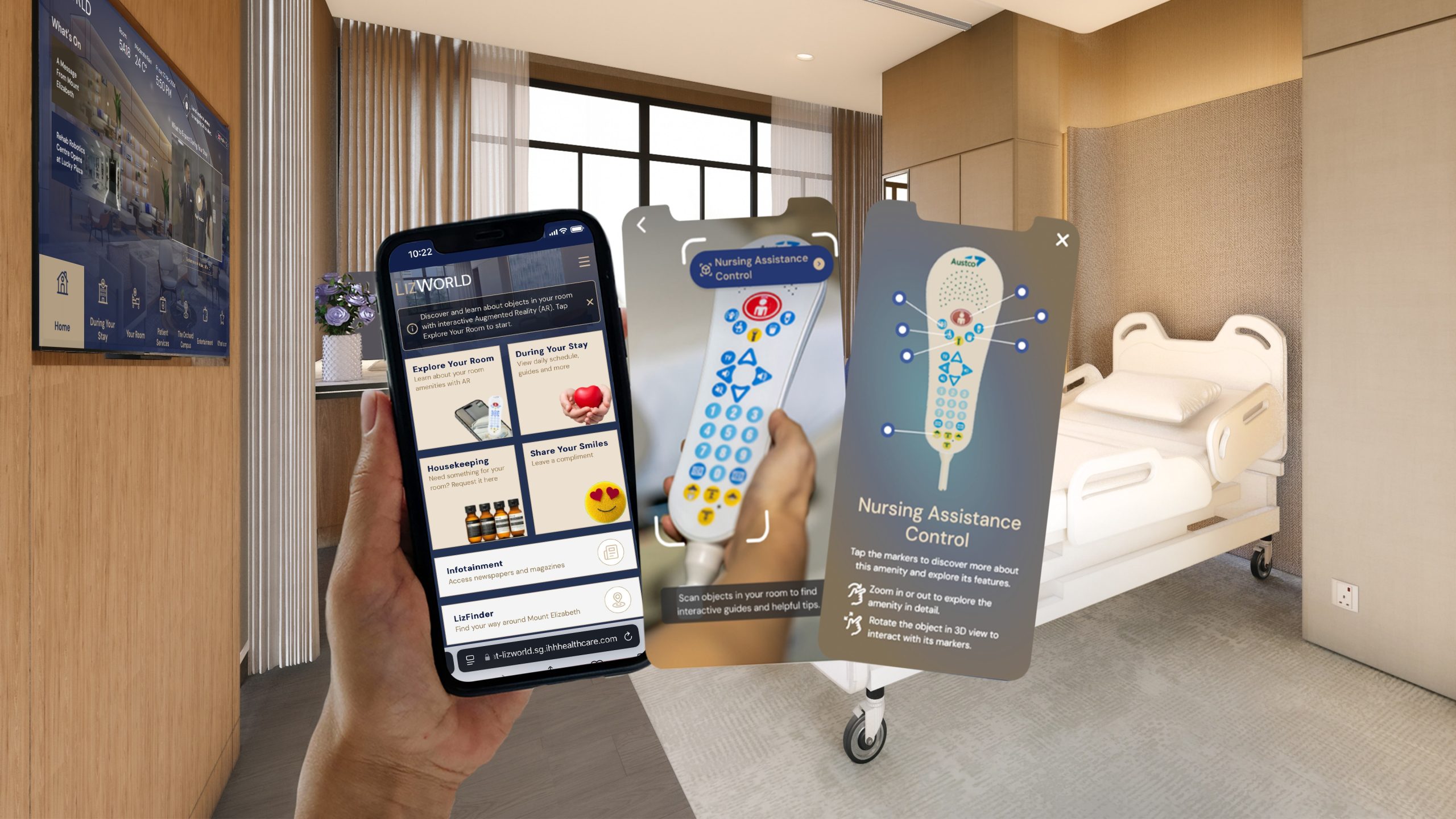
Alongside this, the hospital has implemented LizWorld, a digital patient experience platform that brings together wayfinding, in-room services, and patient requests into a single system.
The impact of these systems is measurable:
- Patient orientation time reduced from 12 minutes to 8 minutes
- Average service request wait times reduced from 40 minutes to 20 minutes
- Each request now requires 12 minutes less nursing time
These gains may seem incremental, but they point to a larger shift. Time saved on logistics can be redirected towards patient care, and when compounded across hundreds of patients, these efficiencies become far more significant. This is particularly true in a system where healthcare manpower remains under strain.
From Workflow Efficiency to Patient Outcomes
Efficiency in healthcare is often viewed through an operational lens: reducing wait times, improving throughput, lowering costs. Increasingly, it is being recognised as a clinical issue as well.
Delays in diagnosis or treatment can affect outcomes. Repeated transfers can increase risks. Fragmented workflows can lead to communication gaps.
By aligning physical design with digital systems, hospitals are attempting to close these gaps — not just to improve efficiency, but to support faster diagnosis, earlier intervention, and closer collaboration across multidisciplinary teams.
Mount Elizabeth Hospital’s redevelopment highlights a growing recognition across healthcare systems: that improving outcomes is not only about new treatments or technologies, but also about how care is organised, coordinated, and delivered.
Beyond the hospital itself, this concept extends into a broader, integrated healthcare campus — where outpatient, ambulatory, and inpatient services are distributed across connected facilities and delivered according to care intensity. By right-siting services in this way, there can be reduced congestion, improved access, and reserved inpatient capacity for complex cases.
In that sense, Mount Elizabeth Hospital’s transformation is less about fancy new facilities, and more about a different way of thinking.

