

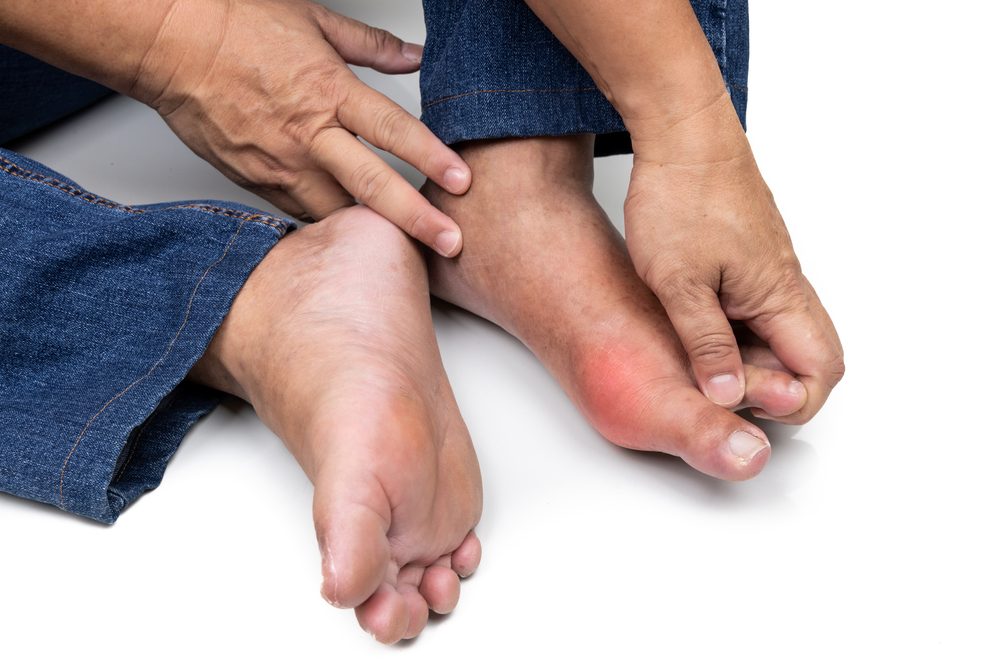
Big toe pain may seem minor at first, but recurring pain around the joint can signal bunions, gout, sesamoiditis, arthritis, or other forefoot conditions.
Pain around the big toe joint is easy to dismiss at first. It might feel like irritation from footwear after a long day, a sports related ache after running or football, or a sudden flare that seems suspiciously like gout. When the discomfort settles temporarily, many people assume it isn’t serious enough to investigate further.


However, recurring pain in this area should not be brushed aside too quickly. A bunion, medically known as hallux valgus, isn’t simply a surface bump. It is a structural change where the big toe gradually shifts toward the second toe. This causes the joint at the base of the toe to become more prominent over time.
More importantly, pain around the big toe isn’t always caused by a bunion alone. Conditions such as gout, sesamoiditis, arthritis, or inflammation around the joint can produce similar symptoms, which is why proper diagnosis matters.
Because of this, bunions are often misunderstood. They are sometimes casually dismissed as an “auntie” problem linked mainly to high heels, but that view is too narrow. Bunions can affect both men and women, especially when there is familial history combined with the right mix of foot structure, joint mechanics, footwear pressure, and repeated loading through the forefoot. The key is understanding what’s actually driving the pain before deciding how it should be treated.
Gout, Bunion, Sesamoiditis, or Something Else?
Big toe pain can be misleading because different conditions can affect the same small area in very different ways. A painful flare might look like gout, a visible bump might suggest a bunion, and pain during push off might point to something deeper beneath the joint. This is why the pattern of pain matters.

Gout commonly affects the big toe joint and can cause sudden, intense pain, redness, warmth, and swelling. A bunion can also cause redness, swelling, and pain around the same region, but it’s primarily a structural alignment problem rather than a uric acid crystal flare.
Sesamoiditis can also confuse the picture. Unlike bunion pain, which often involves a visible bump along the side of the big toe joint, sesamoiditis usually causes pain under the joint, especially during walking, running, or push off. Other causes, such as hallux rigidus, bursitis, or inflammatory arthritis, can also produce pain around the same region, which makes careful assessment important.
Because these conditions can overlap, it’s important not to assume that every big toe flare is gout, or that every painful bump is simply a bunion. If the pain keeps returning, if the toe is visibly shifting toward the second toe, or if footwear is becoming increasingly uncomfortable, an orthopaedic assessment can help identify the true cause and determine whether the joint is still flexible, inflamed, arthritic, or structurally unstable.
When a Bunion Becomes a Functional Problem
Once the cause of big toe pain is clearer, the next question is how much it’s affecting daily life. Many people delay treatment because a bunion can start as a mild bump or occasional irritation. Over time, however, it can become harder to ignore, especially when the joint becomes more painful, stiff, or difficult to fit into shoes.
By the time patients seek help, they might be dealing with:
- Footwear pain – Shoes that used to feel comfortable might start rubbing against the bunion, causing soreness, burning, swelling, or pressure by the middle of the day.
- Pain during push off – The big toe plays an important role in walking, running, climbing stairs, and changing direction. When the joint becomes painful or misaligned, the push off can feel weaker or less comfortable.
- Toe crowding and secondary pressure – As the big toe drifts toward the second toe, the smaller toes can become crowded. In some cases, this can contribute to hammer toe changes, corns, calluses, or pain under the ball of the foot.
- Changes in walking pattern – When the bunion hurts, people often shift weight away from the painful joint. This can place extra stress on other parts of the foot and, in some cases, affect comfort higher up the leg.
Why the Big Toe Matters to Movement
Once footwear comfort, push off, or walking pattern starts changing, the problem is no longer limited to the visible bump itself. The big toe might be small, but it plays an important role in balance, load transfer, and forward movement. During walking or running, the body passes weight through the forefoot before pushing forward through the big toe.
As the bunion changes the alignment of the joint, pressure no longer moves through the foot as evenly. Some people compensate by loading the outer edge of the foot, shortening their stride, or avoiding full push off through the painful joint. Over time, this altered movement can contribute to discomfort in other areas, including the ball of the foot, the smaller toes, the ankle, the knee, or the hip.
This doesn’t mean every bunion will cause problems throughout the entire leg. However, once pain starts changing the way a person walks, it’s no longer just a cosmetic issue. It becomes a movement problem.
Why Do Bunions Develop?
If a bunion can affect movement over time, the next question is why it develops in the first place. It’s a common misconception that footwear is the only cause of bunions. In reality, bunions usually develop through a combination of factors that affect how pressure passes through the forefoot over time.
- Inherited foot structure – Some people are more prone to bunions because of genetic predisposition, which can cause the deformity to appear from a younger age. Other contributing factors include flat feet, low arches, and more flexible joints. These can make the big toe joint less stable under repeated load.
- Sports and repeated forefoot loading – Activities such as football, running, court sports, and long periods of standing can repeatedly load the front of the foot. If the joint is already vulnerable because of foot structure or mechanics, this repeated stress can make pain and deformity more noticeable. In some cases, an injury from a badly taken kick during football or another sport can also aggravate the joint.
- Footwear pressure – Narrow or tapered shoes can crowd the toes and increase pressure around the big toe joint. This is not limited to high heels. Formal leather shoes, tight work shoes, narrow football boots, or anything with a pointed toe box can irritate the area and worsen symptoms.
What are the Treatment Options for Bunions?
Because bunions can vary significantly in severity and progression, treatment isn’t the same for every patient. The right approach depends on factors such as the degree of deformity, the level of pain, joint stiffness, the presence of arthritis, and how much the condition is interfering with daily activities or sport.
Non-surgical
In the earlier stages, non-surgical care can help reduce irritation and make walking more comfortable. This might include wider footwear, footwear modification, padding, orthoses, strengthening work, and activity adjustments. These measures might be guided by allied health professionals such as podiatrists as part of broader care, and they can be useful for managing symptoms. However, they are unable to correct the underlying bone alignment.
When symptoms persist despite these measures, or when the bunion causes problems with daily function, surgery might be considered. This is where specialist orthopaedic assessment becomes important, because bunion surgery isn’t simply about shaving down a bump. The aim is to correct the alignment of the bone, restore a more balanced joint position, and reduce the mechanical forces that continue to drive pain and deformity.
Surgical Treatment
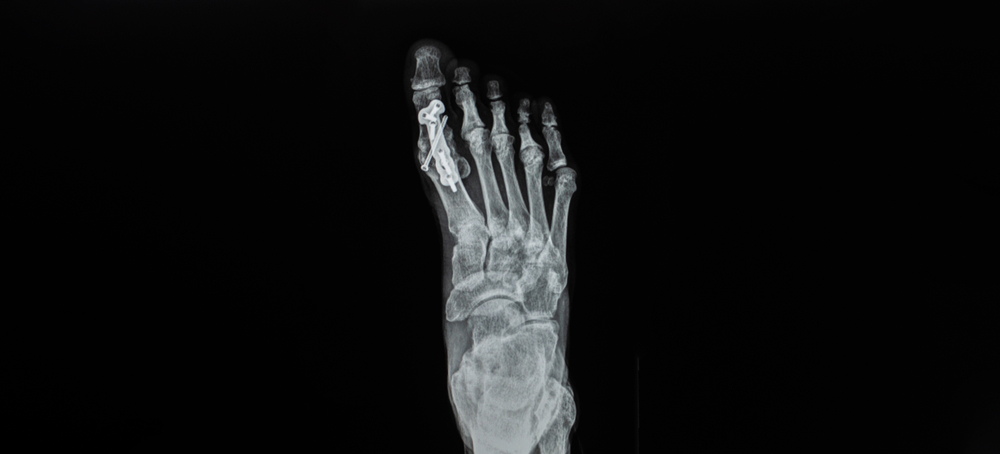
In suitable cases, minimally invasive bunion surgery, also known as MIS bunion surgery, can be performed through smaller incisions using specialised instruments and image guidance. When done with the right indications, precise technique, and experienced surgical judgement, MIS can correct the deformity while reducing soft tissue disruption compared with traditional open approaches.
For selected patients, this can allow earlier weight bearing in a specialised surgical shoe, depending on the severity of the deformity, bone quality, fixation method, and post-operative protocol. The goal isn’t just a smaller scar or a neater looking foot. It’s a more precise correction that supports pain relief, improved alignment, and better function during walking and push off.
Why Earlier Assessment Helps
Since treatment choices depend on the severity of the deformity and the condition of the joint, timing can make a difference. A bunion is usually progressive. It doesn’t simply disappear with rest, and splints or corrective socks bought online can’t permanently correct the bone alignment. While these products might provide temporary symptom relief, they don’t address the underlying deformity.
This is why earlier assessment can be useful. When a bunion is reviewed before the joint becomes severely stiff, arthritic, or difficult to fit into footwear, there might be more options for managing symptoms and planning treatment. If surgery is needed, the decision can also be made with a clearer understanding of the deformity, the joint condition, and the patient’s activity goals.
Why Specialist Experience Matters
By the time treatment is being considered, the important question isn’t only whether a bunion is present, but what type of deformity is involved. Some bunions are mild and flexible, while others involve significant angulation, joint stiffness, arthritis, or secondary toe changes. The right approach therefore depends on understanding the full shape of the problem, not just the visible bump.
A foot and ankle orthopaedic specialist can assess the deformity clinically and with imaging. They then decide whether non-surgical management, minimally invasive correction, or a more traditional surgical approach is most appropriate. This judgement matters because good outcomes depend on matching the technique to the patient, the joint, and the severity of the deformity.
Precision is especially important in minimally invasive bunion surgery. Smaller incisions don’t make the operation simple. In fact, MIS requires careful planning, accurate bone cuts, stable fixation, and experience in correcting the deformity without overcorrecting or under correcting it. When performed well, it can be an effective option for suitable patients who want to address the problem while reducing unnecessary skin or soft tissue disruption.
Protecting Movement Starts with the Right Diagnosis
Big toe pain shouldn’t be ignored just because it seems minor at first. Whether the cause is a bunion, gout, sesamoiditis, arthritis, or another forefoot condition, recurring pain around this joint deserves proper assessment.
This matters because a bunion is not simply an “auntie” problem, and it’s not always just a cosmetic bump. Once it begins to affect footwear, walking, sport, or daily comfort, big toe pain has already become more than a local irritation. It has become a movement problem.
With the right diagnosis, specialist assessment, and treatment plan, patients can better understand whether their symptoms can be managed conservatively or whether corrective surgery should be considered. Where minimally invasive bunion surgery is suitable, experienced orthopaedic care can help correct the deformity with precision, protect function, and support better long-term movement.
This article is contributed by Dr. James Siow, Senior Consultant Orthopaedic Surgeon, Oxford Orthopaedics

