


A tongue-tie assessment involves more than looking beneath a child’s tongue. Dr Caren Lwi Yee Chin explains how feeding, speech, breathing, sleep and oral function help guide individual treatment decisions.
“Doctor, does my child have a tongue-tie?”


I’ve been asked that question hundreds of times.
Yet the consultations I remember most rarely begin there.
They begin with a tired mother struggling to breastfeed. A father worried that his son snores every night. Parents wondering why their daughter’s adult teeth are becoming crowded. Different concerns, different ages, but the same hope: that someone can finally give them a clear answer.
I still remember one mother who walked into my clinic carrying pages of notes. She had spoken to several healthcare professionals and spent weeks reading everything she could find online. We spent most of the consultation discussing feeding, sleep, eating habits and development before we even looked underneath her child’s tongue. Only towards the end of our conversation did she smile and tell me she was actually a dentist herself.
That moment reminded me that if healthcare professionals can feel uncertain about tongue-tie, it is hardly surprising that parents do too.
Over the years, I have realised that the greatest challenge is rarely a lack of information. Parents today have access to more information than any generation before them. The challenge is making sense of conflicting advice and knowing what applies to their own child.
Those conversations have taught me that the most important question is rarely, “Does my child have a tongue-tie?”
It is, “Are we asking the right questions?”
Why Good Consultations Begin With Better Questions
When parents ask whether their child has a tongue-tie, I rarely begin by answering yes or no.
Instead, I ask what prompted their concern.

Some parents tell me breastfeeding has become exhausting. Others are worried because mealtimes have become a daily struggle, or because their child sleeps with an open mouth and snores through the night. Sometimes they simply say, “Something doesn’t feel quite right.”
Children are wonderfully complex, and the same diagnosis can affect two children very differently. Before deciding whether a child needs treatment, I first want to understand the child sitting in front of me and the family who knows that child best.
The best consultations don’t begin with answers.
They begin with better questions.
Why Looking Under the Tongue Isn’t Enough
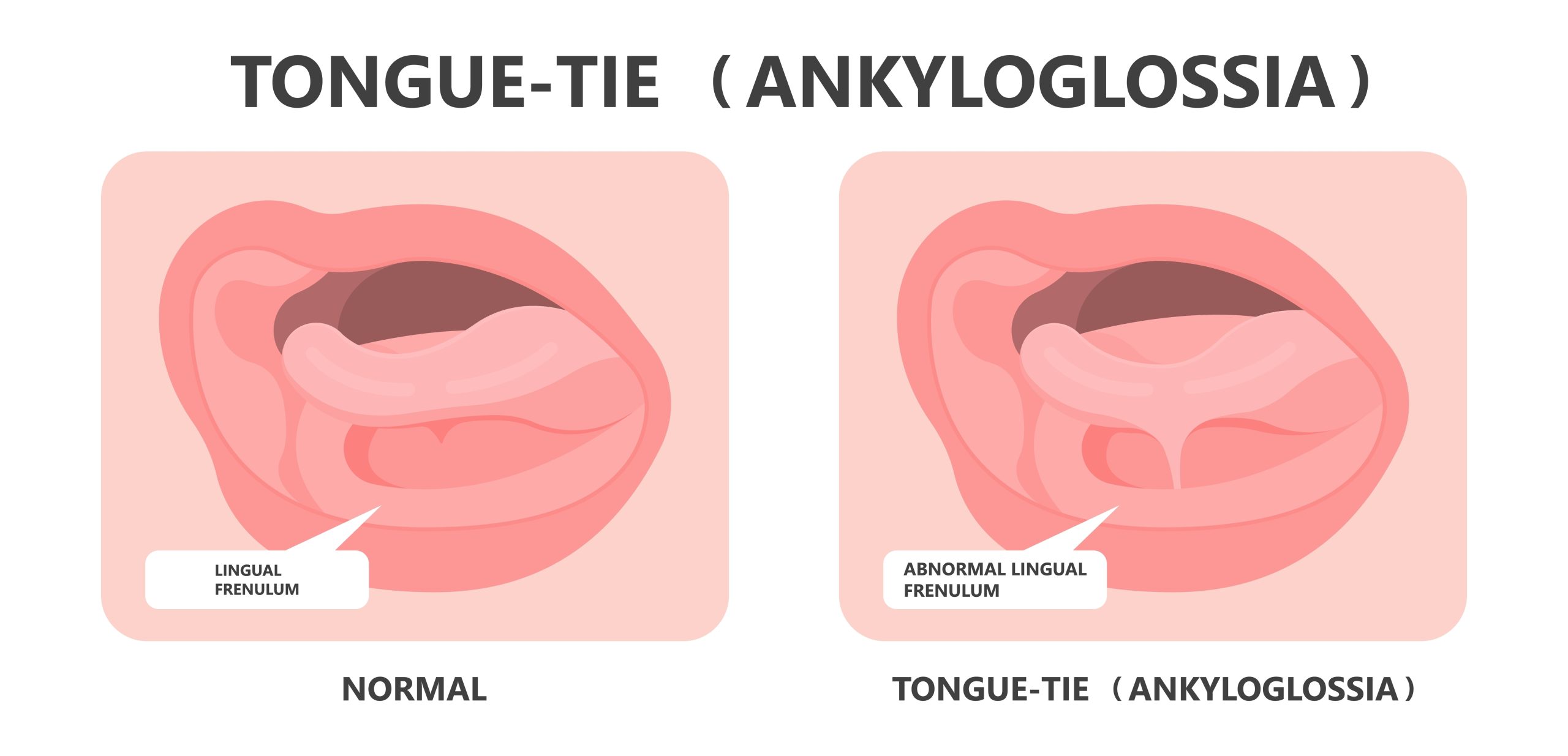
One of the biggest surprises for parents is that I don’t begin a tongue-tie assessment by looking underneath the tongue.
In fact, during the first few minutes of a consultation, I may not ask a child to open their mouth at all.
While we’re talking, I’m quietly observing how the child breathes, whether their lips rest together comfortably, how they swallow naturally, how they speak and how they interact with their parents. These observations often tell me as much as the examination itself.
Parents sometimes ask, “You’re already examining my child?”
I usually smile and reply, “The examination started the moment your child walked into the room.”
Only then do I examine the tongue.
Two children with very similar-looking frenulums can have completely different lives. One may breastfeed well, eat normally and never experience any functional difficulties. Another may have only a subtle restriction but struggle with feeding, chewing or oral function.
The tongue is only one part of the story.
Understanding the child is always more important than judging the frenulum alone.
How the Questions Change as Children Grow
As children grow, the concerns that bring families to my clinic change, even if the tongue itself does not.
For newborns, the concern is usually feeding. A baby may struggle to latch, tire easily during feeds or cause significant discomfort during breastfeeding. It is understandable that parents immediately wonder whether tongue-tie is the cause. Sometimes it is, but feeding difficulties can also be influenced by positioning, milk supply, prematurity and other medical conditions. Current guidance recommends a comprehensive assessment before concluding that tongue-tie is the sole cause. Recent guidance from the American Academy of Pediatrics also emphasises that treatment decisions should be guided by functional concerns, particularly persistent breastfeeding difficulties, rather than the appearance of the frenulum alone.
As children grow, the conversation shifts. Parents may describe prolonged mealtimes, difficulty chewing foods with certain textures or concerns about speech. Appearance alone cannot predict which child will experience difficulties, which is why function matters more than anatomy in isolation.
One consultation with a seven-year-old boy illustrates this well. His parents came because they were worried about crowded teeth and expected to discuss braces.
Instead, I asked whether he slept with his mouth open, whether he snored and whether he could comfortably keep his lips together.
His parents laughed.
“We thought we were here to talk about teeth.”
They weren’t wrong.
But before we talk about how teeth are lining up, I want to understand how the child is growing. Sometimes crowded teeth are simply crowded teeth. Sometimes they encourage us to look more closely at breathing, oral habits and tongue posture.
Parents of teenagers often ask, “Have we left it too late?”
Fortunately, assessment still has value. Although treatment goals change as children grow older, understanding tongue function can still help guide future care.
Why Treatment Is Never One-Size-Fits-All
Over the years, I’ve realised that parents don’t expect every answer to be simple. They simply want to know they’re making the right decision for their child.
Two children can have remarkably similar anatomy yet leave the consultation with completely different treatment plans.
That isn’t inconsistency.
It’s individualised care.
Sometimes, after a thorough assessment, the most valuable thing I can offer a family isn’t treatment – it’s reassurance.
Other children may benefit from feeding support, speech therapy, myofunctional therapy where appropriate, continued observation or, in selected cases, a tongue-tie release.
The mother I mentioned earlier eventually chose treatment for her own child, not because it was the only option, but because, after discussing the potential benefits, limitations and alternatives, it became the right decision for her child.
Another family in a similar situation might reasonably choose a different path.
That is personalised healthcare.
The Tongue Never Works Alone
Every now and then, a child reminds you that no single healthcare professional has all the answers. One such child changed the way I think about multidisciplinary care.
She first came because of retained baby teeth. What seemed like a straightforward dental concern gradually revealed a much bigger story. Rather than relying on my own assessment alone, I discussed her case with my mentors in myofunctional dentistry, Dr. Dan Hanson and Dr. Donny Mandrawa, while also collaborating with Dr. Christine, the chiropractor who had supported her posture and musculoskeletal development for several years.
Those conversations didn’t diminish my role as her dentist. They made me a better one.
Each healthcare professional brought a different perspective, and together we gained a more complete understanding of the child before making treatment decisions.
That experience reinforced an important lesson: children rarely fit neatly into one specialty. Depending on their needs, care may involve paediatricians, lactation consultants, ENT specialists, speech-language therapists, orthodontists and other allied health professionals.
The tongue never works alone.
Neither should healthcare.
Finding Clarity
Before families leave my clinic, I often ask whether they have any remaining questions.
Quite often, they tell me they don’t—not because every concern has been solved that day, but because they finally understand what questions they should be asking.
Not long ago, a mother smiled and said, “I came here thinking we were going to talk about my child’s tongue. I didn’t realise we were going to talk about how my child breathes, sleeps and grows.”
For me, that simple comment captures exactly what these consultations should be about.
Parents rarely seek help because they are worried about a frenulum.
They seek help because they are worried about their child.
Looking back, I don’t think the most important question has ever been, “Does my child have a tongue-tie?”
It has always been,
“What does this child need to thrive?”
There is no single answer that fits every child, and perhaps that is exactly how it should be.
I’ve learnt that parents are rarely looking for someone to make decisions for them. More often, they are looking for someone to help them understand the choices in front of them.
No two children (and no two consultations) are ever the same.
Perhaps that is exactly how good healthcare should be.
The best consultations don’t begin with answers. They begin with better questions.
References
- Thomas J, Bunik M, Holmes A, et al. Identification and Management of Ankyloglossia and Its Effect on Breastfeeding in Infants: Clinical Report. Pediatrics. 2024;154(2):e2024067605. doi:10.1542/peds.2024-067605. (American Academy of Pediatrics Clinical Report)
- American Academy of Pediatric Dentistry. Policy on Management of the Frenulum in Pediatric Patients. The Reference Manual of Pediatric Dentistry. Latest revised edition.
- Academy of Breastfeeding Medicine. Position Statement on Ankyloglossia in Breastfeeding Dyads. Breastfeeding Medicine. 2021;16(4):278–281.
- National Institute for Health and Care Excellence (NICE). Division of Ankyloglossia (Tongue-Tie) for Breastfeeding. Interventional Procedures Guidance (IPG149). Updated guidance.
- Messner AH, Walsh J, Rosenfeld RM, et al. Clinical Consensus Statement: Ankyloglossia in Children. Otolaryngology–Head and Neck Surgery. 2020;162(5):597–611.
- Francis DO, Krishnaswami S, McPheeters M. Treatment of Ankyloglossia and Breastfeeding Outcomes: A Systematic Review. Pediatrics. 2015;135(6):e1458–e1466.
- Webb AN, Hao W, Hong P. The Effect of Tongue-Tie Division on Breastfeeding and Speech Articulation: A Systematic Review. International Journal of Pediatric Otorhinolaryngology. 2013;77(5):635–646.
- Visconti A, Hayes E, Ealy K, Scarborough DR. A Systematic Review: The Effects of Frenotomy on Breastfeeding and Speech in Children With Ankyloglossia. International Journal of Speech-Language Pathology. 2021;23(4):349–358.
- Bruney TL, Scime NV, Madubueze A, et al. Resolution of Common Breastfeeding Problems Following Frenotomy for Ankyloglossia: A Systematic Review and Meta-analysis. Acta Paediatrica. 2022;111(5):940–947.
- Hill RR, Lee CS, Pados BF. The Prevalence of Ankyloglossia in Children Aged Less Than One Year: A Systematic Review and Meta-analysis. Pediatric Research. 2021.

