

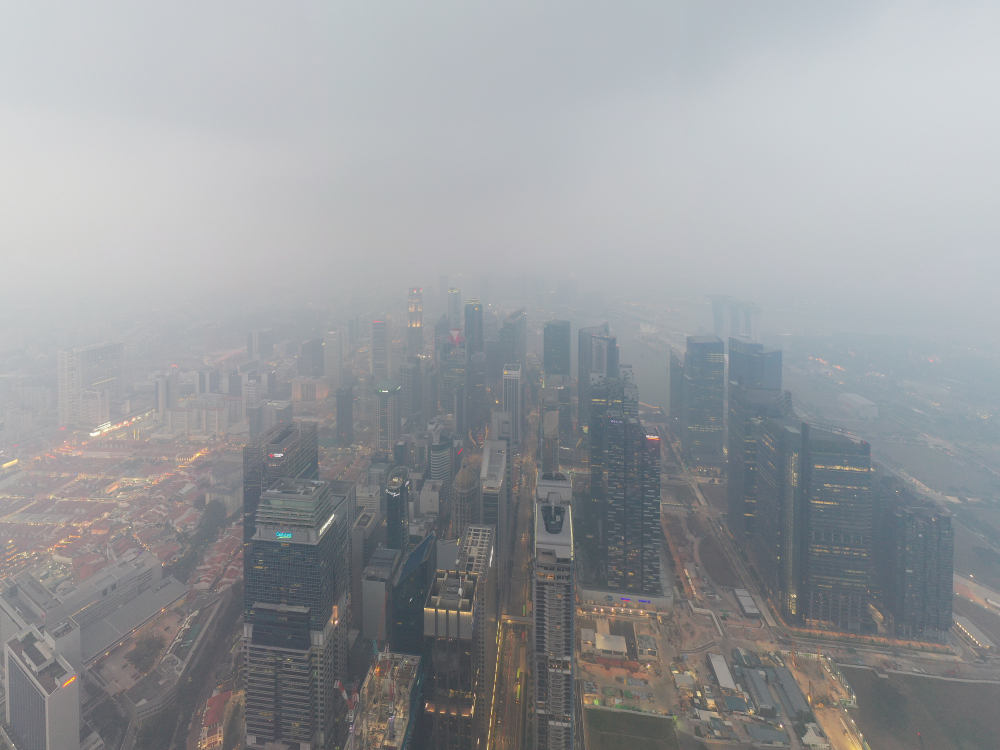
As haze affects Singapore, Malaysia and Indonesia, concerns extend beyond sore throats and cancelled runs. What does PM2.5 do to our lungs, and could repeated exposure contribute to lung cancer in never-smokers?
The skyline fades, the burning smell creeps indoors, and a familiar calculation begins: is it safe to exercise outside, send the children to the playground or carry on with the commute?


Across Singapore, Malaysia and Indonesia, haze is more than an inconvenience. Smoke can irritate the airways and aggravate existing illness. This season, it has also brought a more unsettling question into focus: could the air we breathe contribute to lung cancer, even if we have never smoked?
Why Is The Haze A Health Concern Right Now?
The haze returns when three factors line up: fires, dry weather and winds that carry smoke across borders. Land and forest fires in Sumatra and Kalimantan can send pollution towards Malaysia and Singapore, sometimes far from where the burning began.
Some fires are associated with burning vegetation to clear land. When peatlands catch fire, the problem can become particularly persistent: peat, a soil rich in partly decomposed plant material, can smoulder and release smoke over extended periods.
The risk rises during the region’s drier months. Singapore is particularly susceptible to transboundary haze around August to October, although severe haze is not an inevitable annual event. Rainfall, fire activity and wind direction determine whether smoke reaches the country and how long it stays. El Niño can worsen the conditions by bringing hotter, drier weather.
This October, those ingredients have aligned again. On 9 October 2026, NEA reported increased hotspots in southern and central Sumatra. At 7pm, Singapore’s 24-hour Pollutant Standards Index (PSI) ranged from 136 to 192, within the unhealthy band. NEA warned that readings could exceed 200, entering the very unhealthy range.
For comparison, Singapore’s October 2023 episode peaked at a 24-hour PSI of 123, while the September 2019 episode reached 154. The upper end of the readings reported on 9 October this year therefore exceeded both those peaks.
Further back, 2013 and 2015 stand out as particularly severe haze years. In 2015, strong El Niño conditions intensified regional dryness, contributing to prolonged fires and smoke exposure. These episodes show why haze severity depends on more than the number of fires alone.
Implications on the Healthcare Systems
The current concern is already visible in healthcare visits. On 11 October, Health Minister Ong Ye Kung reported a week-on-week increase in emergency department visits for respiratory issues, alongside more polyclinic visits. He noted that haze had coincided with the Influenza A season, potentially compounding the problem.
In Malaysia, the Health Ministry reported on 10 October 2026 that upper respiratory tract infections rose 10.43%, from 3,509 to 3,875 cases, between epidemiological weeks 39 and 40. Conjunctivitis cases increased 26.47%, from 102 to 129, across 78 monitored healthcare facilities. Asthma cases declined over the same period, showing that the trends were not uniform.
In Indonesia, the meteorological agency BMKG reported on 8 October that satellite imagery showed smoke across much of Sumatra and Kalimantan, alongside several other regions. Its monitoring on 7 October detected 340 high-confidence hotspots in Sumatra and 364 in Kalimantan. Hotspots indicate potential fires rather than confirmed individual blazes, but the combination of smoke and persistent dry conditions prompted warnings about continuing land and forest fire risks.
What Happens When You Breathe In Haze?
The particles to watch during haze are PM2.5: airborne particles measuring 2.5 micrometres or less. Their small size allows them to travel deep into the lungs. Exposure can irritate the airways and aggravate conditions such as asthma, while long-term exposure is associated with a higher risk of lung cancer.
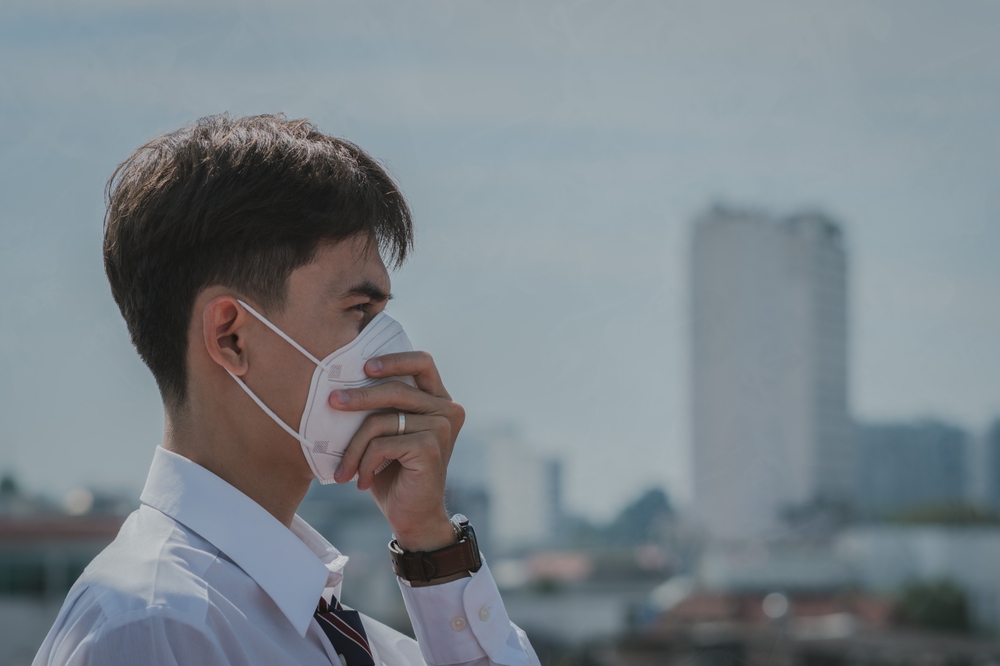
But how can you tell what you are breathing right now?
For immediate outdoor decisions, Singapore’s 1-hour PM2.5 reading is more useful than the reported 24-hour PSI. It measures the average fine-particle concentration over the preceding hour, making it more responsive to a sudden influx of smoke.
The 24-hour PSI remains a valid measure of air quality over a longer period. However, earlier hours of cleaner air can soften the effect of a recent pollution spike, so it may not fully reflect how conditions have just changed. Conversely, it can remain elevated after the air begins to improve.
NEA groups hourly PM2.5 concentrations into four bands:
| 1-Hour PM2.5 | NEA Band |
|---|---|
| 0–55 µg/m³ | Normal |
| 56–150 µg/m³ | Elevated |
| 151–250 µg/m³ | High |
| Above 250 µg/m³ | Very High |
These bands help guide immediate activity decisions – as concentrations rise, reducing outdoor exposure becomes more important, particularly for children, older adults, pregnant women and people with heart or lung conditions.
The effects also depend on how long you spend outside and how hard you exert yourself. Running or doing strenuous work increases the amount of air you breathe, potentially increasing your exposure.
Short-term haze exposure can cause eye, nose and throat irritation, coughing, wheezing or breathlessness, and can worsen existing heart or lung disease. Check the hourly PM2.5 reading for your area alongside NEA’s personal activity guide, and use the 24-hour PSI forecast and health advisory when planning ahead. Symptoms still matter: feeling unwell warrants attention even when the reported pollution level appears reassuring.
Can Haze Increase Your Risk Of Lung Cancer?
The concern has a scientific basis. In 2013, the International Agency for Research on Cancer (IARC), the World Health Organization’s cancer agency, classified outdoor air pollution and particulate matter as carcinogenic to humans. Its assessment drew on population studies, animal experiments and research into how pollutants affect cells.
That classification means there is sufficient evidence that these exposures can cause cancer. It does not mean a few hazy days carry the same risk as years of smoking, or that everyone exposed will develop the disease.
Much of the human evidence comes from observational studies that follow populations over time, estimate their pollution exposure and compare cancer outcomes. Researchers account for factors such as smoking, although exposure estimates and other differences between populations remain potential limitations.
An IARC review of the evidence describes large US and European studies that controlled for smoking and found higher lung cancer risk with increasing long-term PM2.5 exposure. Increased risk was also reported among never-smokers.
How Could Fine Particles Encourage Cancer To Grow?
A 2023 study published in Nature provides a possible explanation. Researchers found an association between PM2.5 exposure and the incidence of lung cancers driven by changes in the EGFR gene, using data from England, South Korea and Taiwan.
Their experiments in mice suggested that fine particles triggered inflammation, encouraging lung cells with existing cancer-related mutations to develop into tumours. Pollution could therefore help altered cells grow, rather than needing to create those mutations first.
The combination of population evidence and biological experiments strengthens the case. However, this research examined air pollution broadly, rather than establishing the cancer risk from Southeast Asia’s seasonal haze alone.
Are Rising Cases In Never-Smokers Linked To Haze?
Singapore has evidence of changing lung cancer patterns, but that is not the same as evidence identifying haze as the cause.
A population-based analysis of Singapore records spanning 1968–2021 found rising incidence among never-smokers, particularly women. It also cited earlier local research in which never-smokers’ share of lung cancer cases increased from 31% in 1999–2002 to 48% in 2008–2011. Those percentages describe the share of diagnosed patients, not an individual never-smoker’s likelihood of developing cancer.
MOH’s 8 October 2026 parliamentary response separately cited a local modelling study indicating increasing incidence among male and female never-smokers. However, its response did not provide numerical incidence rates or establish a correlation with haze exposure.
We cannot conclude that more haze has caused more lung cancer simply because both attract attention. Establishing that connection would require long-term exposure data, allowing researchers to distinguish seasonal smoke from traffic pollution, workplace exposures and other risks.
How Can People Across The Region Reduce Exposure?
For families in Malaysia, Indonesia and Singapore, local air-quality readings are more useful than photographs of a murky skyline. Pollution levels and exposure can differ considerably between locations.
Check the monitoring system for the country where you are. In Malaysia, the Department of Environment publishes the Air Pollutant Index (API), also called IPU, through APIMS. Indonesia publishes the Indeks Standar Pencemar Udara (ISPU) through its official air-quality portal, while its meteorological agency, BMKG, also provides PM2.5 concentrations by monitoring location.
Malaysia’s and Indonesia’s health ministries advise reducing strenuous outdoor activity during haze, with particular care for children, older adults and people with existing heart or lung disease. Seek medical attention if breathing symptoms develop or worsen.
When an N95 mask is appropriate, fit matters. People with severe heart or lung conditions should seek medical advice about wearing one.
Is There Help For Haze-Related Medical Bills?
Singapore reactivated its Haze Subsidy Scheme on 12 October 2026, following an increase in respiratory-related healthcare visits. The existing scheme was last activated in 2015.
View this post on Instagram
At participating Public Health Preparedness Clinics (PHPCs), eligible Singapore citizens pay no more than S$10 for qualifying haze-related treatment. This covers children aged 18 and below, adults aged 65 and above, CHAS Blue or Orange cardholders, and Medical Fee Exemption Card holders.
Pioneer and Merdeka Generation cardholders pay no more than S$5, while Public Assistance recipients pay nothing out of pocket. At polyclinics, the S$10 cap extends to all other Singapore citizens. Patients pay the actual bill if it is lower than the relevant cap, with no additional GST.
Covered conditions include asthma, bronchitis, allergic rhinitis, conjunctivitis, chronic obstructive pulmonary disease and upper respiratory tract infections, including complications. The doctor must assess whether the condition is haze-related. The scheme does not cover masks or unrelated treatment.
To find a participating clinic, use GPGoWhere or look for a PHPC decal or Haze Subsidy Scheme poster. Bring identification and your relevant government scheme card, either physical or digital. You may also visit MOH’s haze page for further information.

