

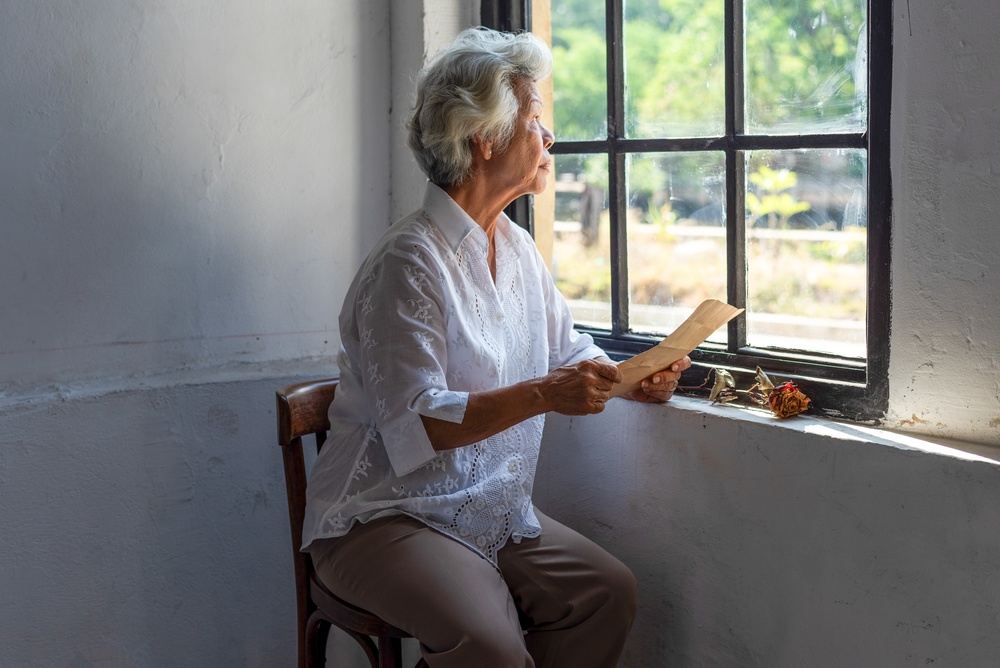
Widely practised across eldercare settings in Singapore, reminiscence therapy for dementia offers modest but meaningful benefits when delivered with the right personal touch.
A faded photograph of a kampung house. A Teresa Teng song on the radio. The smell of kaya toast on a Sunday morning. For many older Singaporeans, small things like these can bring the past vividly back. For people living with dementia, that pull is the idea behind reminiscence therapy. But does it actually help?


Why Care Teams Are Looking to the Past
In 2023, about 74,000 people in Singapore were living with dementia, a figure the Ministry of Health expects to reach 152,000 by 2030. Awareness is growing, yet a 2026 national survey found that nearly seven in ten Singaporeans were unsure where to seek help, and the top reason given for low awareness was having no family history.
What Is Reminiscence Therapy?
Reminiscence therapy uses prompts such as photographs, music, familiar objects, tastes and smells to encourage people to talk about past experiences. Dementia Singapore says it aims to help people feel valued, content and at peace, and can be done one to one or in groups.

The idea is not new in Singapore. When the Society for the Aged Sick opened a Reminiscence Therapy Room in 2017, furnished with a gramophone, old crockery and heritage photographs, Dr Adeline Chuo, then Senior Consultant in Geriatric Medicine at Tan Tock Seng Hospital, said the familiar setting helps keep patients calm. “It makes the life of carers and patients more pleasant and more manageable,” she explained to The Straits Times.
Does It Work?
A Cochrane review of 22 trials involving 1,972 people with dementia concluded that effects are inconsistent, often small, and vary by setting and format. Individual reminiscence probably brought a slight improvement on depression scales, though its clinical importance was uncertain, and effects on cognition were very small. The reviewers found no evidence of harm to people with dementia, although joint groups with carers were linked to slightly higher carer anxiety at longer-term follow-up.
In short, reminiscence does not slow dementia, but it appears to be a safe way to support mood, communication, and connection for some people.
Reminiscence in Singapore
In Singapore, the National Neuroscience Institute runs OWOW!, a 10-week group programme combining reminiscence and cognitive stimulation. Another initiative is the DBS Foundation x SUSS programme, which trains older adults as reminiscence facilitators, alongside a research study running from 2025 to 2029.
From the Clinic to the Bus: Rides to Remember
Reminiscence does not have to happen in a room. Singapore already uses the same principle in public spaces. A replica bus shelter in Yishun Community Hospital’s dementia ward gives patients somewhere to sit, wait and talk, and staff say familiar landmarks can evoke memories of past routines and travel. At Toa Payoh Bus Interchange, murals of childhood games such as chapteh and marbles help passengers with dementia find their way.
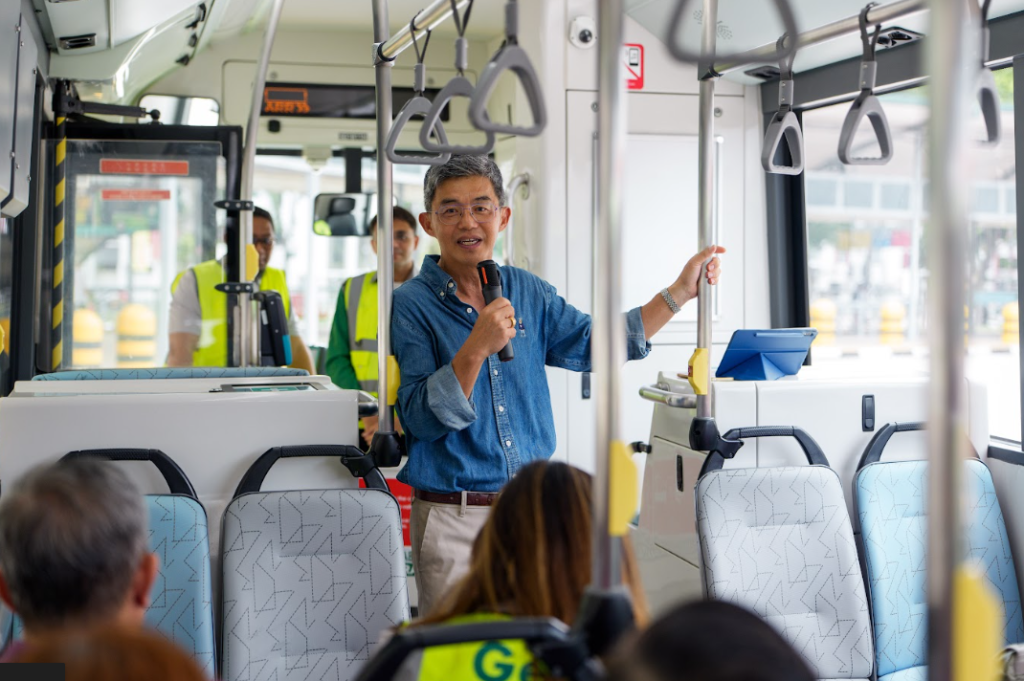
Rides to Remember takes that idea onto the road. This new initiative by Tower Transit Singapore takes groups of people living with dementia on bus journeys through neighbourhoods they know, so that familiar streets and landmarks prompt stories and conversation.
The lead for this initiative, Kishon Chong, from Tower Transit, remarks, “It was incredibly heart-warming to see the participants actively engaging with one another, sharing their personal recollections and stories as we journeyed through familiar neighbourhoods and landmarks.”
“What may seem like an ordinary bus journey to many of us can be a meaningful experience for people living with dementia, offering opportunities to reminisce and share those moments with the people around them.”
He also shared about his excitement on Western route test ride in December. With a pilot alongside Dementia Singapore planned for 2027, the programme will show how far a simple bus ride can go in bringing people living with dementia closer to their families and community.
Tips for Families
- Start with what is meaningful to the person: music, food, festivals, old neighbourhoods.
- Keep it relaxed and conversational, not test-like.
- Follow their lead. Not every memory is a happy one, and it is fine to move on.
- Remember that reminiscence supports wellbeing. It does not replace medical care.
The Bottom Line
Reminiscence will not reverse dementia, and its effects are modest. However, it appears safe, low-cost, and rooted in a very human wish: to be known for the life one has lived.
References
- Dementia Singapore. (2020, March 11). Reminiscence therapy for dementia. https://dementia.org.sg/2020/03/11/reminiscence-therapy-dementia/
- Ministry of Health Singapore. (2025, November 4). Number of dementia-afflicted patients over five-year period and future projections for Singapore [Parliamentary reply]. https://www.moh.gov.sg/newsroom/number-of-dementia-afflicted-patients-over-five-year-period-and-future-projections-for-singapore/
- National Neuroscience Institute. (2025, September 3). Reminiscence therapy and cognitive stimulation activities at NNI helping persons with dementia. NeusLink Newsletter. https://www.singhealth.com.sg/news/patient-care/reminiscence-therapy
- Singapore Management University. (2026, May 13). New survey reveals Singaporeans know more about dementia but nearly 7 in 10 are unsure where to seek help [Press release]. https://news.smu.edu.sg/news/2026/05/13/new-survey-reveals-singaporeans-know-more-about-dementia-nearly-7-10-are-unsure
- Singapore University of Social Sciences. (n.d.). DBS Foundation x SUSS Memory & Cognitive Health Community Programme. https://www.suss.edu.sg/research/suss-reminiscence-research
- Tower Transit Singapore. (2026). Rides to Remember. Retrieved November 25, 2026, from https://www.towertransit.sg/rides-to-remember
- Woods, B., O’Philbin, L., Farrell, E. M., Spector, A. E., & Orrell, M. (2018). Reminiscence therapy for dementia. Cochrane Database of Systematic Reviews, 2018(3), Article CD001120. https://doi.org/10.1002/14651858.CD001120.pub3

