

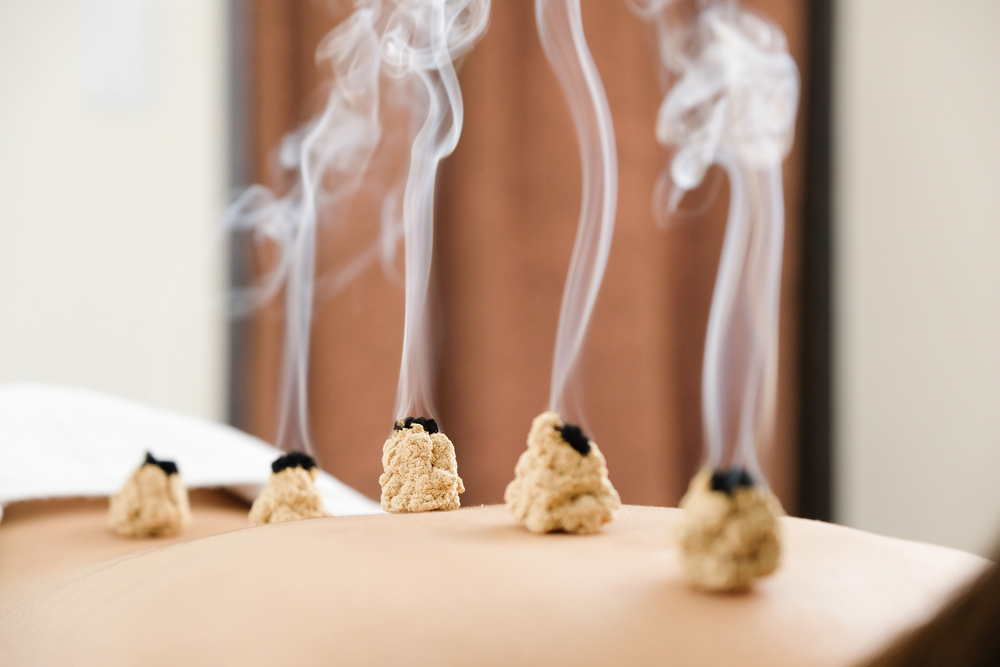
Moxibustion, which refers to the burning of moxa on acupuncture points of the body, is an ancient healing practice that has persisted for eons – but modern research has yet to verify its benefits.
When it comes to Traditional Chinese Medicine (TCM), we are all familiar with practices such as acupuncture, herbal remedies, and even tai chi. Their purpose? To promote the circulation of qi, a foundational concept behind TCM.


Qi refers to the vital energy that flows throughout the body and, according to Ms Adele Lau, a Senior Acupuncturist at the Department of Anaesthesiology in Sengkang General Hospital (SKH), it is ideal when it flows smoothly.
“In TCM, we call this ‘health’, where everything is in a balance,” she said.
But our qi doesn’t always flow the way it should.
“…Energy flow can be blocked by various factors, resulting in disease or pain,” Ms Lau highlighted. “In TCM, we aim to relieve the stagnation of qi.”
While acupuncture is a well-known method for encouraging the improved circulation of qi, it’s not the only one. Moxibustion is often performed alongside acupuncture, particularly when warmth is believed to be therapeutic.
What Is Moxibustion?
Moxibustion involves the burning of moxa, which refers to small cones or cigar-shaped sticks formed out of dried mugwort or other herbs. They are applied to specific areas of the body, which often correspond with traditional acupuncture points.
Moxibustion can come in two types:
Direct Moxibustion
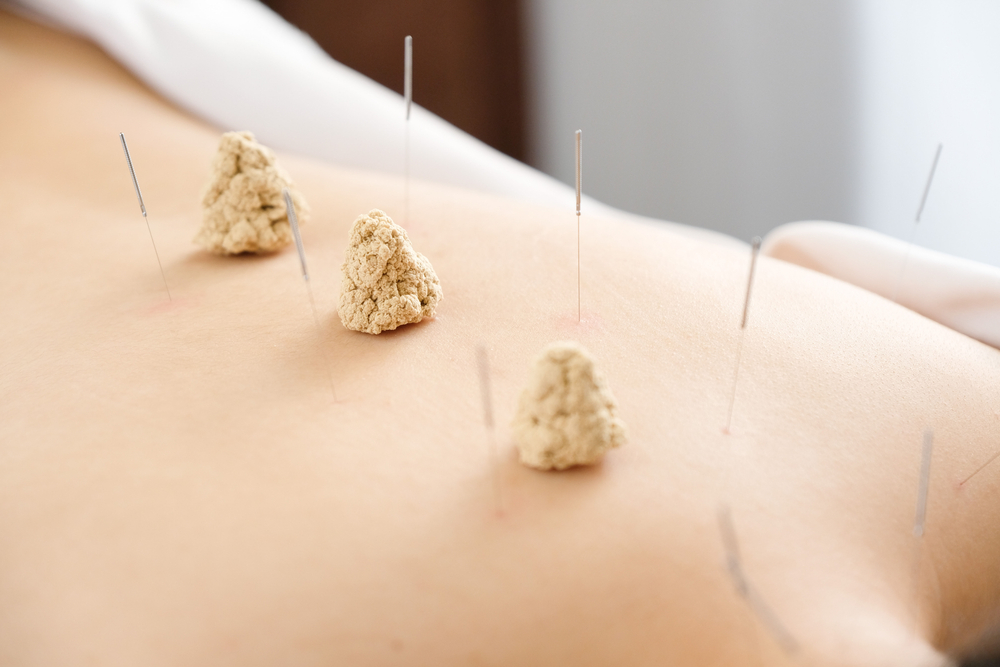
The moxa cone is placed directly on your skin at the treatment area and ignited. The practitioner will allow it to burn slowly until you feel the heat, at which point it will be removed.
The practitioner may also place the moxa on an acupuncture needle. The moxa will burn until it is extinguished, with the heat being directed to your body via the needle.
Indirect Moxibustion
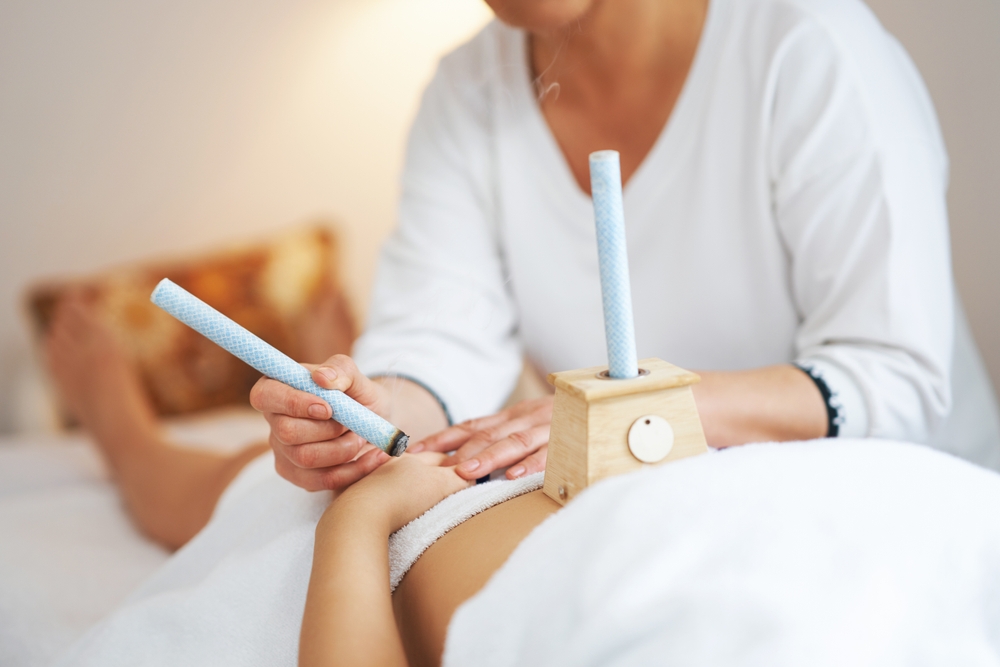
With indirect moxibustion, there is no direct contact between the moxa and your skin. Instead, it is held an inch above your body, and taken away when your skin has warmed.
Alternatively, the practitioner may rest the moxa on a layer of salt or garlic that serves as insulation. The practitioner can also use moxa boxes, which are filled with the herbs, and have that placed on the body after it has been ignited.
What Is Moxibustion Used For?
There are a variety of benefits accorded to moxibustion. Other than offering pain relief and enhancing blood circulation, it eases gastrointestinal issues, supports fertility, and may even help treat cardiovascular diseases. In particular, it has been used to help avert breech pregnancies, which happens when a baby is positioned feet-first rather than head-first in the uterus.
However, while moxibustion does not hurt, it does come with a few risks. It could result in burns, especially if direct moxibustion is applied. It might also activate allergic responses, or cause coughing, nausea or vomiting.
In addition, it should be noted that while moxibustion has been practiced for a few thousand years (possibly since around 1600 BCE), its scientific underpinnings are not as firmly established, making its therapeutic mechanisms – and the validity of its purported benefits – difficult to pin down.
How Moxibustion Might Work: A Western Perspective
Current research has proposed a few explanations for how moxibustion could produce its therapeutic benefits. From a biomedical standpoint, moxibustion’s effects are most often attributed to heat.
Heat from the burning moxa can relax muscles and relieve tension, while encouraging better blood circulation, thus reducing physical discomfort. Aiding in this process is the possibility that the heat also leads to the release of neurotransmitters that modulate pain. It could also help the autonomic nervous system, which regulates numerous bodily functions like indigestion and respiration, rebalance the sympathetic and parasympathetic branches, which stimulate the “fight-or-flight” response and the “rest and digest” processes respectively.
Furthermore, moxibustion might also help increase one’s white blood cell count, which helps the body fight off infections and diseases, and has been demonstrated to alleviate inflammation, all of which displays a positive impact on the immune system.
So, Is There a Place for Moxibustion Today?
Despite centuries of use, high-quality clinical evidence for moxibustion remains limited, largely due to limited sample size and quality. As it is, much of these studies conclude with the need for further research to establish the therapeutic outcomes, or call for more rigorous, large-scale trials for clearer results.
With scientific evidence on the mechanisms behind moxibustion still inconclusive, moxibustion remains under the umbrella of “alternative therapy” in the field of Western therapy.
Moxibustion sits in an unusual space between tradition and modern medicine. Its long history and continued use suggest that many people find subjective benefit, particularly for pain, stiffness, and chronic discomfort. At the same time, scientific uncertainty means it should not replace evidence-based medical care, especially for serious or progressive conditions.
So for those seeking alternative treatments, moxibustion may be worth exploring as part of a broader health regimen, especially for conditions that have not responded well to conventional therapies. However, be sure to approach it with caution, and reach out to trained practitioners who understand the risks and techniques.
External References
- Cleveland Clinic. (2022, February 9). Moxibustion: What Is It and Does It Work? Retrieved from: https://health.clevelandclinic.org/moxibustion
- Cleveland Clinic. (2022, June 6). Parasympathetic Nervous System (PSNS). Retrieved from: https://my.clevelandclinic.org/health/body/23266-parasympathetic-nervous-system-psns
- Cleveland Clinic. (2022, June 6). Sympathetic Nervous System (SNS). Retrieved from: https://my.clevelandclinic.org/health/body/23262-sympathetic-nervous-system-sns-fight-or-flight
- Dai, Z., Liao, X., Wieland, L. S., Hu, J., Wang, Y., Kim, T. H., Liu, J. P., Zhan, S., & Robinson, N. (2022). Cochrane systematic reviews on traditional Chinese medicine: What matters-the quantity or quality of evidence?. Phytomedicine: international journal of phytotherapy and phytopharmacology, 98, 153921. Retrieved from: https://pubmed.ncbi.nlm.nih.gov/35104758/
- Davis, K. (2022, February 23). What to know about moxibustion. Medical News Today. Retrieved from: https://www.medicalnewstoday.com/articles/what-is-moxibustion
- Gan, E. (2024, June 29). What is ‘heatiness’? Do TCM and modern medicine clash? Sengkang General Hospital’s acupuncturist gives a peek into her work. CNA. Retrieved from: https://www.channelnewsasia.com/today/ground-up/what-heatiness-do-tcm-modern-medicine-acupuncturist-sengkang-general-hospital-4647556
- Huang, C., Liang, J., Han, L., Liu, J., Yu, M., & Zhao, B. (2017). Moxibustion in Early Chinese Medicine and Its Relation to the Origin of Meridians: A Study on the Unearthed Literatures. Evidence-based complementary and alternative medicine: eCAM, 2017, 8242136. Retrieved from: https://pmc.ncbi.nlm.nih.gov/articles/PMC5337347/
- Nakahara, H., Kawai, E., & Miyamoto, T. (2022). Acute effects of regional heat stimulation by indirect moxibustion on cardiovascular responses. The journal of physiological sciences: JPS, 72(1), 30. Retrieved from: https://link.springer.com/article/10.1186/s12576-022-00855-z
- Raypole, C. (2024, September 26). What Is Moxibustion? Healthline. Retrieved from: https://www.healthline.com/health/moxibustion
- Thomson Team. (2023, August 23). The Transformative Effects of Moxibustion on the Body. Thomson Medical. Retrieved from: https://www.thomsonmedical.com/blog/the-transformative-effects-of-moxibustion-on-the-body
- WebMD Editorial Contributors. (2023, July 1). What Is Moxibustion? WebMD. Retrieved from: https://www.webmd.com/balance/what-is-moxibustion
- Zuo, C. Y., Zhang, C. S., Zhang, H. X., Gou, C. Y., Lei, H., Tian, F. W., Wang, Z. X., Yin, H. Y., & Yu, S. G. (2025). Moxibustion Alleviates Inflammation via SIRT5-mediated Post-translational Modification and Macrophage Polarization. Inflammation, 48(5), 2908–2923. Retrieved from: https://link.springer.com/article/10.1007/s10753-025-02239-y

