


Festive periods like Chinese New Year can overwhelm neurodivergent children. An early-intervention practitioner explains why sensory overload happens and how families can offer meaningful support.
With the Chinese New Year falling on 17 to 18 February 2026, many families will soon be preparing for a period of visits, celebrations, and changes in routine. Festive and transitional periods like these often place unusually high sensory and emotional demands on young children.


I vividly recall a Chinese New Year with my son, Emmanuel. Like many children with sensory sensitivities, the sudden, sharp clashing of cymbals from a lion dance performance, which most see as a celebration, triggered an immediate state of fight-or-flight for him. What was meant to be a joyous family moment quickly turned into a distressing ordeal, highlighting how ‘festive’ sounds can feel like a physical assault to a neurodivergent child.

As Singapore’s public spaces become more inclusive for neurodivergent individuals, with developments such as calm rooms in major venues and more sensory-supportive design in cultural institutions, understanding how children experience and cope with sensory and social demands has become increasingly important.
For children who are neurodivergent or developmentally vulnerable, these high-stimulus environments can reveal underlying challenges in sensory processing, emotional regulation, and social engagement.
As an early-intervention practitioner, I have seen how these settings act as a powerful stress test for a child’s developing nervous system, making it clear why the right support and environmental design matter so much.
In my practice, I have observed that the ‘behavioural issues’ parents report during holidays are rarely about defiance. Instead, these settings act as a ‘regulatory drain’. By the time a child has navigated a loud car ride, an unfamiliar house, and the smell of various festive dishes, their ‘internal cup’ is already full. Any further demand, like being asked to sit still, becomes the tipping point.
Early Indicators of Developmental Strain
During festive periods, caregivers may observe increased emotional dysregulation, sensory avoidance, and withdrawal from social engagement.
For a preschooler, this strain might look like a child who is usually chatty suddenly ‘freezing’ or hiding behind a parent’s legs when entering a relative’s home. You might notice them covering their ears even when it isn’t particularly loud, or perhaps they begin to obsessively line up red packets in a corner rather than playing with their cousins. This is often a desperate attempt to find order in a chaotic environment.
Common indicators include:
- Heightened sensitivity to noise, crowds, or lighting
- Covering ears, hiding, or seeking isolation
- Reduced social reciprocity, including avoidance of eye contact or greetings ● Difficulty following simple instructions
- Increased repetitive or self-soothing behaviours (e.g., rocking, spinning, lining up objects)
These behaviours often become more pronounced in festive environments because routine, predictability, and visual structure are disrupted. Children who rely on external supports for regulation may struggle when these supports are removed.
Co-regulation is about being the ‘anchor’ for your child. It can be as simple as noticing your child’s breathing quicken and immediately lowering your own voice to a whisper while placing a firm, grounding hand on their shoulder. Another example is the ‘quiet exit’, the moment you see the glazed look of sensory overload, you lead them to a pre-arranged quiet corner and sit with them in silence, offering your calm presence without demanding they ‘explain’ why they are upset.
Meltdown Versus Behavioural Non-Compliance
It is critical to distinguish between behavioural misconduct and neurological overload.
Misbehaviour is typically goal-oriented and influenced by reinforcement. A meltdown, in contrast, represents a loss of neurological regulation. The child’s autonomic nervous system is in a state of distress, and the brain prioritises survival over cognitive control. During such episodes, children are often unable to process verbal instructions, emotional cues, or consequences.
Common adult responses such as verbal reprimands, demands for compliance, or the use of incentives and punishments are ineffective during a meltdown and may further increase physiological stress.
Evidence-based best practice supports co-regulation, in which a calm adult helps stabilise the child’s nervous system through tone, proximity, and reduced sensory input. Removing the child from the overstimulating environment to a quiet space is often the most effective intervention.
One strategy I often recommend is the ‘Sensory Safe-Zone’.
Before the gathering begins, identify a specific room or corner at the host’s house where your child can retreat. Equip this space with a ‘calm-down kit’, such as noise-cancelling headphones, a favourite weighted lap pad. If a meltdown begins, don’t focus on the ‘scene’ being made, focus on moving the child to this safe zone where the sensory ‘noise’ is dialed down to zero.
Managing Social and Sensory Challenges in Festive Settings
Social expectations such as greeting relatives, sustained eye contact, and physical affection can be overwhelming for children with sensory or social-communication vulnerabilities. Forcing these interactions can increase anxiety and avoidance. Instead, offering low-demand alternatives such as waving or brief verbal greetings allows participation without distress.
Children who are unable to sit through long meals or rituals often lack the neuromotor regulation required for sustained stillness. Providing opportunities for movement, sensory tools, or proprioceptive input (e.g., weighted lap pads, fidget objects) can significantly improve tolerance and engagement.
Food aversions and sensitivities are also common. Ensuring access to familiar foods and moderating environmental stimuli such as noise and lighting reduces physiological stress and helps maintain nutritional intake.
Impact on Families and Caregivers
Caregivers often experience social pressure and emotional strain when their child behaves differently in public or family settings. However, a child’s capacity for self-regulation is directly influenced by caregiver regulation. A calm, responsive adult provides the most effective support during periods of overload.
Proactive communication with extended family members about a child’s sensory or regulatory needs can prevent misunderstandings and reduce stigma.
When Early Support Is Indicated
Persistent dysregulation across environments, delayed developmental milestones, or high family stress are indicators that professional input is warranted. Early intervention does not require a formal diagnosis to be effective.
At Bridging the Gap, we focus on identifying the sensory, communicative, and regulatory drivers behind behaviour and provide families with practical tools such as visual schedules, sensory-friendly routines, and environmental adaptations. These supports improve daily functioning and reduce family stress even before diagnostic clarification.
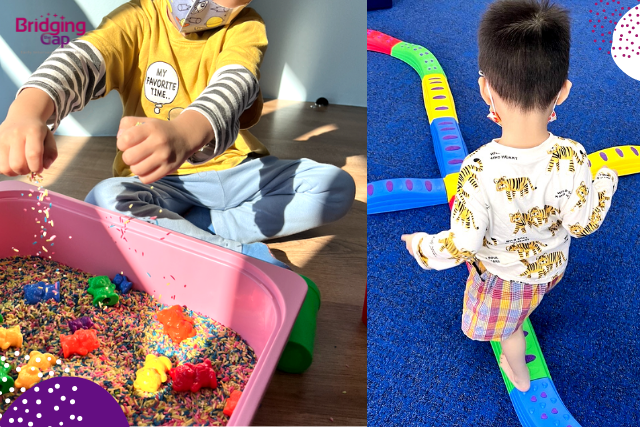
I worked with a family whose toddler would have massive meltdowns every time they visited a mall during festive periods. Through early intervention, we didn’t just ‘train’ the child, we gave the parents a visual schedule. By showing the child a simple picture sequence of the day, ‘Car, Mall, Quiet Snack, Home’, his anxiety plummeted. Because he knew exactly when the ‘noise’ would end, he gained the confidence to navigate the environment without reaching a breaking point.

