


For anyone who has ever delayed a colonoscopy because of discomfort or dread, a new line of research may offer a gentler alternative in the future. Scientists have created microscopic hydrogel spheres that use living bacteria to detect signs of gastrointestinal bleeding, and the only step required from the patient is to swallow them.
The idea sounds futuristic, yet early experiments in mice suggest that these “microsphere pills” could one day help flag intestinal problems without scopes, sedation or invasive testing.


Why Do We Need Easier Ways to Check for Gut Conditions?
Across Asia, conditions such as inflammatory bowel disease, colitis and colorectal cancer continue to rise. Many of these illnesses cause intestinal bleeding, abdominal cramping and changes in bowel habits.
Colonoscopy remains the gold standard for diagnosis. It is accurate, comprehensive and lifesaving. However, many individuals avoid or delay the procedure due to bowel preparation requirements and the discomfort of having an endoscope passed through the large intestine.
This delay often carry risks – early signs of gut inflammation or bleeding can be missed, making it harder for doctors to intervene quickly. This is one reason scientists have been exploring more patient-friendly ways to pick up early warning signs inside the gut.
How Do These Microspheres Work?
The technology, described in ACS Sensors, is surprisingly elegant. Researchers engineered bacteria that can detect haem, a component of red blood cells that appears in the gut when bleeding occurs. When these bacteria encounter haem, they glow.
However, naked bacteria do not survive the acidic, enzyme-rich digestive tract well. The harsh environment can destroy them long before they can do their job.
To overcome this, the team encased the bacteria in tiny droplets of sodium alginate, a hydrogel commonly used as a food thickener. They then mixed in magnetic particles.
This produced microspheres that are:
- Small enough to swallow
- Stable enough to survive digestion
- Permeable enough for heme to reach the bacteria
- Magnetic enough to be retrieved from stool
The result is a biological sensor that travels through the gut, gathers biochemical clues and can be collected afterwards with a simple magnet.
What Did the Researchers Test in Mice?
The team gave the microspheres by mouth to mouse models with varying severity of colitis. After the spheres passed through the gut, the researchers used a magnet to collect them from stool samples and measured how brightly the bacteria glowed.
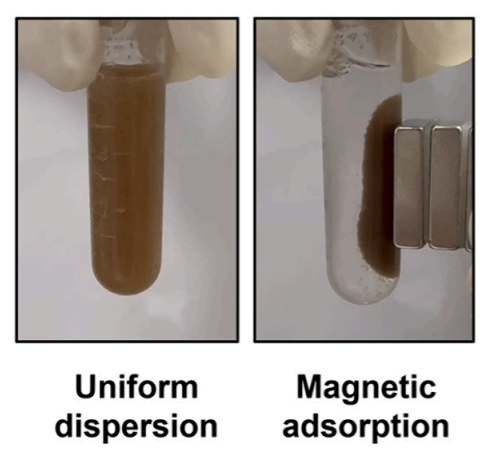
- The entire detection process took about 25 minutes.Once retrieved, the spheres could be assessed quickly. This makes it much faster than traditional laboratory tests.
- The glow intensity rose with disease severity. Mice with more advanced colitis (more inflammation and bleeding) produced a brighter bacterial signal.
- The spheres appeared safe in healthy mice – there were no major signs of toxicity or tissue irritation.
The spheres acted like tiny reporters, travelling through the gut, surviving the journey and returning with a biological “message” about disease activity.
Could This Ever Replace Colonoscopies?
Not yet, and not entirely. Colonoscopies detect polyps, tumours and structural abnormalities that a biochemical signal alone cannot reveal. Furthermore, biopsies and removals can be done during the colonoscopy.
But these microspheres could become a useful screening or monitoring tool, especially for conditions involving intestinal bleeding. The bacteria inside the spheres can even be re-engineered to sense other disease markers, which could extend the technology beyond bleeding to inflammation, infection or even treatment response.
What’s Next?
Research is still in the early, animal-testing stage. Human trials down the line can then determine safety, accuracy and real-world feasibility.
But if future results hold, a swallowable microsphere could give clinicians a fast way to monitor disease progression or treatment response – without putting the patient through an invasive procedure.
References
- Xu, Chu-Ying, et al. “Magnetic hydrogel: Enhanced Bacterial Biosensor for speedy gut disease detection.” ACS Sensors, 19 Nov. 2025, https://doi.org/10.1021/acssensors.5c01813.

