


Phobias always seem like something you age out of. Once you grow up and start the arduous task of adulting, it feels like dealing with phobias is something you no longer have time for.
And yet, the irrational fear of some specific phenomenon can leave you rooted to your seat. Palms sweating, stomach churning, and mouth dry: phobias seem like they will follow you for the rest of your life.


How do we even develop these fears in the first place? Is it is possible for us to get rid of them entirely?
Why Do Phobias Exist?
Phobias are what happens when the emotions of fear and anxiety are amplified to extreme degrees. Normally, having a moment of fear and panic from time to time is just your body’s way of protecting itself. It helps to keep you alert in dangerous situations, and can help to keep you out of harm’s way.
Phobias, on the other hand, can seem irrational and send you into fight or flight mode. It is even more baffling that experts have yet to fully understand what exactly causes phobias to develop.
Phobias are a possible result of traumatic experiences that happened in the past related to a specific thing or situation. They can also be genetically linked, so you end up with the same phobia as your parents. This can result in a form of learned behaviour, where one develops a fear or phobia as they find out about it from others.
Common Types of Phobias

It is very common for people to have specific fears or aversions to certain things or situations. However, phobias about specific phenomena, also known as specific phobia, are not as typical. Around the world, only 2% to 6% of people meet the criteria as having specific phobia.
Regardless, there are a wide variety of phobias out there in the world. Some may stem from deep-seated traumas experiences, discovered after a harrowing childhood memory. Others may simply sprout up as a byproduct of other mental health disorders, like the fear of speaking to people on the phone.
Trypophobia
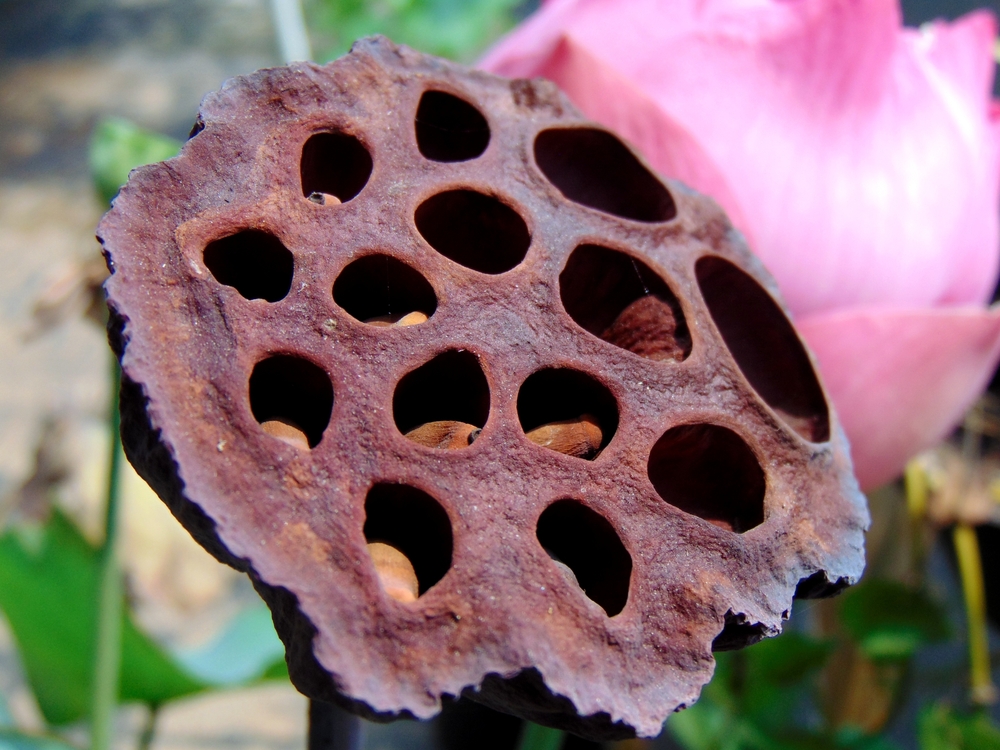
Do you hate looking at a close up of your pores? Or maybe you cannot stand the sight of lotus seed pods? Chances are that you have trypophobia, or the fear of holes.
Do not get us wrong: many do not fear the appearance of the occasional hole, like a sewage opening or the occasional polka-dot patterned shirt. The phobia is usually triggered by closely packed holes, or holes that are gathered close together.
This can cause feelings of disgust and discomfort, and even cause a panic attack if you are especially affected by trypophobia.
Studies have yet to figure out an exact reason behind this phobia, but it has been theorised that it is an extension of a biological fear of venomous or dangerous creatures. Scientists found that highly dangerous animals like the king cobra and blue-ringed octopus triggered a similar sensation of fear in individuals.
In this case, trypophobia might actually just stem from our days as homosapiens. Our fear of holes may not be a case of the ick, but instead a survival response to stay away from danger.
Claustrophobia
Claustrophobia is very common. It is the fear of small, enclosed spaces. It can be triggered by a small space, like a closet or a MRI machine. But it can also happen in a crowded space, like a big group of people.
If you have this phobia, you may experience feelings of dread and nausea as a result. This can escalate into disorientation or even a panic attack if it is not possible to deal with your phobia immediately.
Claustrophobia can be linked to various causes, such as a traumatic experience with a small enclosed space, like getting trapped in an elevator. It can also be genetic, as researchers have found that a defect in a gene called GPM6A can result in your parents passing this phobia down to you.
Emetophobia
Emetophobia is the fear of vomit: both of the act itself and watching others do it. Most of the disgust and repulsion is linked to the process of throwing up; but the anticipation of vomiting is another deeply detested factor. This phobia is often caused by having a negative experience with vomiting.
As a result of this phobia, you may also develop other behaviours to avoid vomiting altogether. This may result in hours of strategic planning to avoid falling ill, and can lead to you being on guard for days on end. Dealing with this phobia can result in the development of new behaviours, as you avoid trying new foods or begin compulsively cleaning to get rid of germs that could potentially make you sick.
Over time, this can lead to several complications like malnutrition or dehydration, as you seek to avoid any situations involving vomiting entirely. Without proper treatment, emetophobia can further escalate into eating disorders and social isolation.
Megalophobia
To some, the idea that humans are but a microscopic spec in the grand scheme of the world is a comforting idea. Others are horrified by the idea that we are physically tiny compared to manmade sculptures and creations of nature. Megalaphobia is thus the fear of large objects.
Triggers for this phobia are especially large objects: skyscrapers, massive statues, boats, or even large animals like whales. There is no known exact cause of megalophobia, with some positing that it is a result of media and legends involving abnormally large creations. Perhaps a simpler answer is that this fear of big objects is yet another holdover from our time as hunters and gatherers: if it is bigger than me, it is very likely that it could kill me.
How You Can Deal With Your Phobias

Dealing with phobias like these can feel like pulling teeth, but various treatment options are available for you.
Phobias can be treated via mental health therapy, medication, or a combination of the two. Depending on the type of phobia, the severity, and how it affects your everyday life, a healthcare professional can help to guide you towards the right treatment plan.
Psychotherapy can help to adjust how you think about and behave around your specific phobia. Exposure therapy can also help to desensitise and control your anxiety when faced with your phobia.

