

By Dr. Francis Wong Keng Lin, Oxford Cartilage & Sports Centre
After cartilage repair, the joint often moves with fewer catches, reflecting a surface that has been successfully restored. For many, this increased stability provides enough control for routine daily activity. However, as that surface is loaded repeatedly over time, the way the joint handles forces begins to change because the new tissue cannot distribute weight as uniformly as the original.


This is where the distinction between how the joint feels and how it actually performs becomes critical. While the initial repair makes the surface smooth, “smooth” is not the same as “strong.” This new tissue faces the same heavy loads as the original cartilage but lacks the natural resilience to handle them. It essentially works under protest, eventually struggling to keep up with the demands of repeated movement in a way that healthy, natural cartilage never would.
Why Cartilage Repair Has Biological Limits
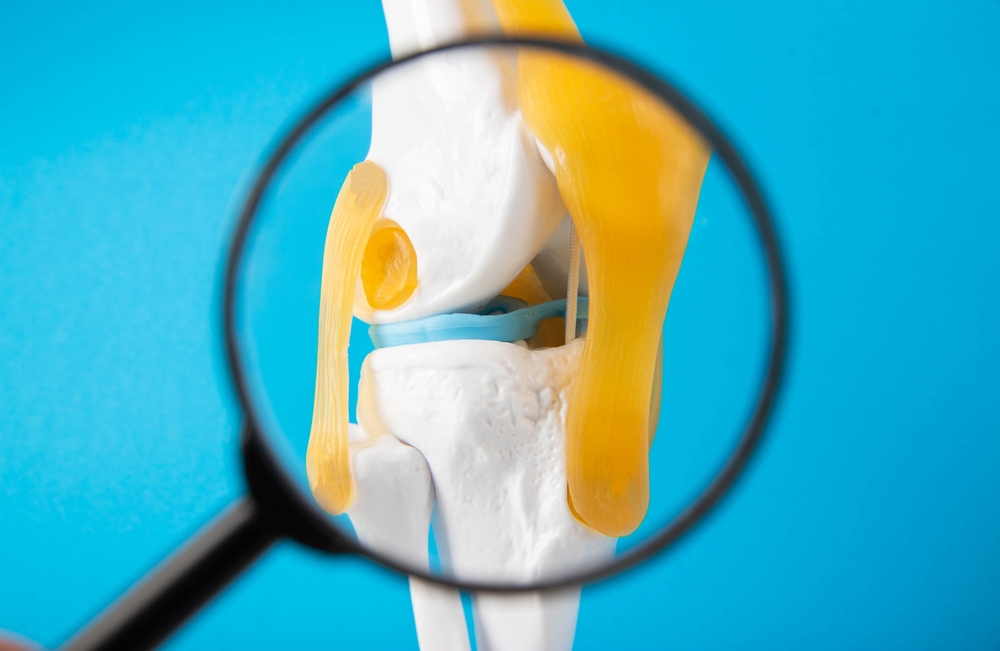
The constraint on natural healing exists primarily because cartilage is avascular. This lack of blood supply means the tissue has no internal way to deliver the cells needed for repair. Consequently, an isolated cartilage injury often remains an empty gap because the biological machinery for healing is simply absent within the tissue itself.
A repair response is typically only triggered if the joint’s environment allows blood or marrow cells to reach the site, providing the raw materials for a rescue process. Once this process begins, the body favors rapid closure over structural precision. Because original hyaline cartilage is slow-growing and complex, the body opts for an immediate seal of fibrocartilage, a simpler material that can be assembled quickly to protect the bone. While this creates a functional patch, the resulting repair is naturally stiffer than the glassy surface you were born with, creating a deficit in quality that cartilage regeneration specifically seeks to overcome by restoring the original hyaline surface.
The Logic Behind Cartilage Regeneration
While cartilage repair focuses on providing a functional surface for the joint, cartilage regeneration is an approach aimed at supporting a more specific type of healing. Rather than just sealing a defect with a basic patch, this strategy focuses on producing tissue that more closely matches the original surface. This outcome depends on two critical pillars: the biological ingredients introduced to the injury and the structural support required for them to mature.
Providing the Foundation for New Growth
To overcome the limited access a joint has to its own repair cells, cartilage regeneration introduces biologics directly to the injury. These specialized cells or growth factors steer the healing process towards the production of high-quality tissue, yet they remain vulnerable to mechanical pressure. This is why various delivery systems are used to house and protect these fragile building blocks during the early stages of growth, allowing them to eventually form a resilient, smooth surface.
What Regeneration Is Not
To understand the potential of this approach, it’s crucial to look at what it can’t do. Cartilage regeneration is a biological strategy with specific requirements. It’s not a miracle fix that works in every situation.
Cartilage regeneration is not a fix for widespread wear. When wear is extensive, the strategy shifts from biological growth to precision resurfacing. This allows for the treatment of only the worn areas while preserving your own healthy bone and ligaments.
Cartilage regeneration is not a standalone solution for every joint. For cartilage regeneration to work, the rest of the joint must be stable. If there are issues with alignment or ligament support, the new tissue will likely struggle to survive the pressure of daily movement.
Cartilage regeneration is not instant recovery. Unlike a mechanical part that’s replaced and ready to use, biological tissue needs time to grow. You are essentially planting a garden rather than laying out a carpet that’s ready for immediate usage.
Cartilage regeneration is not universal across all age groups. Success depends on cellular vitality and the specific demands you place on the joint. While younger patients often have more active repair cells, the goal for every patient is to match the technology to their specific biology and activity goals.
Cartilage regeneration is not independent of your overall health. Biological healing such as cartilage regeneration requires a healthy environment. Factors like smoking or high body mass can reduce the ability of cells to create new, high-quality tissue.
Why Cartilage Regeneration Depends on the Whole Joint
If the necessary biological ingredients are in place, why does the success of cartilage regeneration still depend on the rest of the joint?
The answer lies in the fact that new tissue doesn’t function as a standalone surface. It exists within a larger system where the underlying bone provides support and surrounding structures guide every movement. Even when a damaged area is treated with the most advanced biological strategy, the environment around it continues to influence how stress is absorbed.
Think of it like repairing a pothole. Just as fresh asphalt needs time to set before it can handle heavy traffic, new cartilage requires a dedicated period to mature and integrate into the joint. When these factors work together, the cartilage regeneration process has the period and space to set. Ultimately, since these variables are unique to every individual, a specialist assessment is essential to determine the best possible course of action.

