

Forget grey hair and creaking joints: the decline in collagen production in your body is yet another sign of ageing. With fine lines cropping up on foreheads and your skin losing its bounciness, it might be time to look into restoring and stimulating collagen production.
Collagen is a buzzword in every skincare aisle and on the pages of aesthetic clinic brochures. It is often promised as the magic behind plump and youthful skin. However, as we age, natural collagen levels decline, leading to fine lines and dreaded skin sagging.


But can we really restore collagen, or is it simply a clever marketing gimmick?
Let’s dig into the science behind collagen and today’s cutting-edge treatments to help restore and encourage production.
Understanding Collagen
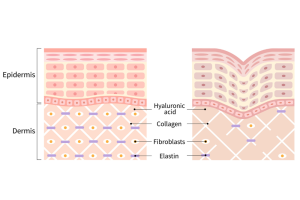
Collagen is the most abundant protein in the human body. It forms the structural framework of our skin, bones, and connective tissues.
In the skin, collagen is essential for:
- Replacing dead skin cells.
- Providing structure, strength and elasticity.
- Supporting fibroblasts (the cells that produce collagen and other fibres in the skin) to generate new cells.
Unfortunately, collagen production begins to dip from our mid-20s. By the time we hit the 40s and 50s, the decline becomes much more noticeable.
This is where beauty science steps in. It is not to replace collagen, but to stimulate the skin’s natural ability to rebuild it again.
Can PLA and HT1C Restore Collagen?
Unlike hyaluronic acid (HA) fillers that add immediate volume, collagen biostimulators, such as PLA and HT1C, work more gradually to kickstart the body’s own collagen-making process.
PLA (Polylactic Acid) Fillers
You might have heard of PLA, PDLLA, PDLA and PLLA fillers during your aesthetic research. So, what are they?
PLA fillers are a group of polylactic acid-based fillers that include PLLA, PDLA and PDLLA. While they are all polylactic acids, what sets them apart is the arrangement of the lactic acid molecules in their structures.
- PLA: Polylactic acid
- PLLA: Poly L-lactic acid
- PDLA: Poly D-lactic acid
- PDLLA: Poly DL-lactic acid
These fillers are made up of synthetic and biocompatible (well-tolerated by the body) polymers that restore and stimulate collagen production in the face and body. They remodel, or gradually lift, firm, and improve skin density. This makes them suitable for older patients with skin laxity.
HT1C Injection
HT1C is a hybrid injection combining polynucleotides (PN) and hyaluronic acid. PN, often derived from salmon DNA, acts as a cell signal to trigger tissue repair. Hence, this can help the skin generate fresh collagen over time.
Besides having anti-inflammatory and antioxidant properties, studies suggest PN also can encourage and stimulate the production of collagen and hyaluronic acid in the skin. This is crucial to improve skin texture, reduce fine wrinkles and enhance facial rejuvenation.
The Link Between Salmon Sperm Injections and Collagen Production

If you have seen influencers getting “salmon sperm” injected into their skin, you may be wondering what is actually in them.
Perhaps the more important question is, what does it actually do?

According to Dr Paul Yow, Director of Aesthetic Medicine at Eagle Aesthetics & Surgery, salmon sperm injections contain purified DNA fragments from salmon or trout sperm cells. These DNA fragments are known as polynucleotide (PN) and polydeoxyribonucleotide (PDRN). PN and PDRN have wound-healing, anti-inflammatory and hydrating properties.
“Salmon sperm injections are particularly recommended for dull, sensitive or aging skin. A complete series of injections is advised, especially for first timers to enhance the effects.”
He also shared that salmon sperm injections can improve skin hydration, elasticity and repair. Some studies support its role in stimulating fibroblasts and reducing inflammation. It is generally safe and well tolerated, although those with fish or seafood allergies should avoid this treatment.
Who Should Avoid Collagen Injections?
Dr Paul emphasises that all collagen injections – whether bovine, porcine or recombinant – should be avoided by those with:
- Allergies to collagen, its source (e.g. porcine, bovine, equine, fish), or other ingredients such as lidocaine used in the injection mix.
- Autoimmune or connective tissue disorders, due to the risk of triggering inflammation.
- Active skin infections in the treatment area.
- Pregnancy or breastfeeding, due to the lack of safety data.
Can Oral Collagen Help Too?
“Yes, but only when taken consistently and with the appropriate form,” says Dr Paul.
Oral collagen is hydrolysed collagen peptides that can survive digestion better and can be absorbed into the bloodstream.
Dr Paul shared some tips for taking oral collagen effectively:
- Choose Type I and III collagen from marine or bovine sources.
- Take it daily for at least 8 to 12 weeks.
- Combine with vitamin C, which is essential for collagen synthesis.
- Best to pair with treatments that directly trigger skin collagen production.
How Radiofrequency Microneedling Can Boost Collagen Production
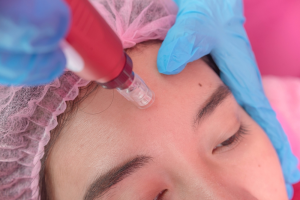
Radiofrequency (RF) microneedling is a type of minimally invasive approach to trigger collagen production. It uses tiny needles to puncture the skin and deliver radiofrequency energy deep into the dermis. This introduces controlled heat energy into the tiny wounds, which helps to restore and stimulate collagen production as the tiny wounds heal.
As RF microneedling delivers a focused micro-injury to the dermis, this prevents the outer layer of skin from damage. This helps to prevent undesirable scarring, pigmentation changes, and skin redness that may occur with laser treatments or traditional microneedling. Side effects are generally mild, such as short-lived discomfort.
So, Can You Truly Restore Collagen?
Science says yes!
With the advent of treatments like PLA, HT1C, and RF microneedling in the aesthetic space, it is now possible to restore and stimulate collagen production in your skin. In addition, these treatments can help contribute to overall skin rejuvenation.
Just remember that collagen does not come back overnight. With consistency, the right treatment plan, and advice, your skin can look fresher and younger over time.
References
- Collagen. Cleveland Clinic. Updated: 23 May 2022. https://my.clevelandclinic.org/health/articles/23089-collagen
- What’s The Difference Between PLA, PDLLA, PDLA and PLLA Fillers? Harley Academy. Updated: 22 August 2024. https://www.harleyacademy.com/aesthetic-medicine-articles/whats-the-difference-between-pla-pdlla-pdla-and-plla-fillers/
- Lee, K. W. A., Chan, K. W. L., Lee, A., Lee, C. H., Wan, J., Wong, S., & Yi, K. H. (2024). Polynucleotides in Aesthetic Medicine: A Review of Current Practices and Perceived Effectiveness. International journal of molecular sciences, 25(15), 8224. https://pmc.ncbi.nlm.nih.gov/articles/PMC11311621/
- https://eagleeyeaesthetics.com.sg/doctors/dr-paul-yow/
- What is PDRN – and why is salmon sperm the hottest K-beauty trend right now? CNA Lifestyle. Updated: 11 March 2025. https://cnalifestyle.channelnewsasia.com/style-beauty/k-beauty-pdrn-salmon-sperm-460441
- Does Hydrolysed Collagen Work? The Medical Perspective. Medical Channel Asia. Updated: 10 July 2024. https://medicalchannelasia.com/does-hydrolysed-collagen-work-the-medical-perspective/
- Shauly, O., Marxen, T., Menon, A., Gould, D. J., Miller, L. B., & Losken, A. (2023). Radiofrequency Microneedling: Technology, Devices, and Indications in the Modern Plastic Surgery Practice. Aesthetic surgery journal. Open forum, 5, ojad100. https://pmc.ncbi.nlm.nih.gov/articles/PMC11181949/
- Can Laser Treatments Really Treat Acne Scars and Sagging Skin? Medical Channel Asia. Updated: 4 December 2024. https://medicalchannelasia.com/can-laser-treatments-really-treat-acne-scars-and-sagging-skin/

