

Your sleeping position may feel like a personal preference, but it actually plays a big role in sleep quality and physical health. From back and neck pain to acid reflux and sleep apnoea, the way you sleep can influence how well your body rests and recovers overnight.
There is no single “perfect” sleeping position that suits everyone. The best sleeping position depends on individual factors such as existing health conditions, comfort, and sleep habits. Understanding how different sleeping positions affect the body can help you make small adjustments that lead to better sleep and fewer aches in the morning.


This guide explores the most common sleeping positions, their potential benefits and drawbacks, and which positions may be better for specific health concerns such as back pain, gastro-oesophageal reflux disease (GERD), and sleep apnoea.
Why Sleeping Position Matters
Poor sleeping posture can place strain on the spine, joints, and muscles for several hours at a time, which may contribute to stiffness, discomfort, or disrupted sleep.
Good sleeping posture helps to:
- Maintain the natural alignment of the spine
- Reduce pressure on joints and soft tissues
- Support steady breathing during sleep
Over time, even small postural stresses during sleep can add up, especially for people with existing musculoskeletal or breathing issues.
Types of Sleeping Position
1. Side Sleeping
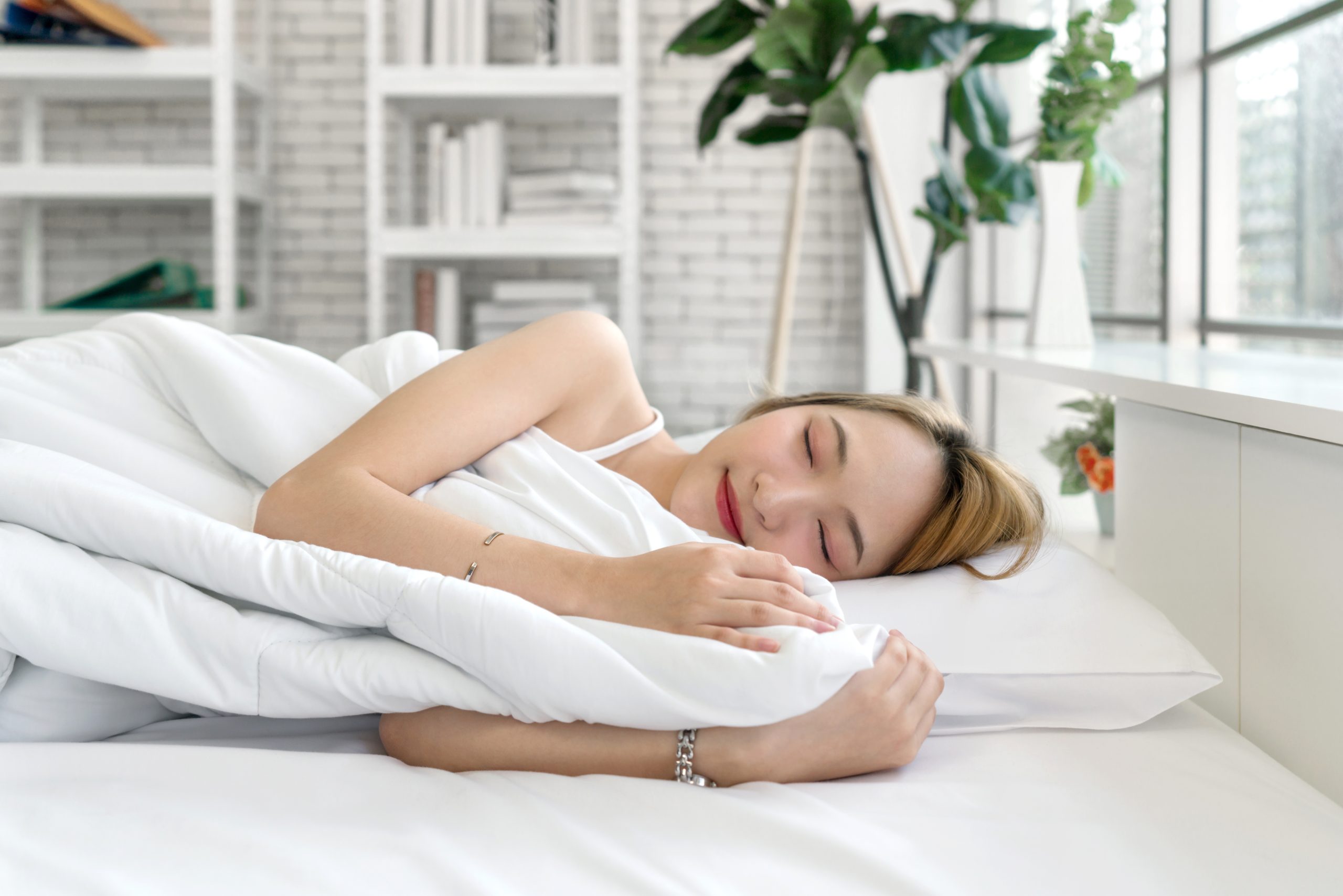
Side sleeping is one of the most common sleeping positions and is often recommended for overall sleep health when supported properly.
Potential Benefits:
Side sleeping may:
- Support better spinal alignment, especially when a pillow is placed between the knees, which may help relieve back pain
- Reduce snoring and breathing disturbances by keeping the airway more open, making it beneficial for people with obstructive sleep apnoea
- Help reduce acid reflux symptoms, particularly when sleeping on the left side
Possible Drawbacks:
Side sleeping may:
- Place pressure on the shoulders and hips, leading to discomfort if the mattress or pillow does not provide adequate support
- Cause arm numbness if body weight is unevenly distributed
Using a pillow that keeps the head aligned with the spine and supporting the knees can help minimise these issues.
Read also: Sleep Your Way to a Pain-Free Back
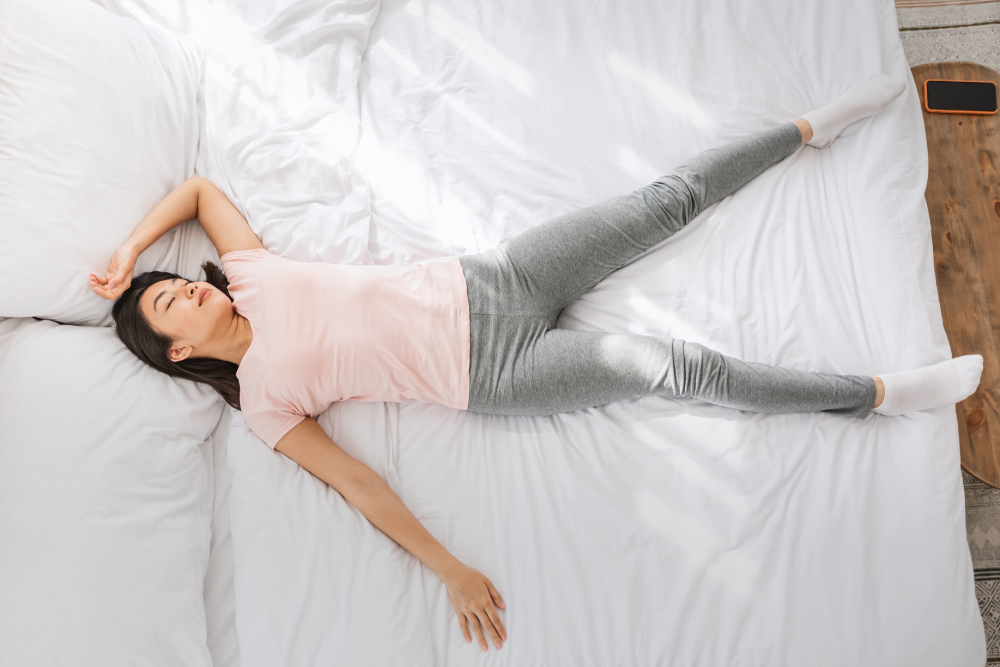
2. Back Sleeping
Back sleeping involves lying flat on the back, facing upward, with body weight evenly distributed across the mattress.
Potential Benefits:
Back sleeping may:
- Reduce overactivity of the neck muscles, which may help relieve neck pain when the neck is kept in a neutral position
- Reduce pressure on the hips and shoulders compared to side sleeping
- Minimise facial compression during sleep, which may reduce skin creasing over time
Possible Drawbacks:
Back sleeping may:
- Worsen snoring and obstructive sleep apnoea, as gravity allows the tongue and soft tissues to fall backward and narrow the airway
- Aggravate acid reflux symptoms unless the upper body is slightly elevated
- Increase lower back discomfort if the lumbar spine is not adequately supported
- Not be recommended during pregnancy, as the weight of a growing baby can compress major blood vessels and affect blood flow
Depending on the firmness of your mattress, a small gap can form between your lower back and the mattress surface, leading to tension in the lower back. You can resolve this by placing a thin pillow in that area or by placing a pillow under your knees. Some people may also benefit from alternating between back and side sleeping throughout the night, depending on comfort and symptoms.
For people who prefer back sleeping but experience reflux or breathing issues, elevating the head and chest may offer some relief.
3. Stomach Sleeping
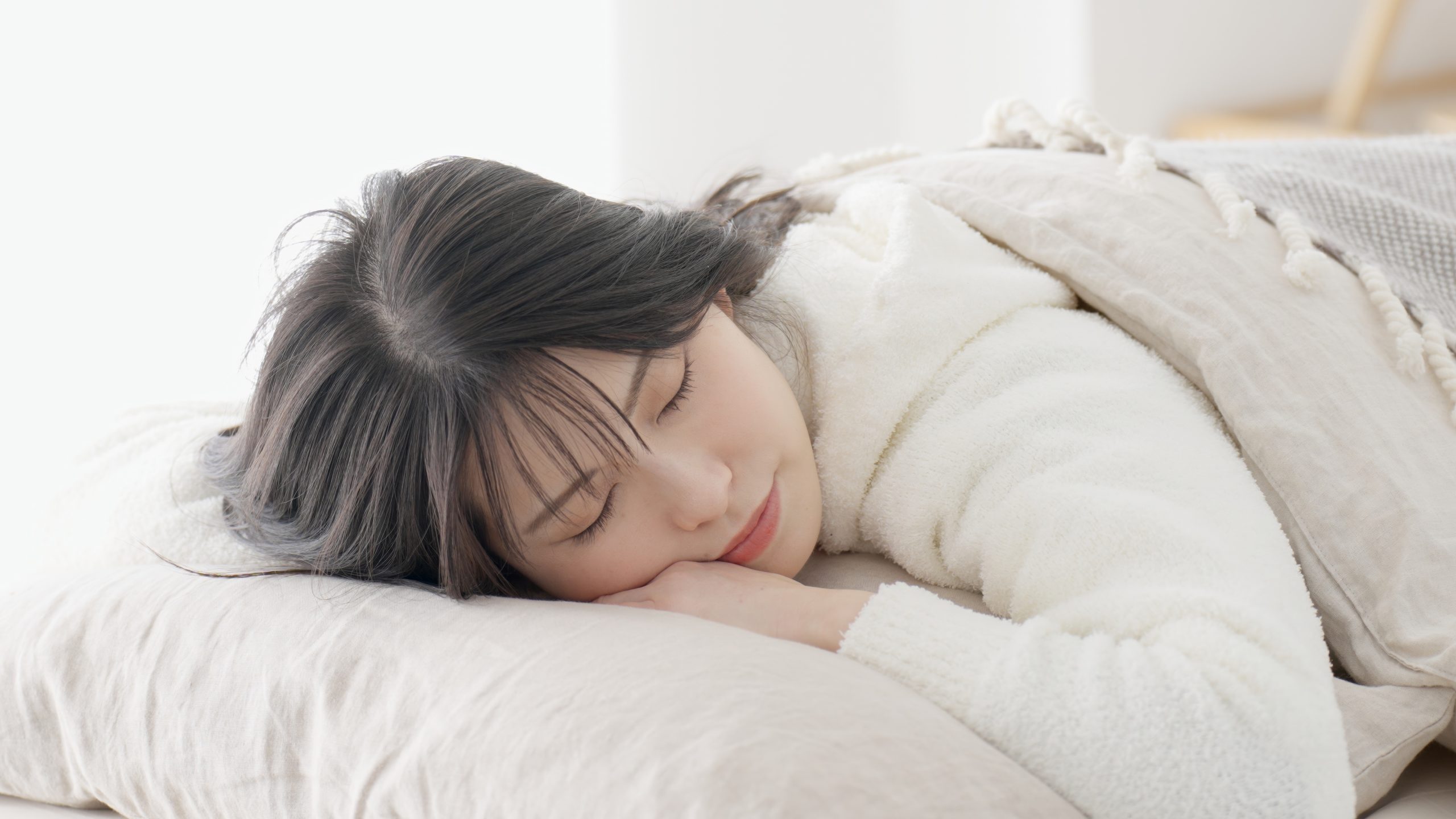
Stomach sleeping is generally considered the least supportive sleeping position, although some people find it difficult to sleep in any other way.
Potential Benefits:
Stomach sleeping may reduce snoring in some individuals.
Possible Drawbacks:
Stomach sleeping often:
- Places strain on the neck due to prolonged head rotation
- Increases pressure on the lower back, which may worsen back pain
- Disrupts natural spinal alignment
- Aggravates acid reflux and is not recommended for people with sleep apnoea
If stomach sleeping cannot be avoided, using a thin pillow or no pillow under the head. Placing a pillow under the pelvis may help reduce strain.
Choosing the Best Sleeping Position for You
There is no single best sleeping position for everyone. The ideal position depends on comfort, existing health conditions, and sleep habits.
In general, side sleeping may suit people with back pain, reflux, or sleep apnoea, while back sleeping may work well for those without breathing or reflux issues when proper support is used. Stomach sleeping is best avoided where possible due to increased strain on the neck and spine.
Take the Sleep Quiz to assess your sleep quality and for personalised tips & advice for you.
References
- Cary, D., Briffa, K., & McKenna, L. (2019). Identifying relationships between sleep posture and non-specific spinal symptoms in adults: A scoping review. BMJ Open, 9(6), e027633. https://pubmed.ncbi.nlm.nih.gov/31256029/
- Simadibrata, D. M., Lesmana, E., Amangku, B. R., Wardoyo, M. P., & Simadibrata, M. (2023). Left lateral decubitus sleeping position is associated with improved gastroesophageal reflux disease symptoms: A systematic review and meta-analysis. World journal of clinical cases, 11(30), 7329–7336. https://doi.org/10.12998/wjcc.v11.i30.7329
- Ylinen, J., Häkkinen, A., Kautiainen, H., & Multanen, J. (2024). Preferences and Avoidance of Sleeping Positions Among Patients With Chronic Low Back Pain: A Cross-Sectional Study. Cureus, 16(5), e59772. https://doi.org/10.7759/cureus.59772
- Lee, W. H., & Ko, M. S. (2017). Effect of sleep posture on neck muscle activity. Journal of Physical Therapy Science, 29(6), 1021–1024. https://pubmed.ncbi.nlm.nih.gov/28626314/
- Anson, G., Kane, M. A. C., & Lambros, V. (2016). Sleep wrinkles: Facial aging and facial distortion during sleep. Aesthetic Surgery Journal, 36(8), 931–940. https://pubmed.ncbi.nlm.nih.gov/27329660/
- Katz, J., Sanapo, L., Bublitz, M. H., Guillen, M., Avalos, A., Aldana, A., Wilson, D., & Bourjeily, G. (2024). Longitudinally assessed maternal sleep position, measures of breathing during sleep, and fetal growth in high-risk pregnancies. Sleep, 47(2), zsad315. https://doi.org/10.1093/sleep/zsad315

