


As an expectant mother, introducing a new life into the world is one of the most profound experiences anyone can have. Naturally, this also means that the path to birth is not always straightforward. How do you even decide between a C-section and natural birth?
As the due date approaches ever closer, one concern that tends to loom large is in regards to how your baby will be delivered. Some already know how it will go. But for others, they are overwhelmed by a swirling mix of opinions, fears, and personal values.


The two most common childbirth methods, natural or vaginal birth, and caesarean section (c-section), each come with their own benefits and challenges. While one is not necessarily better than the other, tacking the facts on top of your individual circumstances can empower you to make an informed choice when the day arrives.
So how should you decide?
Modes of Delivery
First, let us get a better understanding of these two methods of childbirth.
Vaginal Delivery

As the oldest form of childbirth known to man, natural birth refers to vaginal delivery with little to no surgical or even medical intervention. However, it may be assisted or induced, and include pain relief options like epidurals, depending on the mother’s preference or needs.
It consists of three stages. First, labour progresses through contractions that dilate the cervix. Then, the baby is “pushed” out through the birth canal. Lastly, the placenta is delivered.
C-section
A C-section is a surgical procedure in which the baby is delivered through incisions in the abdomen. Often, doctors will use an epidural or anaesthesia to cut off the sensations during the procedure.
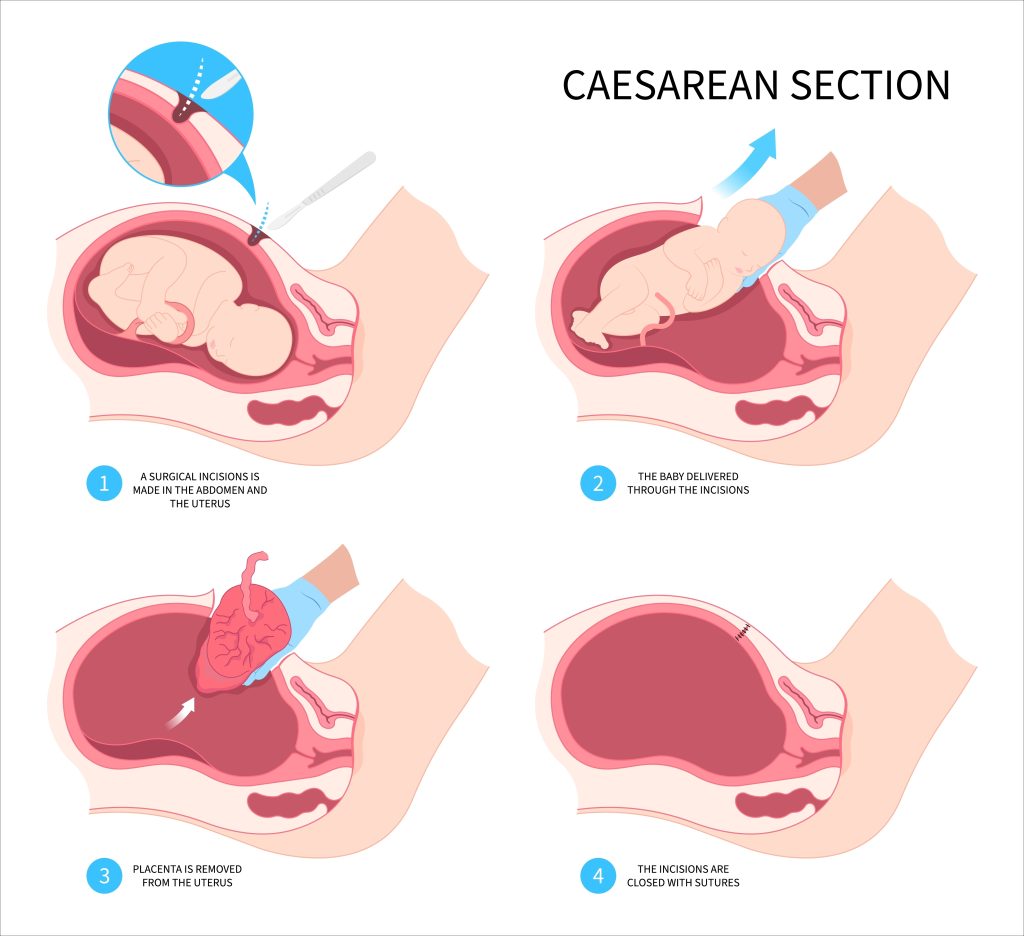
While it may be scheduled or elected, it is also performed as an emergency measure in the event of complications during natural birth. This includes:
- Failure to progress in labour
- Umbilical cord compression
- When an abnormal heart rate detected in the foetus
- Multiple births
- When the placenta covers the cervix or is too deep in the uterine wall
- When the foetus is in breech position
- Maternal health issues like diabetes or infection
The Advantages of Natural Birth Over C-Sections
As the traditional mode of childbirth, women choose it for multiple reasons.
Faster Recovery
Assuming there is no medical issue, a mother can expect to be discharged within 48 hours after delivery, half the time as compared to a C-section. This also means she can return to normal activities sooner.
Lower Risk of Surgical Complications
Furthermore, there is less risk of complications associated with abdominal surgery, such as infections or blood clots, in addition to a decreased chance of future pregnancy issues.
Benefits to the Baby
Passing through the vaginal canal also exposes newborns to good bacteria that can help strengthen their immune system, lowering their likelihood of developing allergies.
As a bonus, breastfeeding can be initiated earlier, thus encouraging bonding.
⚠️ Risks to Note for Natural Births
Vaginal births often result in tearing. While this can be easily rectified, it could also create problems with the pelvic muscles and bowels.
Moreover, labour can be long, unpredictable, and physically taxing. Sometimes, it can lead to issues including haemorrhage, deep vein thrombosis, or other complications that end up requiring an emergency C-section.
The Advantages of C-Sections Over Natural Births

While a natural birth is normally encouraged, C-sections can be appealing for many women.
Convenient and Predictable
A scheduled birth allows parents to plan ahead, offering better logistical management and even reducing the stress and anxiety of waiting for the labour to start. The mother can also avoid the pain and unpredictability of labour contractions and delivery, as the process is more controlled.
“The anaesthesia team stays with the mother throughout the C-section, maintaining constant communication and monitoring her condition,” said Dr Teo Wei Wei, Senior Consultant in the Department of Anaesthesia, National University Hospital.
“At any point the mother feels discomfort, the surgery will be paused, if feasible. We will then evaluate and address the issue, for instance by offering extra pain relief, before resuming the procedure.”
Lower Risks to the Baby
With an elective C-section, there is also less chance of the baby experiencing oxygen deprivation during the delivery, or developing incontinence or sexual dysfunction. The baby will also experience less of the trauma typically associated with vaginal births.
⚠️ Risks to Note for C-Sections
Beyond the longer recovery time, mothers also face higher chances of complications from surgery. It also places higher risk on future pregnancies compared to natural births.
Furthermore, babies born of C-sections are also more prone to having respiratory issues.
Choosing the Right Delivery for You
Preexisting medical conditions, personal preferences, and complications that arise during the delivery are all important considerations for this choice. But sometimes, the decision does not really lie in which method is “better”, but which is better for you and your baby in that moment.
So stay educated, rally your family and friends around you, and try to be flexible. Even with a birth plan, anything can happen.
At the end of the day, the best outcome involves a safe delivery, and a well-supported mother.
External References
- Chin, H.C. (2021, April 30). Childbirth: A Guide for First-Time Mothers. Mount Elizabeth Hospitals. Retrieved from: https://www.mountelizabeth.com.sg/health-plus/article/childbirth-guide-mothers
- Cleveland Clinic. (2021, November 4). C-Section vs. Natural Birth: What Expectant Moms Need to Know. Retrieved from: https://health.clevelandclinic.org/why-you-should-carefully-weigh-c-section-against-a-vaginal-birth
- Cleveland Clinic. (2022, May 26). Vaginal Delivery. Retrieved from: https://my.clevelandclinic.org/health/articles/23097-vaginal-delivery
- Fong, W. W. (2018, October 23). C-section vs Natural Birth: What You Need to Know to Choose. SMG Women’s Health. Retrieved from: https://smgwomenshealth.sg/news-articles/c-section-vs-natural-birth-what-you-need-to-know-to-choose/
- HealthXchange. (n.d.). Pregnancy Week 37: C-section vs Natural Vaginal Birth. Retrieved from: https://www.healthxchange.sg/pregnancy/during-pregnancy/pregnancy-week-thirty-seven-c-section-natural-vaginal-birth
- NUHS. (2025, April 27). What happens when you go for a C-section? Retrieved from: https://nuhsplus.edu.sg/stories/what-happens-when-you-go-for-a-c-section
- Parkway East Hospital. (2021, March 18). What’s Better? Natural Birth, or a C-Section? Retrieved from: https://www.parkwayeast.com.sg/health-plus/article/natural-delivery-caesarean-delivery
- SBCC. (n.d.). C-section vs. Natural Delivery? Retrieved from: https://www.sbcc.sg/c-section-vs-natural-delivery/
- The Healthline Editorial Team. (2016, July 8). Reasons for a C-Section: Medical, Personal, or Other. Healthline. Retrieved from: https://www.healthline.com/health/pregnancy/c-section-reasons
- Valeii, K. (2024, June 3). What Is a C-Section (Cesarean Section)? Verywell Health. Retrieved from: https://www.verywellhealth.com/c-section-5202168

