

When people talk about health, the conversation usually centres on traditional lifestyle factors such as a balanced diet, sufficient exercise, and quality sleep. While love rarely makes the list, research continues to show that healthy relationships may be just as essential to our overall wellbeing.
It is almost Valentine’s Day, and signs of love are everywhere – literally. On cards and chocolates, in floral shops and supermarkets, and all across social media feeds, roses and romantic captions galore.


And if you are in a loving relationship, you are definitely emitting signs of it too, of lingering gazes, flushed cheeks, and comfortable affection.
But love does more than give you fireworks and butterflies. It is a biological experience that skips along our neural pathways, living in physiological responses that shape not just how we think, but how we feel and function.
This means that love is not just a sentimental concept; it can be an influential force on both our physical and mental health.
When We Have Love on the Brain
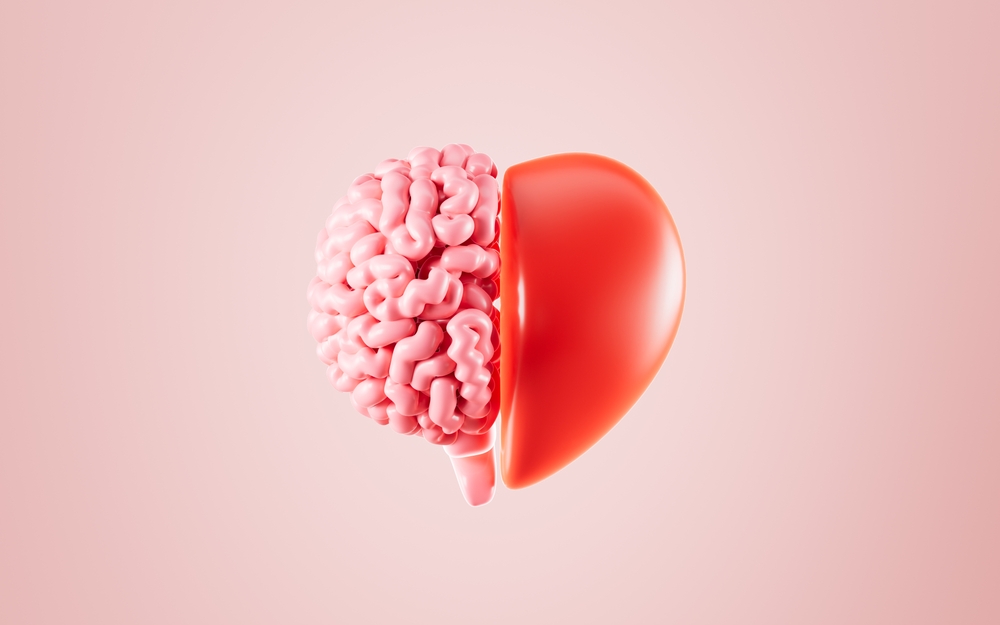
Love is typically thought to be a matter of the heart, but it affects our brains just as well. Even looking at someone we love can drive more activity in certain brain regions than looking at anyone else.
This is because when we feel loved or deeply connected to someone, our brains release a combination of neurotransmitters and hormones in response, including dopamine, oxytocin and vasopressin.
Dopamine
Dopamine is a part of the brain’s reward system, and plays a key role in romantic attraction and emotional bonding. It can engender feelings of pleasure and motivation, reinforcing behaviours that bring us closer to the people we love.
This explains why love can energise us, causing us to constantly seek out the object of our affections.
Oxytocin
Oxytocin is a hormone that fosters connection, playing an essential role in different forms of bonding. For instance, while oxytocin levels are known to increase during childbirth and breastfeeding, this hormone is also released in the midst of sexual activity.
It increases trust and strengthens attachments. It also lowers levels of cortisol, the stress hormone, and promotes a sense of safety, thus helping relax the nervous system.
Vasopressin
Vasopressin is a hormone that regulates a variety of bodily functions, and when it comes to love, it often works alongside oxytocin to promote emotional attachment.
They increase our desire to maintain the relationship over time. They also stir up protective behaviours, such as wanting to defend our partner against dangerous situations.
View this post on Instagram
Together, these chemicals create a brain environment that favours connection and resilience.
The Health Benefits of a Loving Relationship
The physiological responses we experience as a result of love can be rather extensive, and this explains why it can have a number of favourable effects on our wellbeing.
A Boost to Our Physical Health
Stress is noted to trigger various adverse effects on the body, contributing to inflammation and cardiovascular problems. Love can help us effectively manage these impacts, such that we benefit from a decreased risk of heart disease, lower blood pressure, an improved immune system, and even a faster recovery from illness.
An Extension to Our Lifespan
According to research, those who are attached may live a little longer than those who are single. Even among couples, this rate can differ, increasing when the level of satisfaction experienced in the relationship is higher.
A Balm for Pain
Love can influence how the brain processes pain. A study reported how even looking at one’s partner can reduce their perception of pain, exemplifying how a healthy relationship can make healing and recovery more manageable.
At the end of the day, being part of a supportive relationship can be validating and comforting, acting as a psychological safety net during times of stress or uncertainty, ultimately augmenting both physical and mental resilience.
Love Beyond Romance

Taking your loved one out on Valentine’s Day is a time-honoured way of reinforcing your closeness and celebrating your relationship.
But remember that experiencing any of the benefits of love require more than one-off gestures; it involves mutual trust and respect, and a care that manifests itself on a daily basis.
This means being open to communicating our needs while meeting our partner’s, and learning to manage conflict in a healthy way. After all, we are all different, which means that we are bound to clash every once in a while. Being able to discuss an issue rather than avoiding it can strengthen your sense of reliability in your relationship, and move it forward in a progressive way.
“Studies have shown that having a sense of commitment, the desire to have a relationship that lasts will more likely lead to behaviours that support the relationship,” highlighted Dr Lim Boon Leng, a psychiatrist at Dr BL Lim Centre for Psychological Wellness, in CNA.
Love is something sustained and intentional, not just something we feel, and how we choose to nurture it influences our way of living well.
If you happen to be single, worry not – being unattached comes with its own health benefits. Read here for more: Why It’s OK To Be Single and Not Mingle This Valentine’s Day
References
- Brown, S. (2026, January 5). This Is What Happens to Your Brain When You’re in Love. Verywell Health. Retrieved from: https://www.verywellhealth.com/your-brain-in-love-8575246
- Cassata, C. (2023, September 22). What Is Vasopressin? Everyday Health. Retrieved from: https://www.everydayhealth.com/vasopressin/guide/
- Cherry, K. (2025, December 1). What Love Is and How to Cultivate It. Verywell Mind. Retrieved from: https://www.verywellmind.com/what-is-love-2795343
- Collier, J. (2020, March 16). What does love do to our brains? Medical News Today. Retrieved from: https://www.medicalnewstoday.com/articles/what-does-love-do-to-our-brains
- Cronkleton, E. (2022, December 22). How can you tell if you’re in love? Medical News Today. Retrieved from: https://www.medicalnewstoday.com/articles/how-do-you-know-you-love-someone
- doctor.bing (2025) What love does to your brain. Instagram. Retrieved from: https://www.instagram.com/reel/DGCN3ntMx0y/
- Gan, E. (2020, August 28). The science and art behind enduring love and a successful marriage. CNA. Retrieved from: https://www.channelnewsasia.com/singapore/science-and-art-behind-enduring-love-and-successful-marriage-5687376
- Raypole, C. (2020, August 5). 15 Ways Love Affects Your Brain and Body. Healthline. Retrieved from: https://www.healthline.com/health/relationships/effects-of-love
- Young Kuchenbecker, S., Pressman, S. D., Celniker, J., Grewen, K. M., Sumida, K. D., Jonathan, N., Everett, B., & Slavich, G. M. (2021). Oxytocin, cortisol, and cognitive control during acute and naturalistic stress. Stress (Amsterdam, Netherlands), 24(4), 370–383. Retrieved from: https://pmc.ncbi.nlm.nih.gov/articles/PMC8254750/

