

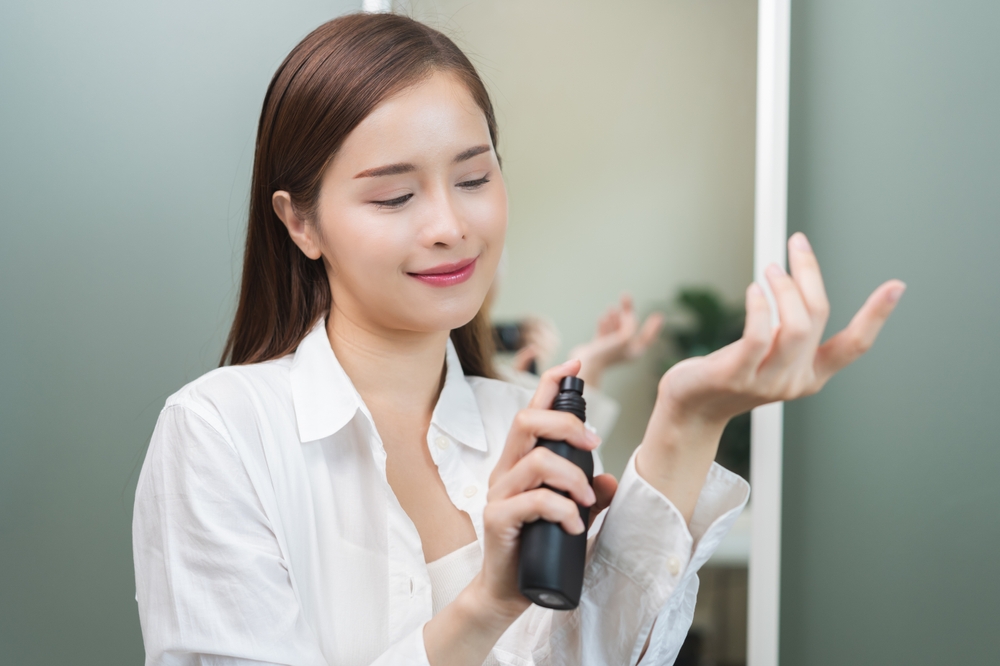
While we use fragrance for attraction, the science of scent reveals deeper connections to our brain and potential risks to our long-term health.
A Direct Path to the Brain
Among all human senses, the sense of smell is unique because of its anatomical fast track to the brain. When you inhale a fragrance, the molecules travel to the olfactory bulb, which has a direct connection to the amygdala, the area responsible for processing emotions, and the hippocampus, which handles memory.


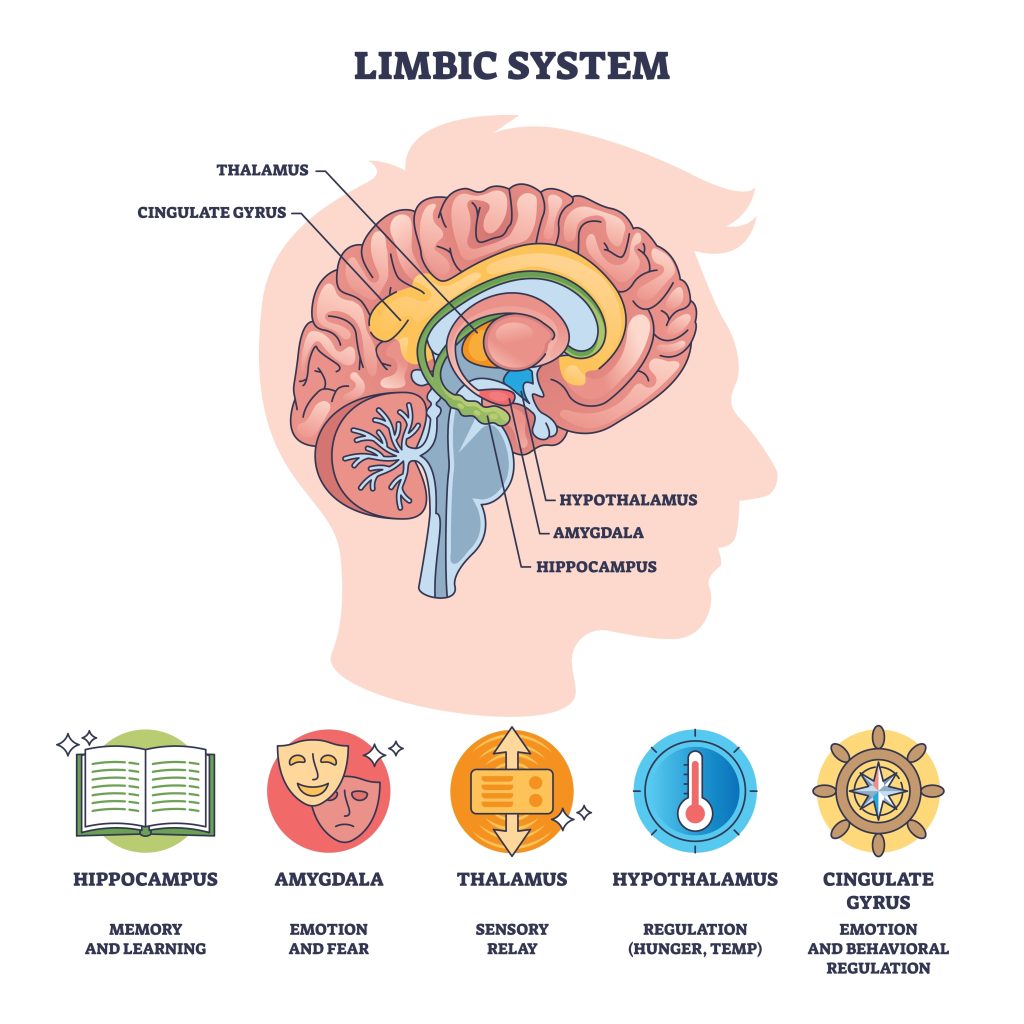
This is why a specific scent can instantly trigger a vivid childhood memory or a strong emotional reaction toward a stranger. Unlike sight or touch, which are processed through other brain regions first, scent hits our emotional core almost instantly. This “Limbic Connection” is the foundation of how fragrance drives human attraction and social perception.
The Biology of Attraction: The MHC Factor
Evolutionary biology suggests that scent acts as a silent messenger for genetic compatibility. A key player in this process is the Major Histocompatibility Complex (MHC). This is a set of genes that helps the immune system recognise foreign substances.
Studies have shown that humans are naturally more attracted to the scent of individuals whose MHC genes are different from their own. From an evolutionary perspective, this serves a vital purpose: producing offspring with a more diverse and robust immune system. Interestingly, we do not just use perfume to hide our natural scent. Research indicates that we often choose fragrances that complement and amplify our unique MHC signals, essentially broadcasting our genetic profile to potential partners.
The Halo Effect: Perception Beyond the Bottle
In 2025, psychological studies further confirmed that pleasant scents create what experts call a Halo Effect. This is a cognitive bias where our positive impression of one trait—such as how someone smells—influences how we perceive their entire character.
Different scent profiles can trigger specific unconscious judgements:
- Professionalism: Clean, citrus-based notes like lemon or bergamot often lead others to perceive an individual as more disciplined and organised.
- Trustworthiness: Soft, “skin-like” scents involving light musk or sandalwood create a sense of comfort and reliability.
- Attractiveness: Deep, primal notes such as vanilla, amber, or oud are frequently associated with warmth and romantic mystery.
The Rise of Neuro-Scents
As we move through 2026, the industry has shifted toward “Functional Fragrance” or neuro-perfumes. These are no longer just about smelling like flowers or wood; they are engineered to produce specific physiological responses.
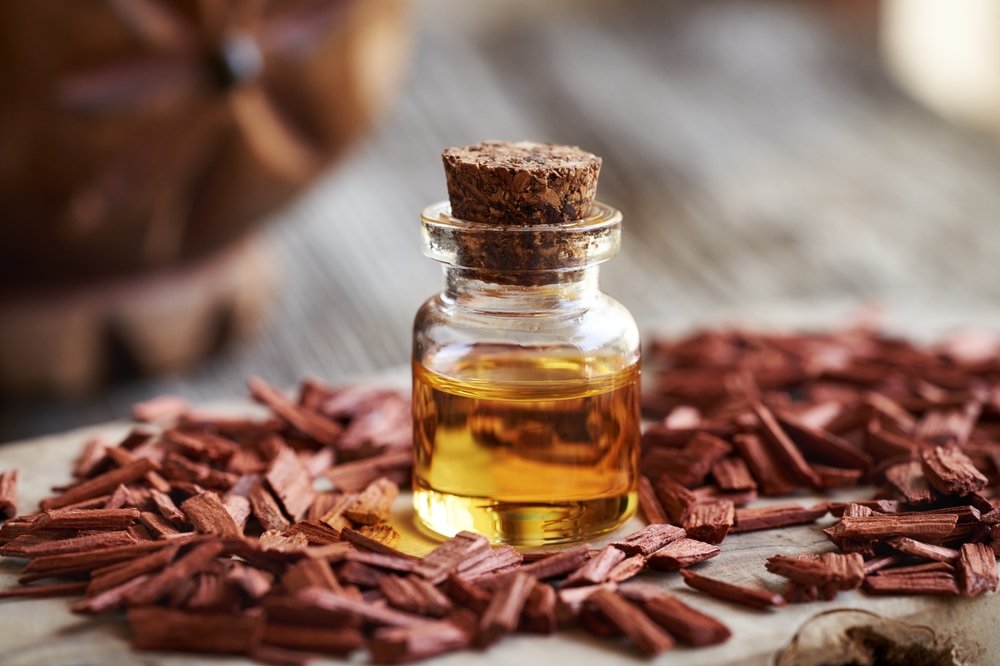
For example, clinical trials have explored ingredients like sandalore, a synthetic sandalwood. Research suggests that sandalore can interact with olfactory receptors located not just in the nose, but also in the skin. These interactions may help lower cortisol levels (the stress hormone) and increase signals of approachability, making the wearer seem more relaxed and welcoming to those around them. This intersection of digital health and traditional beauty is changing how we view personal care.
The Hidden Impact: Bioaccumulation of Phthalates
While the psychological benefits of fragrance are clear, the medical community is increasingly concerned about cumulative exposure. For instance, many perfumes contain phthalates, specifically Diethyl Phthalate (DEP), which acts as a fixative to ensure the scent lasts for several hours on the skin.
Although these are generally considered safe for occasional use, medical experts nevertheless provide a cautionary note regarding the long-term effects or misuse of these substances. In particular, Dr Soma Subramaniam, otorhinolaryngologist at Parkway East Hospital warns that pregnant women should consult doctors before using aromatherapy as “some scented oils can cause hormone dysregulation.”
The concern lies in bioaccumulation—the gradual buildup of these chemicals in the body over decades. Phthalates are known endocrine disruptors, meaning they can interfere with the hormonal system. Longitudinal studies have linked long-term exposure to thyroid dysfunction. In men, consistent exposure over ten to twenty years has been associated with decreased testosterone levels and lower sperm quality.
View this post on Instagram
Sensitisation and Chemical Sensitivity
For some individuals, what begins as a love for fragrance can evolve into a chronic health issue known as Multiple Chemical Sensitivity (MCS). This occurs through a process of sensitisation, where the immune system begins to view synthetic fragrance molecules as a threat.
Once the body is sensitised, even a faint scent in a shopping mall or office can trigger:
- Chronic migraines or tension headaches.
- Brain fog and difficulty concentrating.
- Contact dermatitis (red, itchy skin rashes).
This condition highlights the importance of moderation and being mindful of the chemical loads we place on our bodies daily.
Respiratory Health in Urban Environments
Furthermore, recent data from 2025 suggests that heavy fragrance use may impact the lungs, particularly for those living in densely populated Asian cities like Singapore or Hong Kong. In high-rise apartments with limited natural ventilation, the concentration of Volatile Organic Compounds (VOCs) from perfumes and household sprays can remain high.
Chronic inhalation of these compounds can lead to low-grade, persistent inflammation of the lung tissue. Over time, this may result in a measurable decline in lung elasticity, a process similar to premature aging of the respiratory system. For individuals already dealing with sensitivities or asthma, these environmental factors are especially significant.
Balancing Beauty and Wellbeing
Ultimately, understanding the science of scent allows us to appreciate the complex role it plays in our social lives while simultaneously remaining cautious about our long-term health. In other words, just as we might carefully research medical procedures and treatments, we should also be intentional about the products we apply to our skin every day.
In order to enjoy fragrances safely, you may wish to consider the following steps:
- Apply scents to clothing instead of directly to the skin to reduce chemical absorption.
- Look for “phthalate-free” labels when purchasing new products.
- Ensure there is always good ventilation at home when using any aromatic sprays.
By being informed consumers, we can harness the power of the “Limbic Connection” without compromising our internal health.
References:
- Chaix, R., Cao, C., & Donnelly, P. (2008). Is Mate Choice in Humans MHC-Dependent? PLoS Genetics, 4(9), e1000184. https://doi.org/10.1371/journal.pgen.1000184
- Roberts, S. C., Gosling, L. M., Carter, V., & Petrie, M. (2008). MHC-correlated odour preferences in humans and the use of oral contraceptives. Proceedings of the Royal Society B: Biological Sciences, 275(1652), 2715–2722. https://doi.org/10.1098/rspb.2008.0825
- Thornhill, R. (2003). Major histocompatibility complex genes, symmetry, and body scent attractiveness in men and women. Behavioral Ecology, 14(5), 668–678. https://doi.org/10.1093/beheco/arg043
- Busse, D., Kudella, P., Grüning, N. M., Gisselmann, G., Ständer, S., Luger, T., Jacobsen, F., Steinsträßer, L., Paus, R., & Hatt, H. (2014). A synthetic sandalwood odorant induces wound healing processes in human keratinocytes via the olfactory receptor OR2AT4. Journal of Investigative Dermatology, 134(11), 2823–2832. https://doi.org/10.1038/jid.2014.273
- Denda, M., & Elias, P. M. (2025). Review of sensory systems deployed by epidermal keratinocytes. Frontiers in Cell and Developmental Biology, 13, 1598326. https://doi.org/10.3389/fcell.2025.1598326
- Ngo, T. T. M., Nguyen, H. M., Mai, T. T., & Nguyen, T. D. (2025). How Store Atmosphere Drives Impulse Buying: The Roles of Emotion, Value, and Self-Control. Oikonomia: Jurnal Manajemen, 21(2), 183–208.
- Lötsch, J., & Hummel, T. (2023). The clinical importance of the sense of smell. Neuroscience & Biobehavioral Reviews, 152, 105269. https://doi.org/10.1016/j.neubiorev.2023.105269
- Singapore General Hospital (News/Website Article). Singapore General Hospital. (2023, September 12). Sniffing out the truth: Does scent therapy really have health benefits? https://www.sgh.com.sg/news/patient-care/sniffing-out-the-truth-does-scent-therapy-really-have-health-benefits
- The Washington Post. [@washingtonpost]. (2025, February 19). A spritz of perfume or a scented hair care product may feel like a minor chemical exposure compared to the pollutants elsewhere in our environment — microplastics, air pollution, PFAS. [Video]. Instagram. https://www.instagram.com/reel/DRS_qV4EcpO/
- Angelini, E., Camerini, G., Diop, M., Roche, P., Rodi, T., Schippa, C., & Thomas, T. (2016). Respiratory Health – Exposure Measurements and Modeling in the Fragrance and Flavour Industry. PLOS ONE, 11(2), e0148769. https://doi.org/10.1371/journal.pone.0148769
- Hlisníková, H., Petrovičová, I., Kolena, B., Šidlovská, M., & Sirotkin, A. (2020). Effects and Mechanisms of Phthalates’ Action on Reproductive Processes and Reproductive Health: A Literature Review. International Journal of Environmental Research and Public Health, 17(18), 6811. https://doi.org/10.3390/ijerph17186811
- Piazzese, A. (2025). Multiple Chemical Sensitivity: an Italian prevalence multicentric survey. Frontiers in Public Health, 13, 1685040. https://doi.org/10.3389/fpubh.2025.1685040
- Zhu, Y. (2025). Artificial fragrances and semisynthetic perfumes: The hidden health risks. Functional Food Science, 5(11), 1829.

