


While often associated with aesthetic social media trends, the true benefits of Pilates lie in its ability to build a resilient body and a focused mind through scientific, controlled movement.
Pilates has a rather cultured reputation in the world of fitness. For any social media scroller who has come across a hint of it, what comes to mind are likely images of impossibly toned bodies, slow yet complex manoeuvres on intimidating machines, and, inexplicably, pastel colour schemes.


And while it has become one of the biggest wellness trends in the past decade, many people are still pretty on-the-fence about it. Pilates is either too hard, too slow, or just too fancy.
View this post on Instagram
But beneath the aesthetic social media clips we see lies movement methods designed to strengthen the body from the inside out. It is not about being strong enough or flexible enough to begin with – it is about building awareness, control, and resilience.
The Low-Down on Pilates
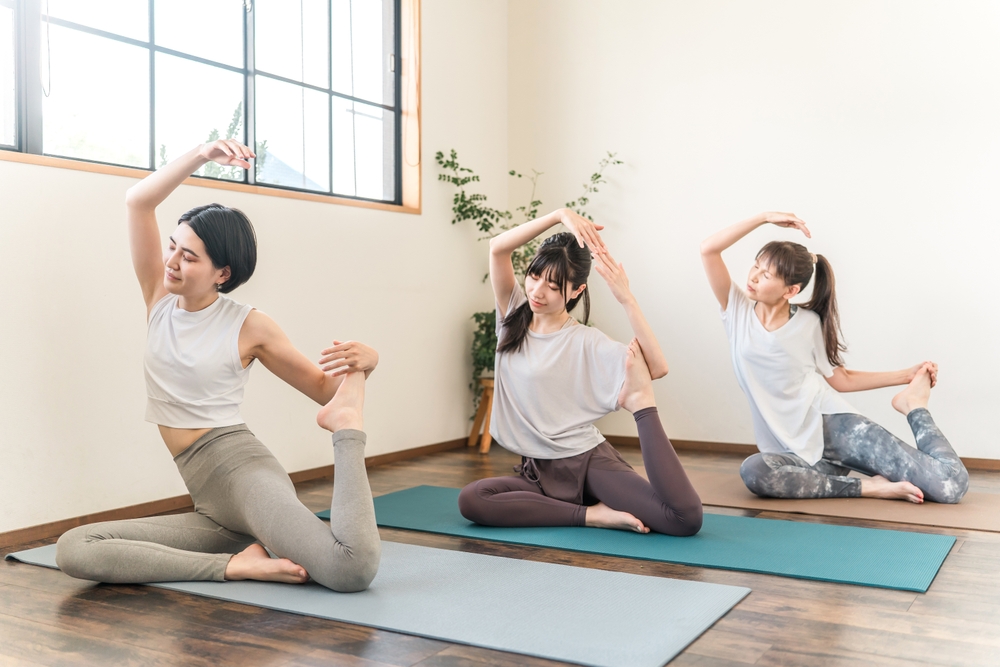
Pilates is a form of exercise and body conditioning originally created by Joseph Pilates, a German physical trainer, in the early 1900s. It is a programme that focuses specifically on building core strength, and that supports the development of the rest of the body.
Pilates can help us improve our endurance, muscle activity, flexibility, and stability in the trunk and lower back. Furthermore, because a foundational aspect of Pilates is to strategically utilise breathing, when combined with controlled movement, it can imbue greater balance in the body.
“Pilates is essentially designed to strengthen muscles, especially smaller, often underused micro muscles. Unlike gym workouts that tend to focus on larger muscles such as the biceps or triceps, Pilates targets the finer muscles that support overall body stability,” explained Pilates instructor Azalia Abd Rahman in Sinar Daily.
“Since it engages micro muscles, practitioners often experience trembling during sessions, a sign that the body is learning to stabilise itself. This is important for long-term strength and balance.”
The Six Principles of Pilates
Pilates is a philosophical exercise method built on six principles, and knowing them can help us get the most out of a session.
1. Centring
In Pilates, everything involves engaging our core, also known as the “powerhouse” of the body. It is important to stay aware of the muscles in this central area, because it forms the foundation for all other movement.
2. Concentration
Pilates demands focused attention. Rather than rushing through repetitions, you concentrate fully on each move, leading to a safer and more efficient workout.
3. Control
Every movement in Pilates is conscious and deliberate. Instead of relying on momentum, control each phase of an exercise through muscle activation and breathing.
4. Precision
Maintain awareness of exercise technique, movement and breathing to reinforce proper alignment and muscle engagement, and help you get stronger. Keep in mind that a few well-executed repetitions are more beneficial than multiple poorly-performed ones.
5. Breath
In Pilates, movement is coordinated with breathing, and this act should be done via the lungs. Being intentional with your breathing patterns can facilitate deeper abdominal engagement and create a rhythm.
6. Flow
Pilates movements are not meant to be rigid; they should flow smoothly in graceful, functional patterns. Note that this may take time to develop, and will feel easier once you get stronger.
The Health Benefits of Pilates
Due to its training philosophies, Pilates offers quite a comprehensive range of health benefits, some of them relatively unique.
Enhances Core Strength
The basis of Pilates involves heavy use of the core, so naturally, the strengthening of it would be a benefit.
However, unlike most other abdominal workouts that focus primarily on surface muscles, Pilates emphasises deep core stability – to the point that you are not just developing your core, but the entirety of your trunk. So much is attached to the core that other regions, like your hips and back, also get a boost. This can improve power transfer between the upper and lower body, improving athletic performance in general.
Improves Posture and Mobility
Poor posture is increasingly common in today’s world of desk jobs and smartphone addiction.
However, Pilates can help restore us to a more neutral position. For one, good posture is well-supported by a strong core. Pilates can also strengthen and lengthen the muscles in our back, promoting spinal alignment.
In addition, all of the smooth transitions performed in Pilates can result in an enhancement of our flexibility, and an optimisation of our range of motion.
Heightens Body Awareness, Balance and Coordination
Comment
byu/Candid-Indication329 from discussion
inpilates
The deliberate, mindful attention we give to how the body moves under Pilates simply enhances our proprioception, or body awareness. It can cause us to develop a strong connection to both our physical and mental being. We are more cognisant about our comforts and pains, our emotions, and even stimuli from our environment.
Over time, this awareness permeates everyday movements, filling them with efficiency and intentionality as we learn to correct imbalances, faulty movement patterns, and prevent ourselves from getting injured.
Boosts Mental Resilience
Pilates is just as much about mental focus as physical movement. For instance, controlled breathing and mindfulness can reduce stress and promote relaxation.
The meditative qualities of Pilates can enhance mood and focus, and improve sleep quality. Moreover, as a form of mindful movement, it can also foster a sense of accomplishment and empowerment.
How To Get Started
Pilates may seem intimidating at a first glance, but anyone can practise it, regardless of fitness level.
So if you would like to try it out, the first step lies on your choice of format. It is ideal to learn with a certified Pilates instructor who can guide you through the process. However, you can also defer to online classes or YouTube videos for at-home workouts. Just be sure to at least have a mat as your exercise equipment.
Secondly, start slow. Do just a couple of sessions a week, and focus on form and movement over speed. Remember that in Pilates, it is quality over quantity – there is no need to rush for results.
View this post on Instagram
Feel free to customise your Pilates programme if you have specific fitness goals or are living with a health condition. The beauty of Pilates comes from its accessibility. All you need is intention, consistency, and a willingness to move with awareness.
References:
- Bottaro, A. (2026, February 1). Pilates for Beginners: What It Is and How to Get Started. Verywell Health. Retrieved from: https://www.verywellhealth.com/pilates-for-beginners-8676736
- Cleveland Clinic. (2023, March 10). Pilates 101: What It Is and Health Benefits. Retrieved from: https://health.clevelandclinic.org/everything-you-want-to-know-about-pilates
- Menzies, R. (2025, May 2). What is Pilates Good For? 19 Benefits. Healthline. Retrieved from: https://www.healthline.com/nutrition/pilates-benefits
- Menzies, R. (2025, July 30). Your Complete Guide to Beginning Pilates. Healthline. Retrieved from: https://www.healthline.com/health/fitness/pilates-for-beginners
- Ogle, M. (2024, July 6). What Is Pilates? Verywell Fit. Retrieved from: https://www.verywellfit.com/what-is-the-pilates-method-of-exercise-2704855
- Sinar Daily. (2026, January 24). Pilates isn’t as easy as it looks – and that’s the point. Retrieved from: https://www.sinardaily.my/article/733249/culture/health/pilates-isnt-as-easy-as-it-looks—and-thats-the-point
- West, M. (2023, August 29). What is Pilates? Benefits vs. yoga and how to do it. Medical News Today. Retrieved from: https://www.medicalnewstoday.com/articles/what-is-pilates

