


If your mind is ready to move on but your body is still stuck in flight-or-fight mode, somatic therapy might be the missing piece in your healing journey. Somatic therapy works as a complement or alternative to traditional psychotherapy, offering a different pathway towards healing.
Your body remembers every life experience you go through, including your traumas – even when your mind tries to move on.


You have talked through your issues, and understand why you feel the stress and anxieties you do. You have done your best to make sense of the story that makes up your mental health, but for some reason, the inexplicable heart palpitations and stomach knots you often experience reveal that your body is still stuck in the same patterns of pain.
Somatic therapy can help, and the first step is in gaining the awareness that healing does not only happen in the mind, but in the body too.
Somatic Therapy: When Talking Is Not Enough
According the Ms Estee Ling, a clinical mental health therapist and director of clinical operations at Sol Therapy, in CNA: “Relational somatic therapy is rooted in the understanding that the body and mind are inseparable, and that our nervous system carries the imprint of everything we have lived through – especially experiences that overwhelmed our capacity to cope.”
Our general understanding of mental health treatment focuses a lot on the mind, on our thoughts and memories and narratives. However, healing the mind does not always fully solve the problem.
“Different approaches serve different people at different junctures in life,” said Ms Ling.
“Sometimes, we need language, reflection, insight, understanding and meaning-making. Sometimes, we need grounding, presence and the steadiness of the body. Both pathways hold equal importance and each complements the other. Relational somatic therapy simply bridges the gap between insight and lived experience, helping the nervous system catch up with what the mind already knows.”
What Somatic Therapy Does
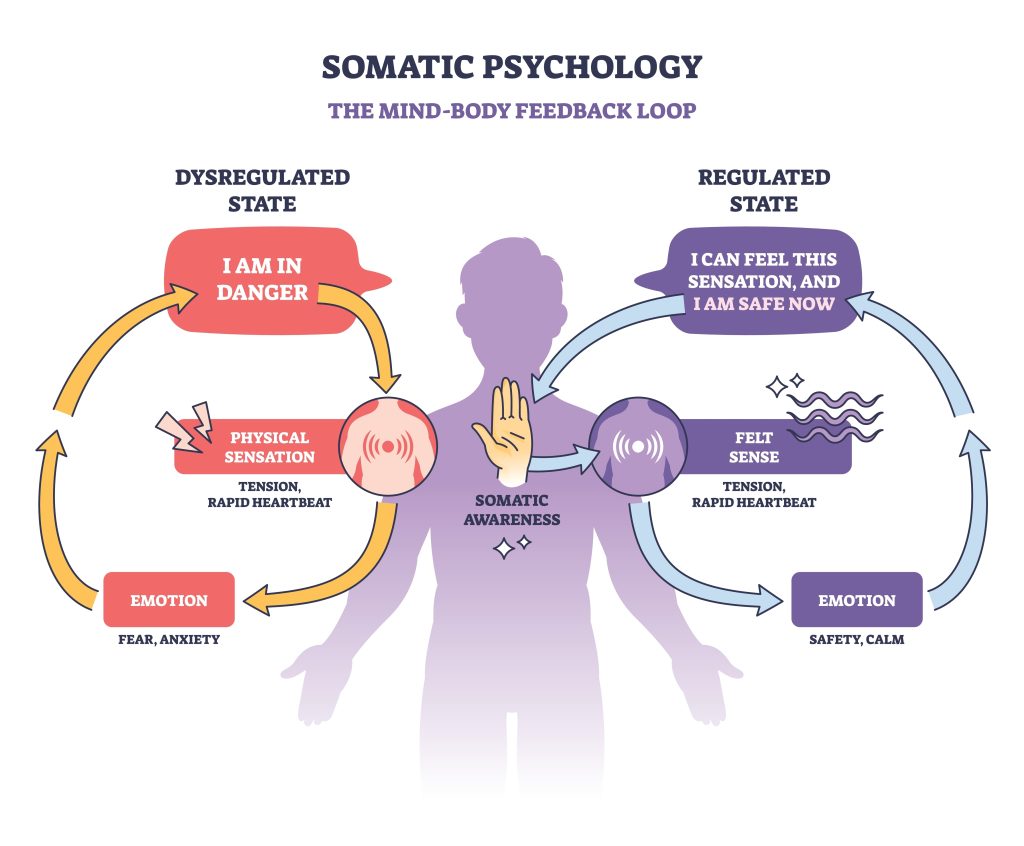
When we experience trauma or stress, the body activates survival responses, in particular the fight-flight-or-freeze response. The nervous system can return to a regulated state once the perceived threat passes. However, when stress is overwhelming or persistent, the body may not be able to return to a state of balance. Instead, it stays stuck dealing with symptoms such as chronic tension, burnout, shallow breathing, hypervigilance, and even a dissociation from oneself.
With somatic therapy, the goal is to help the patient shift out of survival mode, and rebuild their internal sense of safety.
Comment
byu/Capital-Signature146 from discussion
inSomaticExperiencing
“The body discovers new possibilities: breath that moves more freely, muscles that soften, emotions that can be felt without collapse or flooding,” Ms Ling explained.
“Somatic therapy becomes a slow homecoming, allowing people to inhabit their body with more steadiness, connection and choice.”
And from there, they can delve deeper into their own psychological state in the pursuit of true healing.
“When people feel safer in their own body, the nervous system becomes more flexible, creating natural space for reflection, emotional processing and insight,” she added.
How Somatic Therapy Works
Somatic therapy centres on physical awareness, including:
- Movement
- Bodily sensations
- Breathing patterns
- Muscle tension or discomfort
While it was originally developed to help patients manage trauma-related disorders such as PTSD, it can also be beneficial for other mental health conditions, including depression, anxiety, complicated grief, low self-esteem, and intimacy or trust issues.
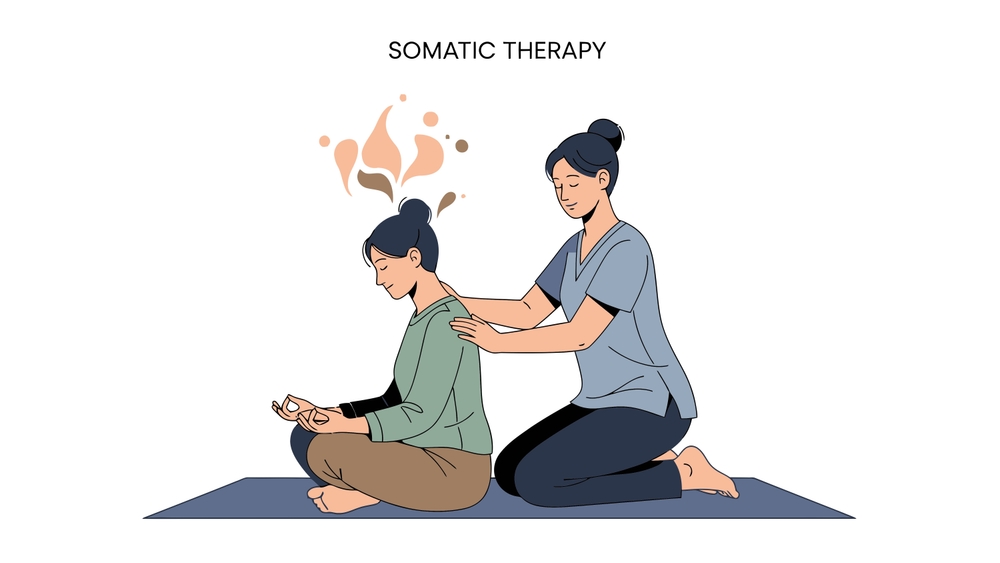
There are several techniques used in somatic therapy, such as:
- Somatic Experiencing: Focuses on developing one’s awareness of physical sensations and helping to release tension held in the body post trauma.
- Sensorimotor Psychotherapy: Integrates body awareness with thoughts and feelings, and is often used for trauma, attachment issues and disassociation.
- Eye Movement Desensitisation and Reprocessing (EMDR): Helps both the body and brain process distressing recollections of experiences via guided eye movements and other forms of bilateral stimulation.
- Hakomi Therapy: Relies on mindfulness and physical awareness to help one understand their emotional habits and how they live in their bodies.
- Bioenergetic Analysis: Uses talk therapy with exercise and grounding techniques to help ease psychological tension.
Essentially, somatic therapy works from the bottom up, addressing physiological responses first so that the mind can follow.
What To Know Before Trying Somatic Therapy
It should be noted that somatic therapy is not for everyone, even if they are dealing with physiological discomfort. This is especially so if you are struggling with acute medical distress or active addiction, or if you are currently in a psychological state of crisis.
“The greatest risk arises when the process moves faster than the body’s capacity, overwhelming a system that cannot yet stay connected,” highlighted Ms Ling. In this case, pacing is crucial. If not done appropriately, it may have an adverse impact on the regulation of your nervous system.
Ultimately, it is best to receive somatic therapy performed by a professional therapist, especially one you can feel comfortable disclosing painful memories and worries to.
As advised by Ms Ling, “Relational somatic therapy is safe when facilitated by trained, certified and trauma-informed therapists who can recognise when the work becomes too much for the person and when other interventions may be more supportive at that juncture. With the right timing, pacing, and support, many people eventually develop the capacity to benefit from somatic work.”
At the end of the day, somatic therapy is a reminder that healing through trauma is a whole-body experience. And while it is not a quick fix, it is an invitation for us to fully inhabit our physical being again, one moment of awareness at a time.
References:
- Austwick, M. (2025, September 8). What is somatic therapy? Medical News Today. Retrieved from: https://www.medicalnewstoday.com/articles/somatic-therapy
- Gans, S. (2025, November 13). What Is Somatic Therapy? Verywell Mind. Retrieved from: https://www.verywellmind.com/what-is-somatic-therapy-5190064
- Lau, D. (2025, December 20). Your body holds stress and trauma. Should you give somatic therapy a try? CNA. Retrieved from: https://www.channelnewsasia.com/today/mental-health-matters/somatic-therapy-trauma-stress-body-physical-symptoms-5592966
- Psychology Today. (2022, June 2). Somatic Therapy. Retrieved from: https://www.psychologytoday.com/sg/therapy-types/somatic-therapy
- Raypole, C. (2020, February 28). How Somatic Experiencing Can Help You Process Trauma. Healthline. Retrieved from: https://www.healthline.com/health/somatic-experiencing
- Ruwa, R. (2025, November 3). A Guide to Somatic Therapy: What Are the Signs Your Body Is Releasing Trauma? Healthline. Retrieved from: https://www.healthline.com/health/somatic-therapy
- Reddit. (2024, April 3). [Comment on the thread “What are the signs your body is releasing trauma?”]. r/SomaticExperiencing. Retrieved from: https://www.reddit.com/r/SomaticExperiencing/comments/1bu6mlp/comment/kxqtx5w/

