

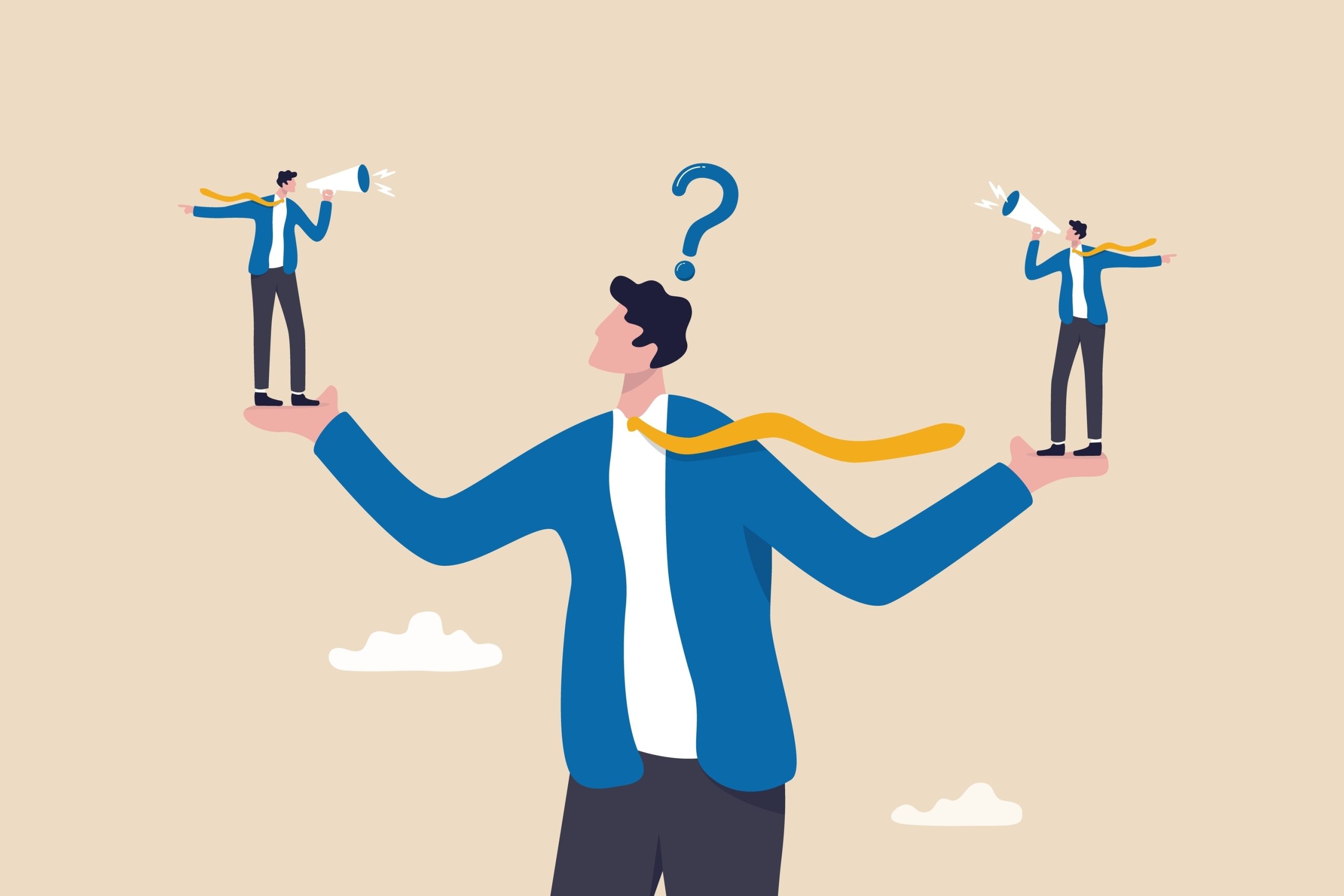
The popular subreddit r/AmItheAsshole is more than just entertainment; it is a revealing look into how AITA culture affects our mental health and self-worth.
Unless you have been living under a rock, you are likely to have heard about r/AmItheAsshole, affectionately shortened to AITA. As one of the most popular web forums on social media platform Reddit, it has become a cultural phenomenon, inviting everyday people to share personal anecdotes of conflict, and ask a simple but powerful question: “Am I the asshole?”


The very existence of this query speaks volumes about the pervasive anxiety surrounding whether or not we are acting morally or ethically in any given situation, and sometimes the mental back-and-forth we put our minds through can be detrimental to our psyche, especially when we give up too much of our time to it.

“It’s all too easy to get lost in worrying and ruminating about all sorts of things that are out of our control,” said Dr Natalie Games, a clinical psychologist at Alliance Counselling, in Her World. “Rumination and worry are exaggerations of thoughtful self-reflection, and contribute to feelings of unease and depression, distorting the natural sadness and grieving that are inherent in our humanity, and robbing us of joy and delight in our own present moments of precious living.”
So what better way to release some of the burden of that worrying to the eponymous subreddit? Surely the combined opinions of millions of users will provide us with the most balanced view.
In return, our audience gets to enjoy some form of entertainment via a new case to judge (and, perhaps, a very juicy story).
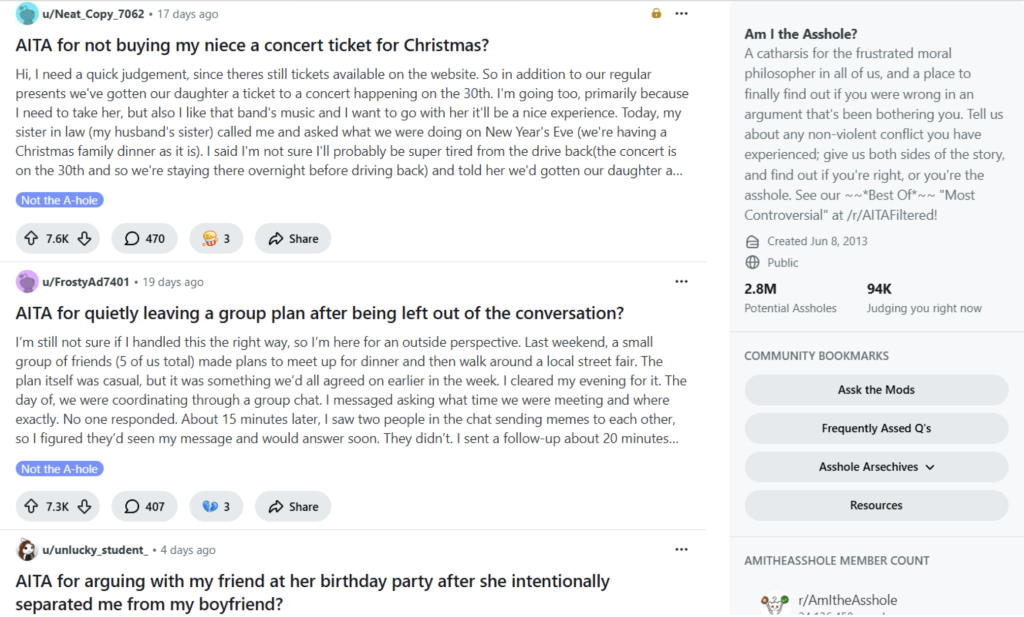
Maybe it seems like a quirky little pastime to indulge in, but it may reflect deeper psychological and social underpinnings in how we understand morality and self-worth in this digital age.
AITA As More Than Commentary
AITA is formatted around social dilemmas. The original poster shares a narrative describing a personal conflict they cannot get closure on – whether that is with family, friends, or colleagues – and asks strangers to judge whether they acted appropriately. Commenters will then typically respond with standard verdicts:
- YTA (you’re the asshole)
- NTA (not the asshole)
- NAH (no assholes here)
- ESH (everyone sucks here)
For many posters, AITA becomes an outlet to seek justification and clarification on whether their actions or behaviours were “right”.
But why do people turn to strangers online for such affirmation?
The Psychological Pull of AITA
It is utterly normal for us to feel uncertain about whether we are displaying appropriate emotional reactions and boundaries in everyday life. When you find it difficult to confide in the people around you – especially if you are in conflict with those very people – online communities can help provide informational support and a different perspective.
Furthermore, when it comes to AITA responses, getting genuine support and validation does not just feel good in the moment – it can give a meaningful boost to our mental health. Research into online communities shows that people can benefit from an improved sense of empowerment and greater resilience, and digital connection can act as a bulwark against social isolation. It can be especially important for people without strong offline support networks.
However, it is crucial to remember the broader discussions around social media and mental health: while online interactions can provide social connection, so can it exacerbate psychological issues ranging from self-esteem and stress, to anxiety and depression.
When Public Moral Judgement Is Normalised
The AITA subreddit represents one modern version of a timeless human struggle: the need to feel “right” in our interactions with others.
In a world where our actions are constantly scrutinised by friends, family, and even social media, questioning our own decisions can become an ingrained instinct, fed by chronic self-doubt, a diminished self-esteem, and our natural desire for a sense of belonging. This can manifest as a constant need for external approval.
And when it comes to external approval, AITA culture has normalised an interesting form of public moral judgement, where strangers online, often lacking critical information in regards to the social and psychological dynamics revolving around the conflict, comment on the validity of one’s feelings and actions.
When context and nuance can be overlooked, especially in a one-sided story, the result can lead to a black-and-white moral landscape with less room for grey areas. Such oversimplification of moral judgements underscores how social media can distort how we judge right and wrong.
Regardless, even if the judgement taken could mirror larger societal norms, it can also contribute to shaming and moral absolutism. When posters share deeply vulnerable stories in the hopes of being answered with reassurance or insight, and receive an overwhelming “YTA”, it can feel like a mass rejection, and a critique of not just their intentions, but their identity.
Don’t Make an Online Judgement Personal
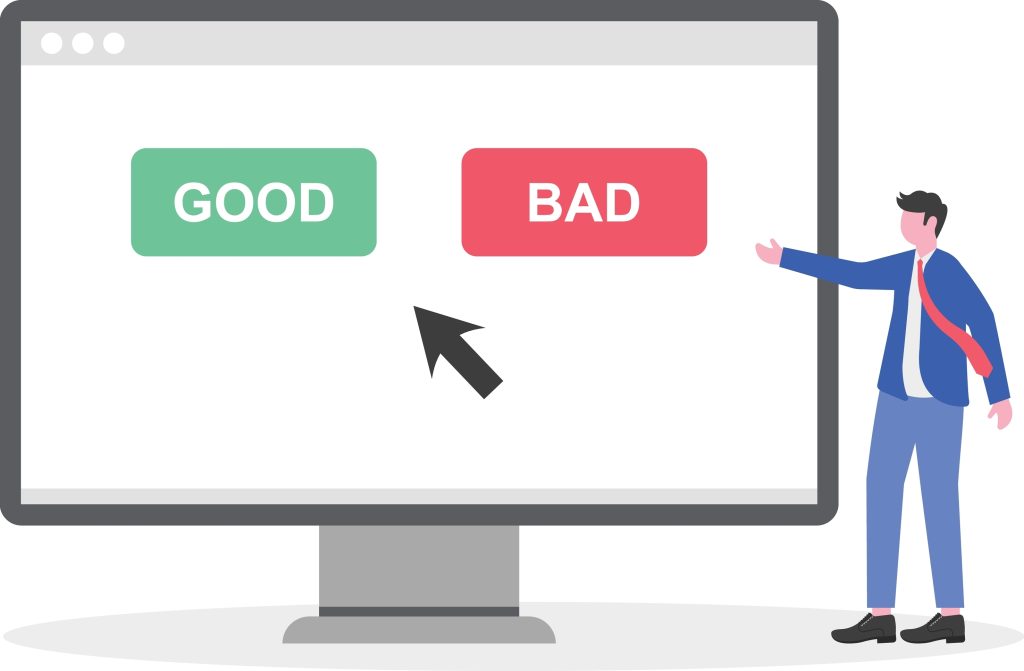
There are dangers to relying too much on public moral judgement, especially when we let it reinforce our doubts and undermine our confidence.
Regardless, AITA can still support us when it comes to self-reflection and cultural awareness. It gives us an idea of how society might react to our behaviours, and this can enable us to take steps that lead to personal growth.
We just need to keep in mind that the responses we get on r/AITA aren’t universal truths. Remember that when it comes to mental wellbeing, it is not always be about being right, but about feeling grounded enough to decide that for ourselves.
References
- Barron, A.C., Woodyatt, L., Thomas, E.F., Loh, J.E.K., & Dunning, K. (2023). Doing good or feeling good? Justice concerns predict online shaming via deservingness and schadenfreude. Computers in Human Behavior Reports, 11. Retrieved from: https://www.sciencedirect.com/science/article/pii/S2451958823000507
- Gupta, S. (2025, July 3). How Self-Reflection Benefits Your Mental Health. Verywell Mind. Retrieved from: https://www.verywellmind.com/self-reflection-importance-benefits-and-strategies-7500858
- Knöchel, T., & Vahed, S. (2025). Digital moral distortion: How social media can negatively shape our judgement of right and wrong. The Inquisitive Mind. Retrieved from: https://www.in-mind.org/article/digital-moral-distortion-how-social-media-can-negatively-shape-our-judgement-of-right-and
- Psychology Today. (2022, May 31). Social Media and Its Impact on Mental Health. Retrieved from: https://www.psychologytoday.com/us/blog/addiction-recovery/202205/social-media-and-its-impact-mental-health
- Sandhu, B. (2021, October 10). Are you overthinking? Here’s how it could affect your mental health. Her World. Retrieved from: https://www.herworld.com/wellness/overthinking-mental-health
- Wisner, W. (2025, September 24). What to Know About Attention-Seeking Behavior. Verywell Mind. Retrieved from: https://www.verywellmind.com/attention-seeking-behavior-causes-traits-treatment-5213790
- Yang, Y., Zhang, Y., & Xiang, A. (2023). Information interaction and social support: exploring help-seeking in online communities during public health emergencies. BMC Public Health, 23(1), 1250. Retrieved from: https://link.springer.com/article/10.1186/s12889-023-16151-3
- Zubernis, L. (2023, March 28). Can Social Media and Online Communities Be Good for Us? Psychology Today. Retrieved from: https://www.psychologytoday.com/sg/blog/the-science-of-fandom/202303/can-social-media-and-online-communities-be-good-for-us

