

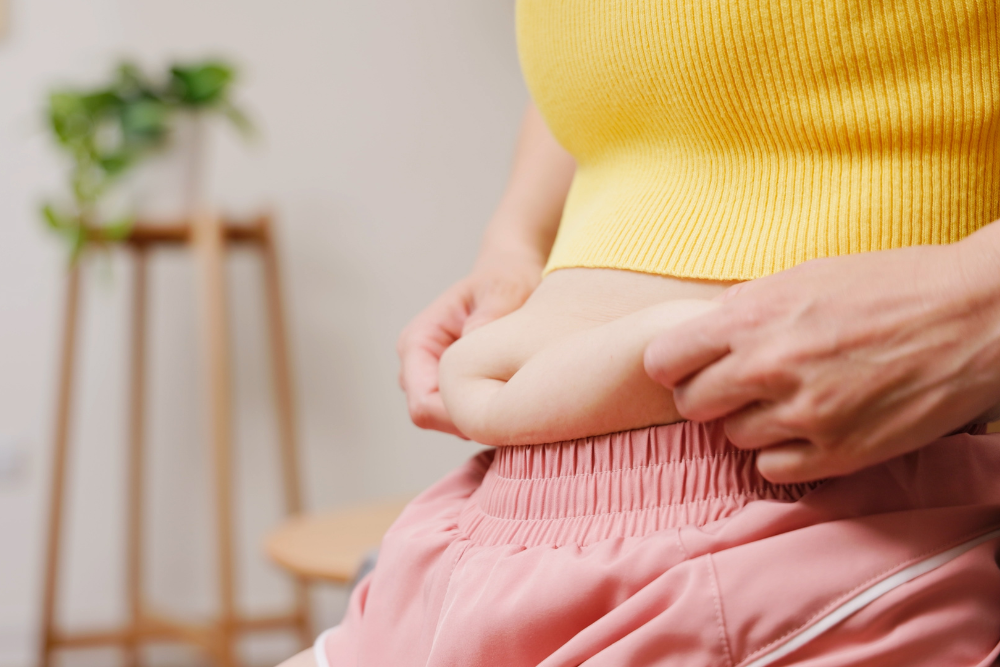
Why does belly fat after 40 feel impossible to shift? Biological changes, slower metabolism, hormones and lifestyle stress all collide to reshape the midlife waistline.
Middle age can be a tough transitionary period. You feel a decline in energy, note with at least a certain level of concern the hairline receding from your forehead, and – worst of all – develop some extra weight that becomes your body’s latest frenemy. And its most overt feature? The belly fat that clings stubbornly to you, regardless of whatever you do.


Maybe you have been restricting your diet, and even doing a few extra crunches daily to try and wrangle that growing hassle of a midsection – yet there it remains.
Unfortunately, losing that spare tyre can become especially challenging after we hit the age of 40, and it can be difficult to reconcile this notion with the fact that, just a few years earlier, a good night’s sleep might have been enough to help flatten our tummies.
So what’s changed?
The Factors That Reshape Our Stomachs
When it comes to our widening waistlines, age is more than just a number. Entering our 40s can kickstart a bunch of biological shifts, and potentially some lifestyle changes, that contribute to making belly fat all that harder to shed.
Muscle Loss
Muscles do more than look good; they help our bodies process calories more efficiently. In fact, muscles burn more calories than fat even when we are at rest, and this effect is resistant to age, meaning that they burn the same amount of calories whether we are 25 or 75.
The problem is that we are not always able to keep our muscles throughout the years.
“When people reach middle age, what happens is age-related loss of muscle mass,” explained Dr Chan Soo Ling, a consultant endocrinologist from Ng Teng Fong General Hospital (NTFGH). “After age 30, an individual loses about 3-5% of their muscle mass, and this repeats every decade.”
Our softening muscles add to the build-up of belly fat, and also lead on to the next issue.
A Decelerating Metabolism
Our metabolism rate naturally slows with age. This means that even if we are consuming pretty much the exact same number of calories as we did 10 or 20 years ago, they are just not burning off as much now.
The muscle loss further tacks on to the problem, resulting in a significant decline in our basal metabolic rate, which refers to the energy our bodies expend during periods of inactivity. Thus, the fat around our bellies accumulates faster each day, and becomes frustratingly hard to get rid of.
Hormonal Alterations
We go through a lot of hormonal changes in our 40s, and even though men and women experience them differently, they are similarly impacted in the way fat is stored in the body.
For women, their bodies see a shift when oestrogen levels start to plummet as they approach the menopausal stage. Where oestrogen led to the tendency of weight gain to develop in the face, chest and thighs, the menopausal effect shifts that gain to the stomach.
As for men, they will experience a drop in testosterone. Considering that testosterone is the hormone responsible for supporting muscle growth and fat distribution, its decline slows down the body’s ability to burn fat overall.
Lifestyle-Related Woes
Our 40s are not just rife with physiological adaptations – this is a time when many of us go through plenty of social and psychological episodes too.
According to Dr Chan, it is “the period during which many people are busy at the peak of their lives.” This busy-ness could consequently lead to more deskbound days, an imbalanced diet, and a distressing lack of sleep.
“Studies have shown that if you sleep less than six hours a day, you have a higher risk of gaining more weight,” she added.
And if you are experiencing chronic stress, your heightened cortisol production can mess with your insulin levels and appetite control, hence resulting in that bit of padding around your abdomen.
The Perennial Problem With Belly Fat

When weight gain is concentrated around the stomach, it is known as visceral fat, a type of fat that surrounds the internal organs. Visceral fat can be of great concern because of its ability to produce inflammatory chemicals that can create metabolic complications.
“When your body is in a state of inflammation, it’s no longer as sensitive to insulin,” Dr Chan highlighted.
“This is where diseases like diabetes, insulin resistance, high blood pressure, high cholesterol, and fatty liver come into the picture. And these, in turn, lead to increased risk of cardiovascular events, like heart attack and stroke. It’s a chain reaction…all because of visceral fat.”
Controlling That Burgeoning Belly
Losing weight can seem like a discouraging effort when it feels like your own body is working so hard against you, but when done consistently and sustainably, such efforts really can pay off.
Start by upping your workout routines. Considering the role of muscles in maintaining our metabolism rates, it is not just enough to exercise the recommended 150 minutes per week – you need to include strength and resistance training too. Add some form of weightlifting, or incorporating resistance bands at least two to three sessions a week.
When it comes to your diet, focus less on sugary or processed foods, and more on wholegrains, fruits and vegetables. You can also consider a mix of lean and plant-based protein.
It is also important to manage your sleep quality and stress. Follow sleep hygiene practices, and include more stress-relieving activities to your schedule that are effective for you, be it meditation or quality time with your loved one.
Remember, resolving belly fat isn’t just about aesthetics, but is for the betterment of your health and quality of life in the long run.
Read More
- Is Your Dad Bod a Health Risk?
- 5 Signs of a Slowing Metabolism: How You Can Boost It Back Up
- More Than Just Menopause – How Muscle, Fat and a Simple Blood Test Can Predict Midlife Women’s Health
External References
- Harvard Health Publishing. (2024, March 26). Taking aim at belly fat. Retrieved from: https://www.health.harvard.edu/newsletter_article/taking-aim-at-belly-fat
- Khoo, B. K. (2023, November 24). Middle-age spread: Why does it happen in your 40s and how can you lose the extra kilos? CNA. Retrieved from: https://cnalifestyle.channelnewsasia.com/wellness/middle-age-weight-loss-fat-metabolism-hormones-378971
- NUHSPlus. (2023, April 3). Weight gain in middle age, explained. Retrieved from: https://nuhsplus.edu.sg/article/weight-gain-in-middle-age–explained
- Rossi, C. (2025, September 2). 8 Simple Ways To Lose Belly Fat, Backed by Science. Health. Retrieved from: https://www.health.com/weight-loss/11-reasons-why-youre-not-losing-belly-fat
- The Healthline Editorial Team. (2025, February 26). Why It Can Be Tough to Lose Weight After 40 — and 6 Fixes That May Help. Healthline. Retrieved from: https://www.healthline.com/health/fitness-exercise/lose-weight-after-40
- Waehner, P. (2021, April 14). How to Lose Weight When You’re Over 40. Verywell Fit. Retrieved from: https://www.verywellfit.com/im-over-40-and-i-cant-lose-weight-1230893
- Weber, B. (2023, August 29). Stress and weight gain: The connection and how to manage it. Medical News Today. Retrieved from: https://www.medicalnewstoday.com/articles/stress-and-weight-gain

