

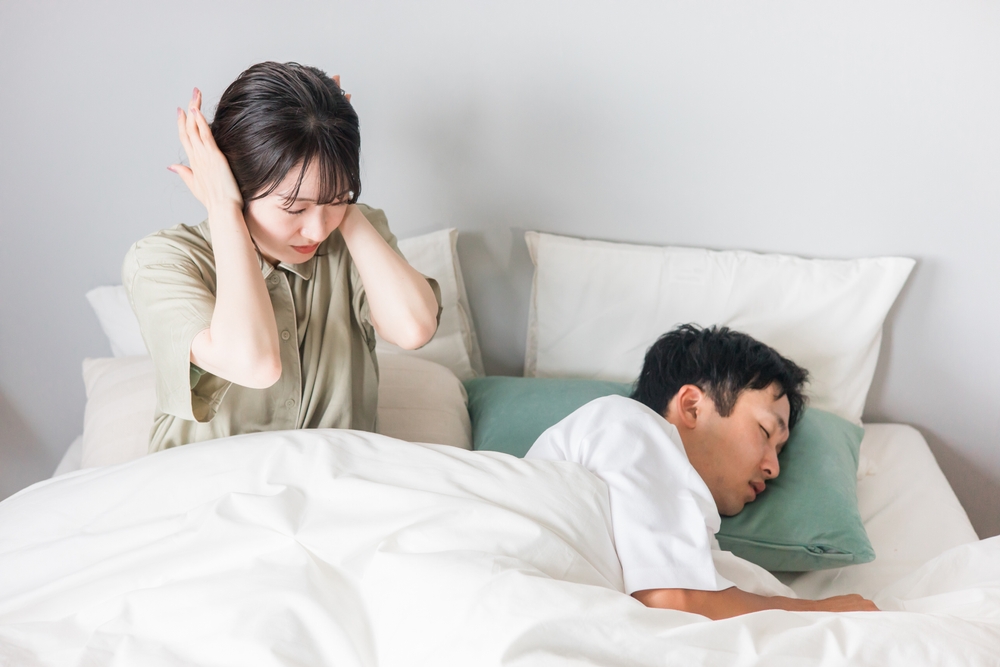
Have you ever been told that you talk in your sleep, whether it is whispering, mumbling, or even shouting, with no memory of it the next morning? Or perhaps your child occasionally babbles at night, only to settle back into sleep moments later?
Sleep talking, also known as somniloquy, is a common sleep behaviour that usually isn’t harmful. However, questions often arise about what causes it, how often it happens, and whether it could be linked to other sleep or health conditions. Understanding sleep talking can help you know when it’s simply a harmless quirk and when it may be worth paying closer attention.


What Is Sleep Talking?
Sleep talking, also known as somniloquy, is the act of speaking during sleep without awareness or recall. It is classified as a parasomnia, a group of sleep disorders involving unusual behaviours that occur during sleep.
Sleep talking can happen during any stage of sleep, including both REM and non-REM sleep. Episodes are typically brief, often lasting less than 30 seconds, but some people may talk multiple times in a single night.
Speech can range from:
- Simple sounds or mumbling
- Clear words or sentences
- Emotional outbursts, laughter, shouting, or swearing
The content may be neutral, confusing, or occasionally offensive, and most people who sleep talk have no memory of what they said.
How Common Is Sleep Talking?
Sleep talking is very common. Research suggests that up to two-thirds of people experience at least one episode in their lifetime.
It is especially frequent in children. About 50% of children aged 3 to 10 years talk in their sleep, while only around 5% of adults continue to sleep talk regularly.
Sleep talking affects males and females equally and may run in families, suggesting a genetic component.
What Are the Symptoms of Sleep Talking?
The main symptom is audible speech during sleep, without awareness of it happening. This is usually discovered when a bed partner or family member hears it, and someone complains about being disturbed at night.
Episodes are typically short and sporadic. In most cases, sleep talking does not affect sleep quality or daytime functioning.
Why Do People Talk in Their Sleep?
The exact cause of sleep talking is not fully understood. Unlike common assumptions, it is not always linked to dreaming, and it can occur during any sleep stage.
Sleep talking often occurs on its own and is usually harmless. However, it may sometimes be associated with other factors, including:
- Emotional stress
- Fever or illness
- Certain medications
- Substance or alcohol use
- Mental health conditions
- Disrupted sleep schedules, such as jet lag or insomnia
Sleep talking may also occur alongside other parasomnias, such as sleepwalking or sleep-related eating disorder.
In some cases, shouting or vocalisations during sleep may be linked to other sleep disorders, including:
- Sleep terrors, which involve intense fear, screaming, and physical agitation
- REM sleep behaviour disorder (RBD), where people act out dreams with movements and vocalisations
Because these conditions carry different risks, context and accompanying symptoms matter.
Read also: Sleep Disorders 101: Common Types & Their Causes
Is Sleep Talking Dangerous?
In most cases, no. Sleep talking is generally harmless and does not require treatment.
However, it may become a concern if:
- It begins suddenly in adulthood
- It involves intense fear, screaming, or violent behaviour
- It occurs alongside sleepwalking, injuries, or excessive daytime sleepiness
- It significantly disrupts a bed partner’s sleep
In these situations, sleep talking may signal another sleep disorder that should be assessed.
Can You Stop Sleep Talking?
There is no guaranteed way to stop sleep talking, and treatment is rarely needed. However, certain habits may help reduce how often it occurs. Helpful strategies include:
- Managing stress
- Maintaining a regular sleep schedule
- Getting enough sleep each night
- Limiting caffeine and alcohol
- Keeping a consistent bedtime routine
Keeping a sleep diary for one to two weeks may help identify triggers. This can be useful if medical advice is needed later.
Read more: Mastering Sleep Hygiene For Quality Sleep
Tips for Bed Partners of Sleep Talkers
If your partner’s sleep talking is disturbing your rest, practical steps may help:
- Use earplugs or white noise
- Adjust sleeping arrangements if needed
- Encourage healthy sleep habits together
If sleep talking is persistent or accompanied by other symptoms, medical evaluation may be helpful.
When to See a Doctor
You should consider seeking medical advice if sleep talking:
- Starts suddenly later in life
- Is linked to fear, violence, or injury
- Occurs with other sleep disturbances or daytime fatigue
Parents should also consult a paediatrician if they are concerned about a child’s sleep behaviour.
Key Takeaway
Sleep talking is a common and usually harmless sleep behaviour that affects both children and adults. While most episodes are brief and infrequent, persistent or intense sleep talking may point to another sleep disorder.
Understanding the context, frequency, and accompanying symptoms can help determine when reassurance is enough and when professional advice is needed.
Struggling with your sleep and want clearer answers? Explore our Sleep page for practical guidance, medical insights, and real questions people ask about sleep.
You can also take our Sleep Quiz to see how your sleep habits measure up.
References
Alonso J, Camacho M, Chhetri DK, Guilleminault C, Zaghi S. Catathrenia (Nocturnal Groaning): A Social Media Survey and State-of-the-Art Review. J Clin Sleep Med. 2017;13(4):613-622. Published 2017 Apr 15. https://pubmed.ncbi.nlm.nih.gov/28095968/
Bjorvatn, B., Grønli, J., & Pallesen, S. (2010). Prevalence of different parasomnias in the general population. Sleep medicine, 11(10), 1031–1034. https://pubmed.ncbi.nlm.nih.gov/21093361/
Arnulf I, Uguccioni G, Gay F, et al. What Does the Sleeping Brain Say? Syntax and Semantics of Sleep Talking in Healthy Subjects and in Parasomnia Patients. Sleep. 2017;40(11):10.1093/sleep/zsx159. http://academic.oup.com/sleep/article/doi/10.1093/sleep/zsx159/4345704

