


As Singapore hospitals embrace caregiver involvement, year-end family gatherings may be the best time to spot early mobility decline and prevent avoidable falls in older adults.
Singapore hospitals have recently increasingly embraced caregiver involvement, with programmes like Partner to Care training over 4,000 caregivers since 2023. There’s growing recognition that family members are essential partners in healthcare. As we are nearing the end of the year and one step closer to the Christmas and New Year’s celebrations, this could be the perfect moment for early detection, which is not supposed to happen in hospital wards but starts at our own dining tables during year-end (and upcoming) gatherings.


Extended family time during the December holiday provides valuable opportunities that go beyond what phone calls or occasional visits offer. This time allows for a holistic observation of how elderly loved ones actually move through their daily routines. These shared hours can reveal mobility changes that can make the difference between timely intervention and a preventable fall.
What Families Should Watch For
Something big must have started small. During meals, notice whether they struggle to cut food or grip cups with two hands. In the kitchen, observe if they avoid reaching overhead or lean heavily on counters whilst standing. Perhaps most telling: does your parent, who once chatted animatedly at every gathering, now stay quietly seated? Does the one who always volunteered for market runs suddenly decline invitations for even short walks?
The instinct to “wait and see” if discomfort resolves on its own rarely serves older adults well. They heal more slowly than younger people, have reduced stem cell availability, slower collagen formation, and often multiple health conditions that complicate recovery. Someone with diabetes, for instance, may have poorer blood flow, delaying healing considerably.
And deconditioning happens remarkably quickly. Research shows older adults can lose 3-7% of muscle mass and 10-20% of strength over just one to two weeks of reduced activity. What begins as a minor strain from lifting shopping bags can spiral within weeks if left unaddressed.
What begins as a minor strain from lifting shopping bags can spiral within weeks if left unaddressed.
In the first fortnight of an acute issue, relatively simple interventions, pain management, advice, perhaps physiotherapy, can resolve the problem effectively. But wait until month two, and reduced movement to avoid discomfort leads to muscle weakening. The body starts compensating, leaning to one side, placing abnormal stress on other joints. New pain develops.
By month three, pain may become constant, no longer tied to specific movements but driven by muscle deconditioning and nerve sensitisation. This is why catching changes early matters.
Testing Mobility in Five Minutes
Families needn’t guess. Five simple tests can be performed at home in minutes to assess fall risk and functional independence.
1. 30-Second Sit-to-Stand Test
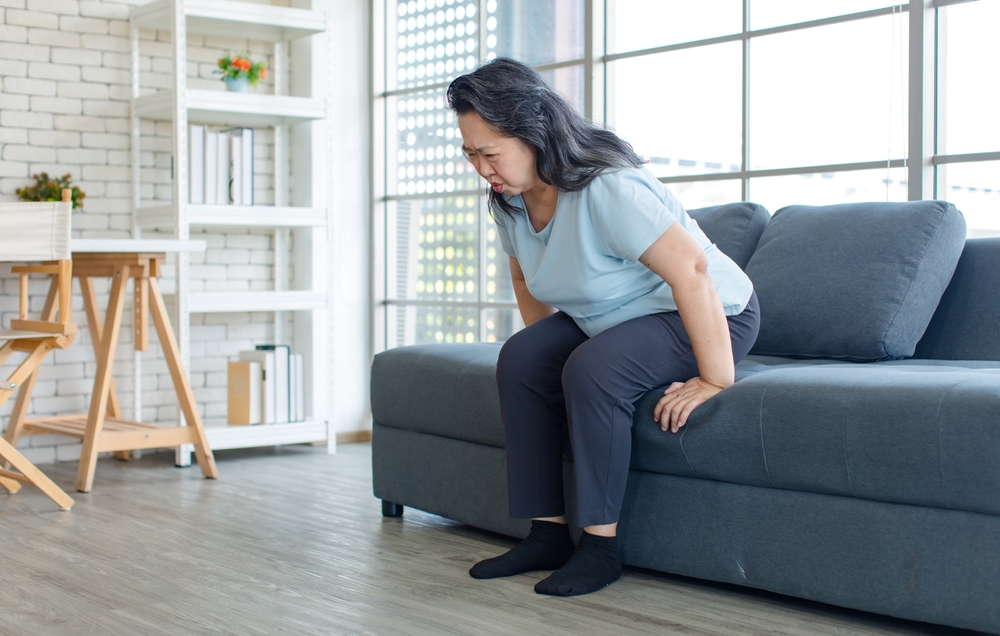
Sitting in a standard chair with arms crossed, count how many times someone can stand fully and sit back down in 30 seconds. Twelve or more repetitions indicate excellent strength.
Fewer than eight? That signals a significant fall risk.
2. Single-Leg Balance
The single-leg balance assesses stability. Standing near a wall for safety, time how long they can hold one foot off the ground without touching down. Ten seconds or more suggests good balance; less than five seconds indicates high fall risk.
3. Functional Reach
Functional reach assesses balance and flexibility. Standing sideways by a wall, measure how far the arm can reach forward without stepping. Over 25cm is good; under 15cm indicates high fall risk.
4. Timed Up-and-Go
The timed up-and-go evaluates overall mobility. From a seated position, time how long it takes to stand, walk three metres, turn around, walk back, and sit down. Under 10 seconds is excellent. Over 30 seconds suggests significant impairment.
5. Pain Assessment
Pain assessment identifies warning signs. Rate the pain during daily activities on a scale of 0-10. Scores above 4/10 or avoidance of usual activities signal the need for professional evaluation.
These assessments provide concrete data rather than vague concerns, making it easier to advocate for professional help when needed.
Making 2026 Count
Approaching these concerns requires sensitivity. Rather than confronting directly, begin with gentle observations: “I noticed standing up seemed harder than before. Have you been feeling unsteady?” Normalise the conversation by acknowledging that many people experience such changes with age, and emphasise that early support helps maintain independence longer.
It is better to set the new year, new me goal with non-vague resolutions, which rarely stick. Instead of “exercise more,” encourage specific, measurable goals: “I’ll attend physiotherapy twice weekly for eight weeks to reduce knee pain and increase my walking distance from 200 to 500 metres.” This defines what will be done, why, and how success will be measured.
As more Singapore hospitals recognise that caregiving begins before discharge and extends well beyond hospital walls, families have an increasingly important role. The year-end gatherings are opportunities to notice, to ask, and to act before minor concerns become major complications.
Early intervention with targeted exercises, balance training, and home-safety guidance can prevent falls and preserve the independence that allows our ageing loved ones to remain active participants in family life. Sometimes the most valuable gift we can give is simply paying attention.

