

Presbyopia is one of the most common vision changes associated with getting older, making it difficult for us to see up close after hitting the age of 40.
Ever found yourself wondering why a restaurant is so scant on the lighting that you can hardly read the menu? Or recently realised that you have been holding your phone a little further away than you used to?
If you are over 40 and this experience feels all too familiar, there is a good chance that it involves a natural change in your vision – a condition known as presbyopia.
A Close-Up on Why Seeing Gets Harder When You Are Older
Presbyopia is the age-related loss of the eye’s ability to focus on nearby objects. Though it feels as though it happens overnight, this condition develops gradually as the result of changes in the eye’s lens.
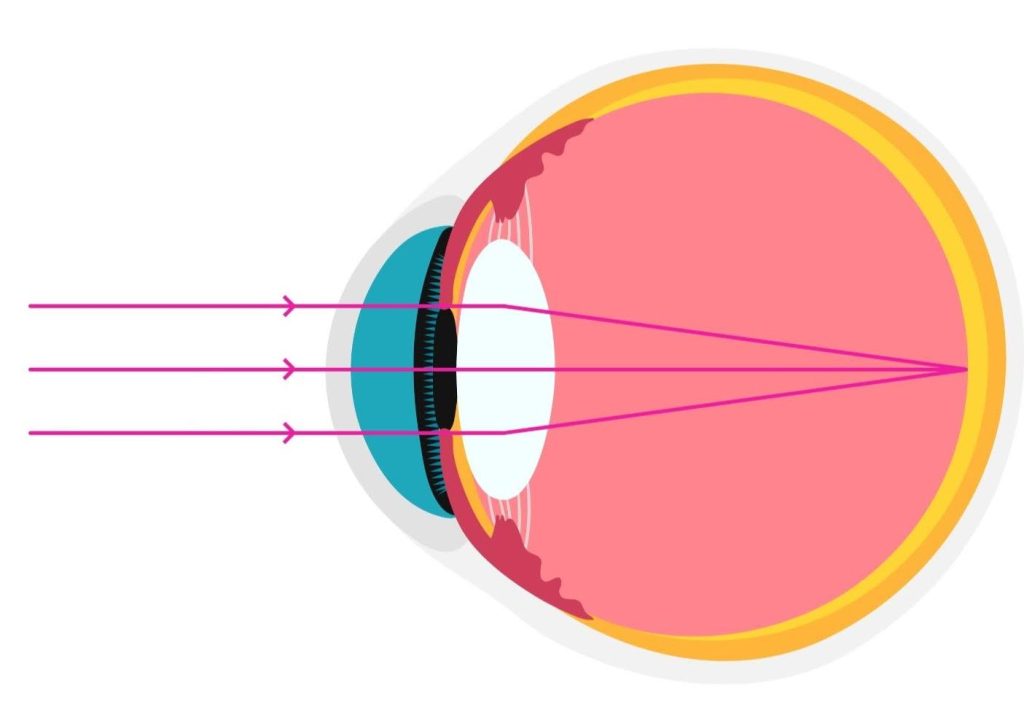
In normal function, the lens is flexible and easily changes shape. When light enters your eye, tiny muscles around the lens contract or relax depending on whether objects are close or far away, thus bringing them into clear focus regardless of distance. The light then lands on the retina, a layer of tissue lining the back of the eye that converts it into electrical signals that tell the brain to interpret and convert them into the images we see.
However, as you age, the lens slowly becomes stiffer. The reduced flexibility means that the lens has more difficulty precisely projecting light from nearby objects onto the retina, causing close-up vision to become blurry.
The symptoms of presbyopia will worsen as you get older, though they generally stop once you reach 65 years.
What Presbyopia Feels Like
For many people, the first sign of presbyopia is trouble reading or doing close-up tasks that used to be effortless.
Other signs you might notice include:
- Having difficulty seeing details up close.
- Holding items like books, menus or your phone further away to see better.
- Getting eye strain from trying to see things up close.
- Developing headaches due to eye-related muscle tension.
- Needing brighter light to see things more comfortably.
- Needing a bigger font size when reading.
Yet, your distance vision can remain clear.
It should be noted that while presbyopia is similar to farsightedness (otherwise known as hyperopia), they are considered separate conditions – the former is linked to ageing, while the latter can occur due to a flatter cornea or an atypically short eyeball.
This means that even if you are farsighted, it is still possible to develop presbyopia over time.
Other eye-related conditions, including myopia and astigmatism, can also complicate the issue, adding another layer to your vision needs.
What Other Vision Changes Might You Notice After 40?
While presbyopia deserves plenty of attention when we talk about age-related changes in vision, it is not the only change that can occur.
Dry Eyes
Dry eyes occur when your tear glands are not functioning properly enough to provide sufficient lubrication. If you feel a sting, burn or grittiness in your eyes, this could be playing a role. While everyone can experience it, the likelihood of dry eye can increase with age.
Floaters
Ever had tiny dots or squiggly lines flicker across your vision? These are floaters, which occur when clumps of cells in the vitreous, which is the gel-like substance inside the eye, casts shadows on the retina, causing us to perceive floating shapes. The occasional floater is generally harmless, but a sudden influx of new floaters should not be ignored.
Cataracts
Cataracts, or cloudy spots on the lens of the eye, become increasingly common as we get older. Early cataracts may cause little to no symptoms, but as they progress, you might notice blurry vision, double vision, an increased sensitivity to light, or difficulty seeing at night. While mild conditions can be easily managed, more severe conditions require surgery.
Other eye conditions
Glaucoma, retinal conditions and changes related to diabetes may not cause obvious symptoms at first. Regular eye examinations can help identify problems that might otherwise go unnoticed.
When You Should Get Your Eyes Checked?
While it can be tempting to wait until your vision becomes genuinely troublesome before booking an eye examination, your eyesight is worth being proactive about – especially if you notice a persistent change in your vision.
Not every vision change after 40 can simply be attributed to ageing. Different vision problems can produce overlapping symptoms, which is why an eye examination matters – so that an optometrist or ophthalmologist can distinguish between them.
To stay ahead of any problems, it is recommended to get a baseline eye screening at the age of 40 – even if the only issue identified is as natural to ageing as presbyopia.
Managing Presbyopia
Presbyopia is a normal, almost universal part of getting older. While there is no cure for it, there are several treatment options available.
Solutions like reading glasses and prescription lenses can make the adjustment remarkably simple. Several surgical approaches may also reduce dependence on reading glasses – Some people consider surgery because they would like to rely less on reading glasses or contact lenses.
Surgical approaches include treatments that reshape the cornea and procedures that replace the eye’s natural lens. Correcting presbyopia is more complex than correcting vision at a single distance. A treatment needs to consider how the two eyes work together when viewing objects up close, at arm’s length and farther away.
One approach is monovision – which corrects one eye mainly for distance and the other mainly for near vision. The brain learns to use the image from each eye for different tasks. It can reduce reliance on reading glasses, although some people may find it difficult to adapt or notice less clarity at intermediate distances.
Another option is Laser Blended Vision, which gives each eye a slightly different visual role, while extending the range of focus in both eyes. The overlapping range can help support vision across near, intermediate and far distances. Suitability varies, so a detailed eye examination is required.
Caring for Your Eyes as You Age
Good everyday habits can support eye health as you get older:
- Attend eye examinations at the recommended intervals
- Wear sunglasses with appropriate UV protection
- Use comfortable lighting when reading
- Take regular breaks during prolonged screen use
- Manage conditions such as diabetes and high blood pressure
- Avoid smoking
- Eat a varied, balanced diet
Changes in near vision may be a normal part of ageing, but they are still worth discussing with an eye-care professional. An examination can identify what is causing the change and help you compare the available options.
Remember, with how much our eyes help us navigate our world, maintaining good vision and overall comfort are more than enough reasons to give them a little assistance as they age alongside us.
Interested in furthering your understanding of presbyopia? For more information, resources and treatment options, visit https://medicalchannelasia.com/seelifebeyond/

