

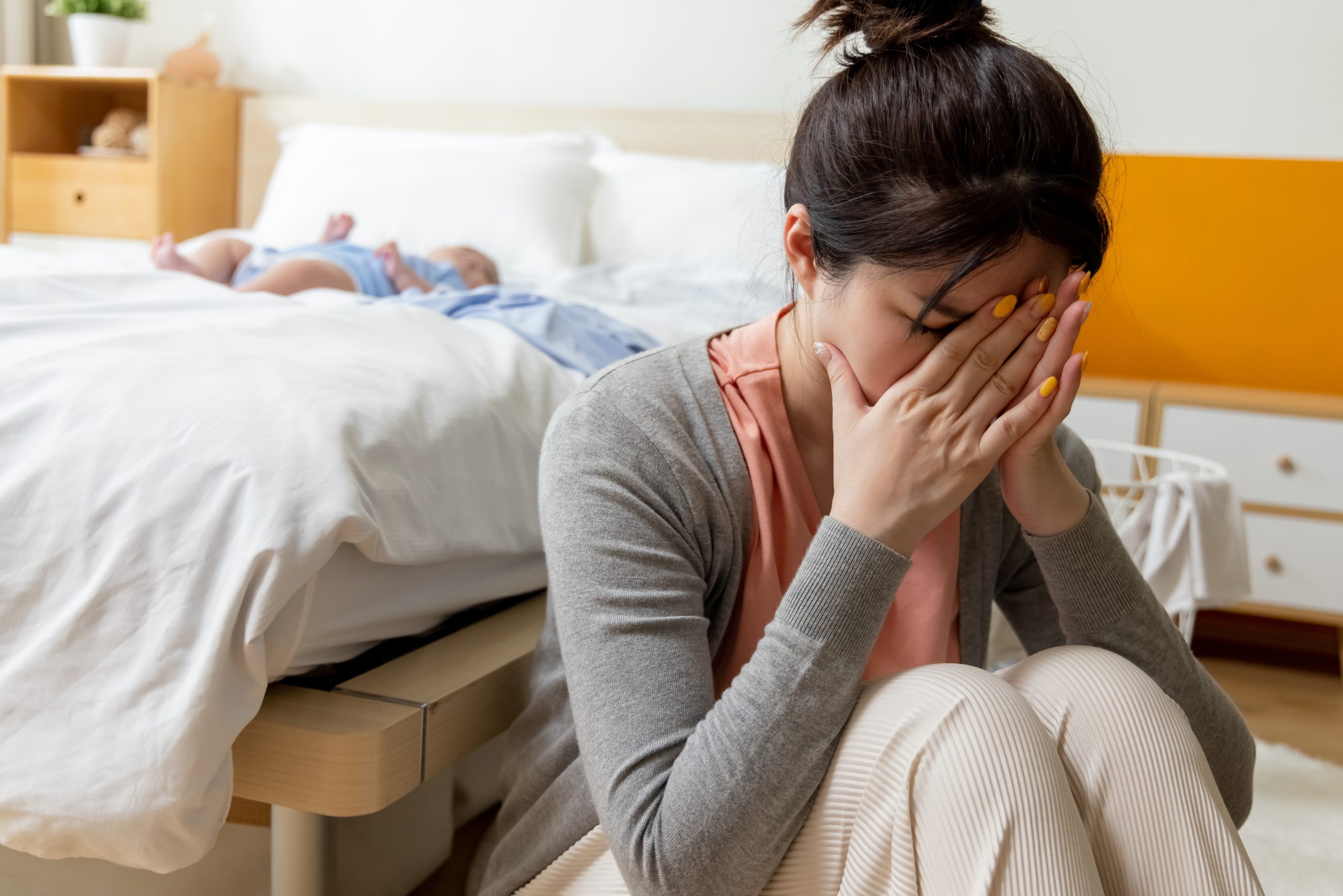
The first days with a newborn are often emotional and sleepless. But if a mother becomes confused, hears or sees things, or behaves completely out of character, something more serious may be happening.
In the first few days with a newborn, sleep can feel like a luxury. Parents lose track of time, feeds blur into one another and everyone is running on very little rest. So if a new mother seems irritable or unusually emotional, it is easy to put it down to exhaustion.


But what if she becomes increasingly confused? What if she starts saying that the television is sending her messages, or remains unusually energetic despite barely sleeping?
These are not simply signs that she needs more rest. They may point to postpartum psychosis, a rare but severe mental illness that can begin suddenly after childbirth.
It affects around 1 to 2 in every 1,000 mothers, most often within the first two weeks after delivery. It is also a medical emergency.
When Is It More Than Just Baby Blues?
Mood changes after childbirth are common. Many mothers feel tearful, irritable or overwhelmed during the first few days. These ‘baby blues’ usually settle within about two weeks.
Postpartum depression goes further. Sadness, anxiety, guilt or a loss of interest can persist and interfere with daily life. It deserves professional support, but it does not usually cause a mother to lose touch with reality.
Postpartum psychosis is different because a mother may lose touch with reality. She may hear or see things that are not there, become convinced of unusual ideas or appear deeply confused. Her mood can also shift quickly between excitement, fear, irritability and despair.
Signs That Can Be Easy to Miss
The change may be dramatic, but it is not always obvious at the beginning. It can look like extreme energy, unusual confidence or simply being unable to switch off.
Warning signs may include:
- Hallucinations: hearing, seeing or feeling things that are not there
- Delusions: strongly believing things that are not true, sometimes involving the baby
- Extreme energy or agitation: speaking rapidly, having racing thoughts or behaving impulsively
- Severe confusion: appearing disorientated or unable to follow a conversation
- Rapid mood changes: shifting between excitement, irritability, fear and sadness
- Little or no sleep: being unable to sleep while remaining unusually alert or active
- Unusual behaviour: becoming suspicious, withdrawn or unlike her usual self
Some mothers may also have thoughts of harming themselves or the baby. Others may not realise anything is wrong. A mother may not realise that she is unwell. This means her partner or family may need to recognise the change and seek help for her.
When Postpartum Symptoms Take a Dangerous Turn
Postpartum psychosis does not always begin with obvious hallucinations or dramatic behaviour. In a Reddit post, one mother described an initially subtle sense that something was wrong, followed by worsening depression, intrusive thoughts and an urgent need for psychiatric care.
Her experience highlights why frightening thoughts should never be hidden out of shame or fear. Seeking professional help allowed her to establish a safety plan and begin treatment.
Content warning: The following first-person account contains discussion of suicide, thoughts of harming a baby and psychiatric hospital treatment.
TW: My experience with postpartum psychosis
by u/missadinosaur in beyondthebump
Why Does It Happen?
There is no single cause. The rapid hormonal changes after delivery, severe sleep disruption and an underlying vulnerability to mood disorders may all play a role.
The risk is higher in mothers with bipolar I disorder, schizoaffective disorder, a previous episode of postpartum psychosis or a close family history of these conditions.
But it can also appear seemingly out of the blue in someone who has never experienced a serious mental health problem before.
It is not caused by poor parenting, a lack of maternal instinct or personal weakness.
Can a Mother Recover From Postpartum Psychosis?
Postpartum psychosis can be frightening for the mother and everyone around her, but most women recover with the right treatment and support.
Most mothers need treatment in hospital, where they can be kept safe while medication helps manage psychosis, stabilise mood and restore sleep. Psychological and practical support may continue after the most severe symptoms settle.
With prompt treatment, most mothers make a full recovery. This may take time. Even after the psychosis resolves, some women experience depression, anxiety or guilt about what happened.
A previous episode also raises the risk during a future pregnancy. Planning early with a psychiatrist and obstetrician can put extra support in place before the baby arrives.
What Should Families Do?
It can feel uncomfortable to step in, especially if the mother insists that she is fine. However, postpartum psychosis can worsen quickly, so families should not wait to see whether it passes on its own.
- Stay with her. Do not leave her alone or as the sole caregiver for the baby.
- Keep things calm. Do not argue about unusual beliefs or try to prove that they are untrue.
- Seek urgent care. Contact her doctor or take her to an emergency department for a same-day assessment.
- Share what you noticed. Tell the medical team when the changes began, how much she has slept and whether there are safety concerns.
Do not wait for her to agree that something is wrong. Someone experiencing psychosis may genuinely be unable to see that she needs help.
Postpartum psychosis does not mean a mother does not love her baby or cannot be a good parent. It means she is seriously unwell and needs treatment. She may not understand this at the time. Her family may have to make that decision for her, even when doing so feels difficult.
References
Royal College of Psychiatrists. (2018). Postpartum psychosis. https://www.rcpsych.ac.uk/mental-health/mental-illnesses-and-mental-health-problems/postpartum-psychosis
National Health Service. (2023). Postpartum psychosis. https://www.nhs.uk/mental-health/conditions/post-partum-psychosis/
National Institute for Health and Care Excellence. (2014, updated 2020). Antenatal and postnatal mental health: Clinical management and service guidance (CG192). https://www.nice.org.uk/guidance/cg192
American College of Obstetricians and Gynecologists. (2023). Treatment and management of mental health conditions during pregnancy and postpartum: ACOG Clinical Practice Guideline No. 5. Obstetrics & Gynecology, 141(6), 1262–1288. https://doi.org/10.1097/AOG.0000000000005202

