

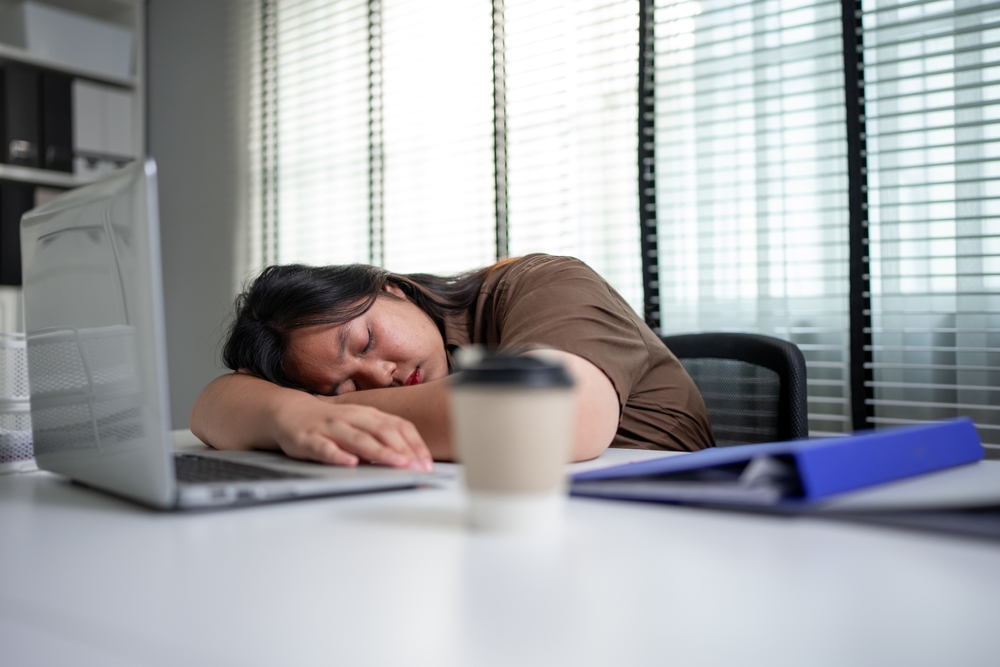
A survey of 1,000 office workers in Singapore found nearly one in four screened at raised risk of sleep apnoea. Yet many dismissed daytime sleepiness and disrupted breathing as harmless.
The afternoon slump, the third coffee, the colleague who jokes about snoring through the night. Poor sleep has become familiar enough to pass for ordinary working life. A new Singapore survey suggests that familiarity could be helping warning signs go unnoticed.


Half of the workers surveyed considered daytime sleepiness a normal part of a busy working life. One in four believed brief pauses in breathing during sleep were harmless, while almost as many thought loud, regular snoring meant deep, healthy sleep.
Against that backdrop, 24% of respondents screened at intermediate-to-high risk of obstructive sleep apnoea (OSA), a condition in which the upper airway repeatedly becomes blocked during sleep.
The findings highlight a gap between potential sleep problems and workers’ understanding of them. Sixty per cent had either never heard of sleep apnoea or knew it only by name.
Poor Nights Follow Workers Into the Office
Commissioned by medical technology and sleep health companies Easmed and The Air Station, the survey involved 1,000 office-based or mainly office-based workers aged 30 to 60. Milieu conducted the online research from 4 to 17 July 2026, according to the survey factsheet.
Respondents reported sleeping an average of 6.3 hours a night, compared with the 7.4 hours they felt they needed to wake refreshed. That left an average nightly shortfall of 1.1 hours.
Almost all respondents, 97%, said their productivity declined after a poor night’s sleep. More than half, 58%, estimated that their performance fell by over 20%.
Those figures reflect workers’ perceptions rather than measured output, and the survey does not establish that sleep apnoea caused the reported losses. They nevertheless show how widely respondents felt poor sleep affected their working day.

Dr Phua Chu Qin, Senior Consultant in Otolaryngology (ENT) and Director of Sleep Surgery at Sengkang General Hospital, said the findings reinforced the need to take persistent tiredness seriously.
“The productivity findings for this local survey reinforce that sleep is not simply a lifestyle issue,” she said. “This is timely, because Singaporeans need to move away from normalising poor sleep and persistent daytime fatigue and start to recognise when poor sleep warrants assessment.”
The Warning Signs Hiding in Plain Sight
For people with obstructive sleep apnoea, sleep can be repeatedly disrupted by reduced or blocked airflow. The condition can also prevent the body from getting enough oxygen.
Loud snoring, gasping for air and excessive daytime sleepiness are among the signs worth discussing with a healthcare professional, according to the US National Heart, Lung, and Blood Institute.
Spending longer in bed does not resolve the airway blockage. Someone may allow ample time for sleep and still wake feeling unrefreshed, although tiredness alone does not mean they have sleep apnoea.
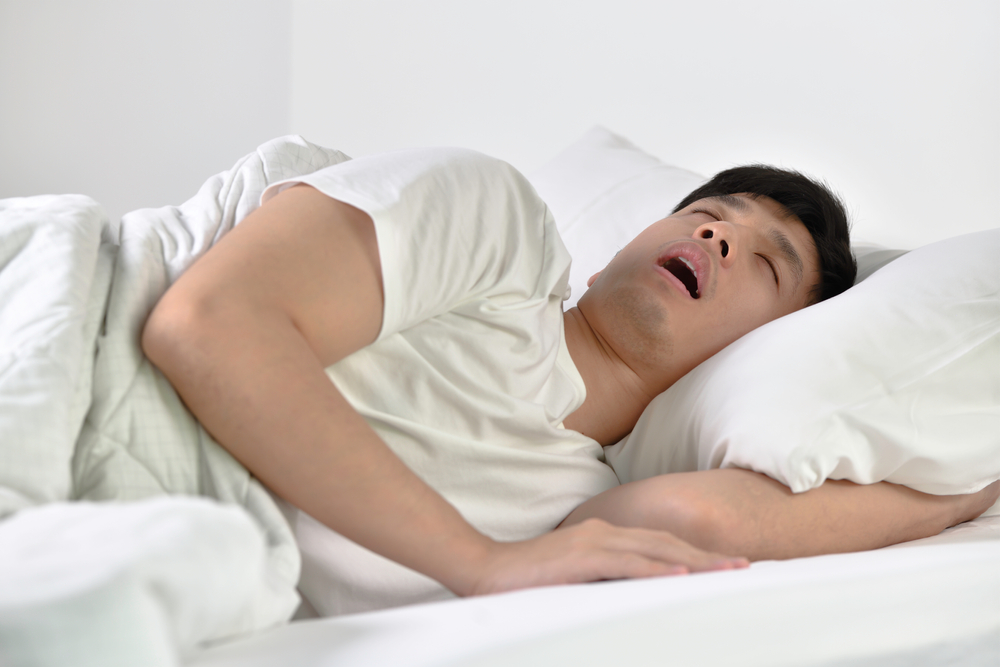
The survey suggests that some workers may be interpreting possible warning signs as reassurance. Among the 50 respondents in the high-risk category, 52% believed loud snoring was healthy and 54% considered breathing interruptions harmless. The small subgroup means those percentages should be interpreted cautiously.
“Snoring and witnessing breathing pauses during sleep should not automatically be dismissed as harmless,” Dr Phua said.
“Recognising these warning signs early and getting assessed can be an important step towards better health, alertness and productivity,” she added.
A Risk Score Is a Starting Point
The survey used a modified STOP-Bang questionnaire to assess sleep apnoea risk. Around 19% of respondents fell into the intermediate-risk category and 5% into the high-risk category.
These findings identify possible risk, rather than confirmed cases. The questionnaire omitted neck circumference and used an adjusted scoring approach; the supplied factsheet does not establish that this version performs identically to the original screening tool.
The sample also limits how broadly the results can be applied. All respondents had tertiary education, and 90% were Chinese. The headline figure should therefore be understood as a finding among the workers surveyed, rather than an estimate for Singapore’s entire population.
For individuals concerned about symptoms, a healthcare professional can assess whether a sleep study is needed. While a digital questionnaire or consumer app does not replace clinical assessment, a sleep quiz can be a useful first step towards understanding your sleep habits and identifying concerns to discuss with a doctor.
Take Medical Channel Asia’s sleep quiz to start exploring your sleep health.
Workers Want Support Despite Barriers
More than half of respondents, 56%, said they had never evaluated their sleep quality through a doctor, app or diagnostic test.
When asked about barriers to assessment, 51% cited the cost of diagnosis or treatment. Another 36% did not know where to seek help.
Workers also wanted support from their employers. Flexible working hours were the most popular request, selected by 72%, followed by subsidised screening at 37% and targeted sleep education at 21%.
The responses point to two needs: enough opportunity to rest, and a clearer route to care when a sleep disorder may be involved. Adjusting work schedules may help workers make time for sleep, while persistent symptoms warrant medical attention.
For employers, making sleep health information and assessment pathways easier to access could help staff act on concerns they have previously brushed aside.
Looking Beyond the Afternoon Slump
The workplace findings give poor sleep an immediate, recognisable cost: workers feel they get less done. But the survey also raises a concern about what people have come to accept as normal.
Half of respondents regarded daytime sleepiness as part of busy working life. Meanwhile, substantial gaps in awareness suggest that some may not recognise when snoring, gasping or disrupted breathing deserve assessment.
The survey cannot determine how many respondents have sleep apnoea, or how much of their reported fatigue stems from it. It does, however, highlight the limits of treating persistent tiredness as something to push through.
As Dr Phua noted, “Singaporeans need to move away from normalising poor sleep and persistent daytime fatigue and start to recognise when poor sleep warrants assessment.”

