

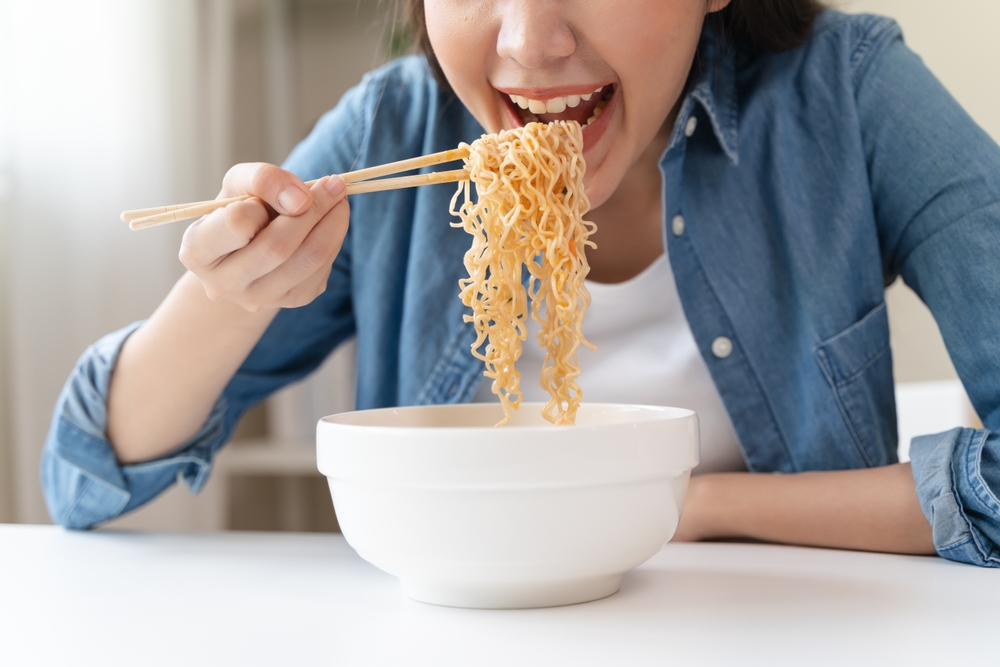
What happens if you eat instant noodles for a week? From sodium overload to nutrient gaps, here is how your body may respond.
A busy week. A tight budget. Or perhaps just a craving for something quick, salty, and comforting. Instant noodles, after all, are a pantry staple across Asia – cheap, convenient, and sinfully satisfying.


But what if you relied on them for every meal, every day, for a full week?
While we aren’t going to try it out – here is a breakdown of how your body might react on an Instant Noodle Diet for a week:
What is Actually in Instant Noodles?
Before imagining the effects, it helps to understand what you are really eating.

Most instant noodles contain three main components: refined wheat noodles, flavouring powder or sauce, and preserved toppings such as dehydrated vegetables or processed meat.
They are typically:
- High in refined carbohydrates
- High in sodium
- Low in fibre
- Low in essential vitamins and minerals
- Often containing preservatives and additives
While they provide calories, they are not designed to provide balanced nutrition.
Sodium
One of the biggest concerns is sodium. A single packet of instant noodles can contain anywhere between 1,500 to 2,000 mg of sodium – that is already exceeding the recommended daily limit for adults (The AHA guidelines recommend a daily goal of <1,500mg per day!)
If you are eating this for multiple meals a day, your sodium intake can quickly add up. Over time, this may lead to:
- Water retention, causing a bloated or “puffy” feeling
- Increased thirst
- Elevated blood pressure, especially in those who are salt-sensitive
Even within a week, some people may start to feel heavier or more sluggish, not because of fat gain, but due to fluid retention in the short term.
Missing Nutrients
Instant noodles provide plenty of calories, but not complete nutrition. They are typically low in:
- Protein
- Fibre
- Essential vitamins such as vitamin A, C, and B-complex
- Key minerals like potassium, magnesium, and calcium
This can be a real problem. Protein is needed for muscle repair and immune function, and fibre supports digestion and gut health. Vitamins and minerals are involved in everything in your body, from energy production to brain function.
Without these, your body may begin to show signs of fatigue, poor concentration, constipation and even skin that appears dull or dehydrated, because instant noodles simply do not provide enough of what your body needs to function well.
Energy and Hunger Levels
Instant noodles are made primarily from refined carbohydrates. These are quickly digested, leading to a rapid rise — and subsequent drop — in blood sugar levels.
What this means in practice:
- You may feel full initially, but hungry again soon after
- Energy levels may fluctuate throughout the day
- Cravings for more salty or high-calorie foods may increase
Without sufficient protein, fibre, and healthy fats to stabilise blood sugar, meals become less satisfying and less sustaining.
Gut Health
Gut health is often overlooked in short-term diet changes, but it can shift quickly.
A diet made up entirely of instant noodles is very low in fibre and lacks diversity. This can affect the gut microbiome, which is the community of bacteria that supports digestion, immunity, and even mood. A dysregulated gut microbiome can result in gastrointestinal symptoms of constipation and bloating, amongst others.
While a week is unlikely to cause lasting damage, it may still leave you feeling uncomfortable and irregular.
What About Preservatives and Additives?
Instant noodles often contain preservatives, stabilisers, and flavour enhancers such as monosodium glutamate (MSG). Despite common misconceptions, MSG is generally considered safe for most people when consumed in moderation. The larger concern is not a single additive, but the overall dietary pattern.
A diet dominated by processed foods tends to mean:
- Lower intake of fresh, whole foods
- Reduced exposure to natural nutrients and antioxidants
- Greater dependence on artificial flavouring
Over time, such eating patterns are then associated with poorer health outcomes.
Making Instant Noodles Less Unhealthy
If instant noodles are part of your routine due to its convenience, there are simple ways to improve their nutritional value.

Try:
- Add protein such as eggs, tofu, or lean meat. To make things simpler, use ready-to-eat options like rotisserie chicken or canned chicken.
- Include vegetables in your meal. Options like spinach, bok choy or thinly sliced leeks can wilt in the broth while your instant noodles soften – great for a one-pot dish
- Use only part of the seasoning packet to reduce sodium. Try draining the water after the noodles soften and season to taste. You can also experiment with other seasonings such as soy sauce or salt and pepper instead of the available seasoning packet.
- Pair with fruit or other whole foods to round out your meal
These small adjustments can transform your meal into something more balanced.
TLDR: You Can, But Do You Want To?
Yes, you can survive on instant noodles for a week. Eating it daily for the short term will likely not cause immediate harm in a healthy person. The human body is resilient and can tolerate short periods of nutritional imbalance.
However, over a longer period, it can lead to:
- High sodium intake and water retention
- Low intake of essential nutrients
- Fatigue, bloating, and poor gut health
It is a convenient food, but not a complete one – so eat your whole foods!

