


Tech neck is increasingly causing neck pain among young people. Here is how prolonged screen use strains the spine and what you can do to prevent lasting discomfort.
In the digital world of today, smartphones, tablets and laptops have become our inseparable companions. They help us learn, work, socialise, and even unwind. However, alongside all of these conveniences comes an increasingly common health issue affecting younger people: tech neck.


Once considered a complaint mainly among older adults, neck pain has been showing up in university students and young working adults, teenagers, and even children. As screen time continues to climb, healthcare professionals are seeing more people within these age groups experiencing discomfort linked to poor posture and prolonged device use.
But if you have been similarly plagued all too often by a stiff neck due to spending a whole day glued to a screen, good news: tech neck is largely preventable. The first step is to understand why it happens – and how you can make daily digital use less encumbering on the spine.
How Teck Neck Develops
Teck neck, alternatively known as text neck, is any form of pain, stiffness or muscle strain on the neck and shoulder that is caused by poor posture while using digital devices.
The average adult head weighs about 5 kilograms, which the spine can efficiently support in a neutral position. However, for every 15 degrees your head tilts forward, the force placed on your spine increases significantly.
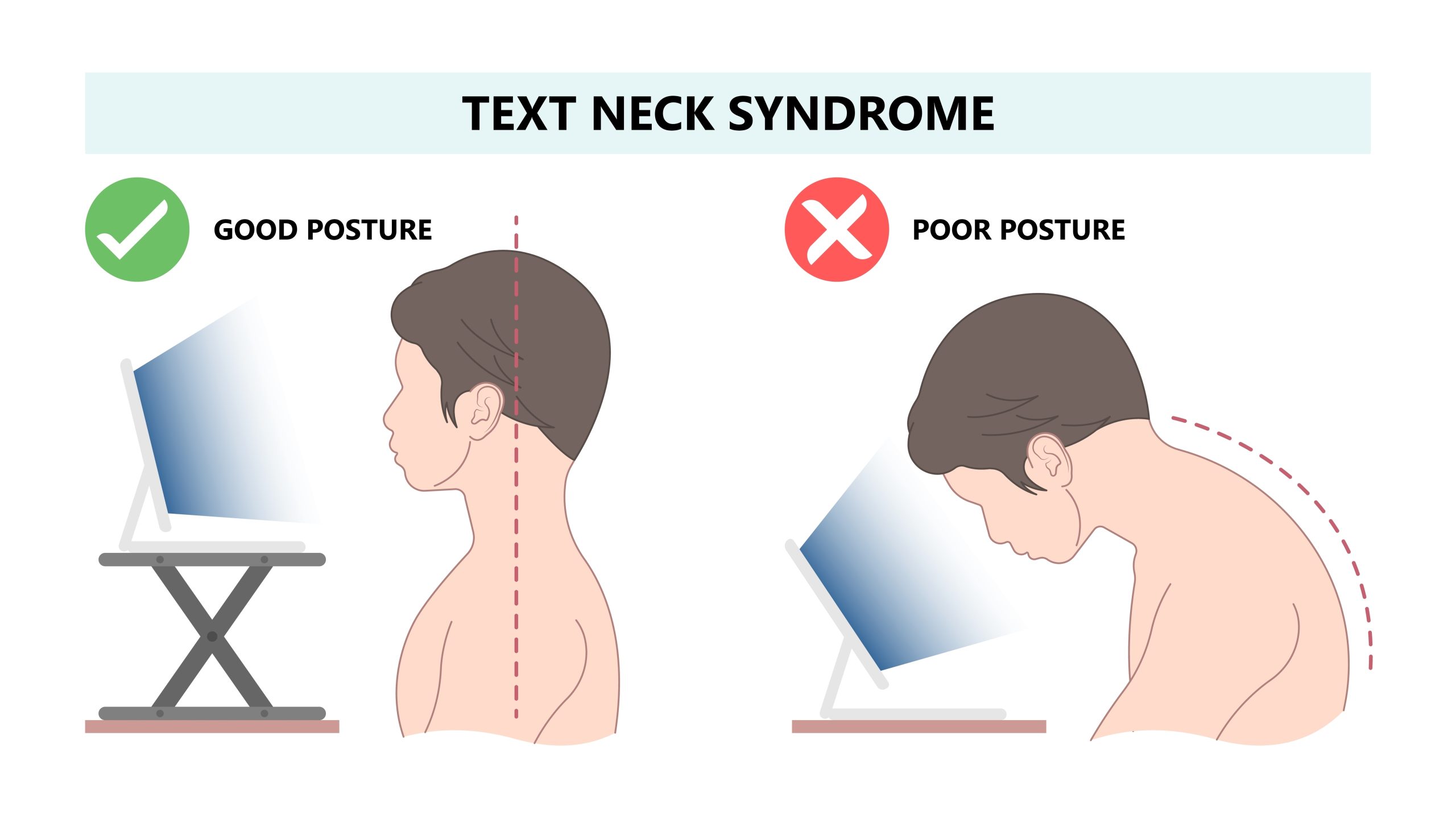
At 60 degrees, the angle typically taken when we look down on our phones, the effective load on the neck can reach roughly 27 kilograms. Keeping our heads at this forward, downward position for too long can cause the neck muscles to tighten, and result in discomfort.
“If this continues, the problem extends beyond the muscles. It can also affect the ligaments and other structures in the neck, including the spinal joints and discs, which act as shock absorbers and allow the spine to move smoothly. Maintaining poor posture while using devices can accelerate the degeneration or ageing of these discs,” explained Dr S. Jaya Thilak, consultant orthopaedic and spine surgeon at Ipoh Specialist Hospital, in Bernama.
The repeated strain can increase the risk of pressure on the surrounding nerves, leading to a variety of complications, including reduced mobility and postural imbalances, herniated discs, and chronic pain.
Why Neck Pain Is a Youth Problem

Since the 2020 pandemic, the demographic of patients afflicted with tech neck symptoms has been shifting away from those in their 40s to those in their 20s (and younger), and this concerning issue can be attributed to the increasing pervasiveness of technology.
From social networking to gaming and entertainment, today’s youths spend a substantial portion of their day exposed to screens. Hours of continuous device use – specifically modern devices – offer little opportunity for their neck muscles to relax.
According to Dr Jaya: “In the past, children watched television, which naturally encouraged eye and body movement. Today, social media algorithms and video platforms are designed to keep users scrolling endlessly from one piece of content to the next, making it increasingly addictive.”
Remote working and learning, while offering flexibility and convenience, has also heightened the problem. Hunching over laptops for lectures or tasks at home increases the likelihood of neck and upper back discomfort, while also reducing the physical movement that naturally comes the moment you even take a step outside.
Smartphones are perhaps one of the biggest contributors to tech neck.
“Smartphones are particularly addictive. While reading a book also involves looking down, people rarely spend hours in the same incorrect posture as they do when using their phones. Many users simply don’t realise how long they have been holding their neck in an unhealthy position.”
With technology increasingly penetrating work, social, and even educational spaces, it becomes ever more important to address the issue of tech neck early – before it develops into something chronic.
Practical Tips for Reducing Teck Neck
The occasional neck soreness may seem harmless, but continuous poor posture can have long-term consequences. Thankfully, all we need to do to avoid tech neck is to imbue a few simple, healthier movement habits throughout our day.
Adjust Your View
Whenever possible, raise the position of your phone or other handheld devices closer to eye level. This will reduce the need to crane your neck forward.
For laptops and other monitors, consider using a laptop stand to create a more ergonomic workstation.
Take Regular Movement Breaks
Make it a point to stand, stretch, or just walk around every half an hour in the middle of work (or a scrolling session) to help reduce muscle fatigue.
In addition, while digital devices are essential for many aspects of modern life, it would be best to minimise uninterrupted screen use. Alternate screen-based activities with outdoor exercise, reading printed materials, or hobbies that encourage different body positions.
Stretch Regularly
Gentle stretching can help improve mobility, realign your spine, and ease tension that builds up throughout the day.
Some exercises you can do daily include:
- Neck Rotations: Slowly turn your head from side to side in a comfortable range of motion a few times for every hour of prolonged sitting.
- Shoulder Shrugs: Raise your shoulders towards your ears and hold it there briefly, then relax, and repeat for 10 reps, 3 times a day.
- Shoulder Rolls: Roll your shoulders forwards and backwards in a circular motion a few times for every hour of prolonged sitting.
- Low Row: Using a resistance band secured around a sturdy object, pull your elbows back while squeezing your shoulder blades together, then extend your arms forward to relax, and repeat for 10 reps, 3 times a day.
- Adult Tummy Time: Lie face down while propping yourself up on your elbows for a few minutes.
These changes might seem small, but doing them consistently can make the biggest difference. Remember that the goal is not to spend less time enjoying technology, but to find better ways to use it.
External References
- Arshad, N. A. B. (2026, August 1). Children Increasingly At Risk Of Text Neck Syndrome. Bernama. Retrieved from: https://www.bernama.com/en/news.php/?id=2588851
- Cleveland Clinic. (2025, November 19). Tech Neck: A Modern-Day Pain. Retrieved from: https://health.clevelandclinic.org/tech-neck
- HealthXchange. (n.d.). Manage Neck Pain: Coping Tips for Tech Neck (Text Neck) and When to See a Doctor. Retrieved from: https://www.healthxchange.sg/how-to-manage/neck-pain/tech-neck-text-neck-when-to-see-doctor-for-neck-pain
- Lim, K. (2024, April 24). Doctors seeing more younger patients with neck pain; excessive smartphone use a key factor. The Straits Times. Retrieved from: https://www.straitstimes.com/singapore/patients-with-neck-pain-getting-younger-say-doctors-excessive-smartphone-use-a-key-factor
- Mayo Clinic. (2024, April 10). ‘Tech neck’: Technology’s effect on your neck. Retrieved from: https://www.mayoclinichealthsystem.org/hometown-health/speaking-of-health/effect-of-technology-on-your-neck
- Silva, S. (2025, April 2). Tech Neck: Signs, Causes, and Prevention. Healthline. Retrieved from: https://www.healthline.com/health/tech-neck

