


Heart attacks do not always begin with crushing chest pain. Fatigue, breathlessness, indigestion-like discomfort and subtle changes in exercise tolerance may be early warning signs that are too often overlooked, particularly in women, older adults and people with diabetes.
When most people picture a heart attack, they imagine someone clutching their chest before collapsing to the ground.


It is the version we see repeatedly in television dramas and movies: sudden, dramatic and impossible to miss.
Real life is often very different.
Many heart attacks begin quietly. The warning signs can emerge hours, days or even weeks before the event itself. Rather than severe chest pain, people may experience vague symptoms that are easily attributed to stress, ageing, poor sleep, indigestion or simply feeling under the weather.
Unfortunately, these subtle symptoms are also the ones most likely to be ignored.
And when it comes to a heart attack, every minute matters.
Heart Attack Symptoms Are Not Always Obvious
A heart attack, medically known as a myocardial infarction, occurs when blood flow to part of the heart muscle becomes blocked.
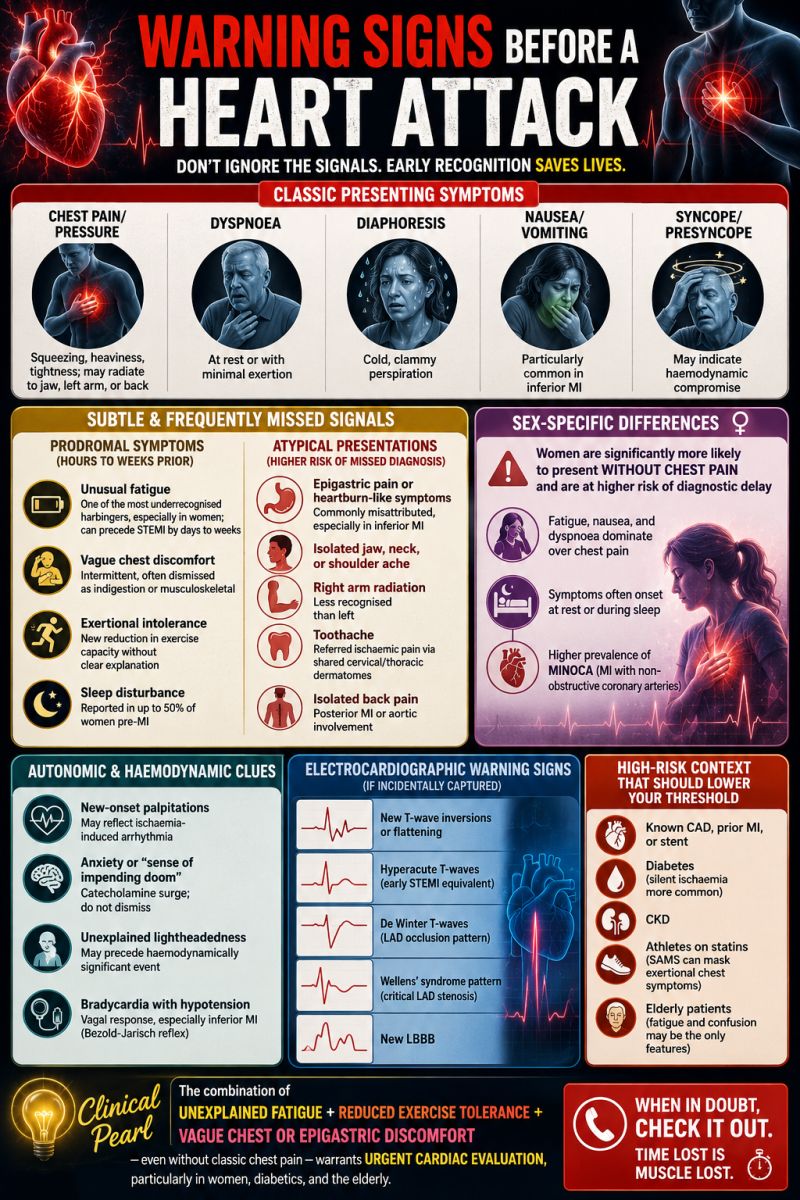
The classic symptom is chest pain or pressure. Patients often describe it as a squeezing, tightness or heaviness in the centre of the chest. The discomfort may spread to the left arm, jaw, neck or back.
However, not everyone experiences these textbook symptoms.
In some cases, the heart sends warning signals that are far less dramatic. These may appear gradually and can be difficult to recognise as heart-related.
According to Dr Koh Choong Hou, Cardiologist at Nobel Heart Centre and also Visiting Consultant at National Heart Centre Singapore, many heart attacks do not begin the way most people expect.
“Many heart attacks are preceded by subtle warning signs that can appear hours, days, or even weeks earlier — and they are frequently dismissed as stress, ageing, indigestion, poor sleep, or simply ‘not feeling quite right’.”
This is one reason why recognising changes in your body’s normal patterns can be just as important as recognising classic chest pain.
For clinicians, identifying these patients can be more challenging than diagnosing someone with an obvious heart attack.
The danger lies in dismissing symptoms that seem too mild, too vague or too unrelated to the heart.
What Are the Most Commonly Missed Heart Attack Warning Signs?
One of the most overlooked warning signs is unusual fatigue.
This is not simply feeling tired after a long day. Many patients describe a profound exhaustion that feels disproportionate to their activities. Tasks that were previously easy may suddenly feel much harder.
A related symptom is reduced exercise tolerance.
Perhaps climbing a flight of stairs leaves you unusually breathless. Maybe your regular walk feels more strenuous than usual. If your physical capacity suddenly declines without a clear explanation, it may warrant medical attention.
Shortness of breath is another important clue.
Some people experience breathlessness during minimal activity or even while resting. This can occur with or without chest discomfort.
Other subtle symptoms include:
- Vague chest discomfort or pressure
- Indigestion-like pain or persistent “heartburn”
- Jaw pain
- Neck pain
- Shoulder pain
- Toothache without an obvious dental cause
- Upper back pain
- Unexplained palpitations
- Lightheadedness or dizziness
Some patients also report a strong sense that something simply is not right. While difficult to quantify, this feeling should not be ignored, especially when accompanied by other symptoms.
The Symptoms Women Are More Likely to Experience
Heart attack symptoms can differ between men and women.
Women are significantly more likely to present without the classic crushing chest pain that many people associate with a heart attack.
Instead, symptoms such as fatigue, nausea, breathlessness and sleep disturbances may dominate the clinical picture.
Some women report feeling overwhelmingly tired for days before a heart attack. Others notice worsening shortness of breath or unexplained weakness.
These symptoms are easy to dismiss as stress, hormonal changes, poor sleep or the demands of daily life.
As a result, women may experience delays in seeking medical attention and delays in diagnosis.
This is one reason why public awareness of atypical heart attack symptoms remains so important.
Why People With Diabetes and Older Adults Need Extra Vigilance
People living with diabetes face a unique challenge.
Diabetes can affect nerve function, reducing the body’s ability to perceive pain. This means some individuals experience “silent” or minimally symptomatic heart attacks.
Instead of severe chest pain, they may notice fatigue, breathlessness, nausea or a decline in physical performance.
Similarly, older adults often present differently.
Fatigue, confusion, dizziness, weakness or reduced mobility may be the only clues that something serious is happening.
These symptoms can easily be mistaken for normal ageing or other medical conditions.
Yet in some cases, they may represent a developing cardiac emergency.
The Clinical Pearl Doctors Want You to Remember
Among the many warning signs, there is one combination of symptoms that deserves particular attention:
- Unexplained fatigue
- Reduced exercise tolerance
- Vague chest or upper abdominal discomfort
Even without classic chest pain, this cluster of symptoms may signal an underlying cardiac problem and warrants medical evaluation.
The challenge for both patients and healthcare professionals is recognising that heart attacks do not always follow the textbook. Dr Koh notes that some of the most challenging cases are not the dramatic ones.
“The real difficulty is identifying the patient whose symptoms seem too mild, too vague, or too atypical to be cardiac.”
Some arrive with what cardiologists describe as “guns blazing” — severe chest pain, obvious ECG changes and unmistakable symptoms. Others arrive quietly – and those are often the cases that are easiest to miss.
When Should You Seek Medical Attention?
If you experience persistent chest discomfort, unexplained breathlessness, sudden exercise intolerance, fainting, severe dizziness or symptoms that concern you, seek urgent medical assessment.
This is particularly important if you have known cardiovascular risk factors such as:
- Diabetes
- High blood pressure
- High cholesterol
- Smoking history
- Previous heart disease
- Family history of heart disease
It is always safer to have symptoms evaluated and discover they are not cardiac than to ignore them and lose valuable time.
When a heart attack occurs, part of the heart muscle begins to die due to lack of blood flow. The longer treatment is delayed, the greater the damage.
For Dr Koh, the message is simple: do not wait for symptoms to become severe before seeking help.
“When it comes to myocardial infarction, time = muscle. Delayed treatment leads to irrecoverable cardiac muscle death.”
Recognising the warning signs early can make the difference between a heart attack that is treated promptly and one that causes permanent damage.
If something feels wrong, do not wait for the symptoms to become dramatic. Sometimes the most important warning signs are the ones that whisper rather than shout.

