

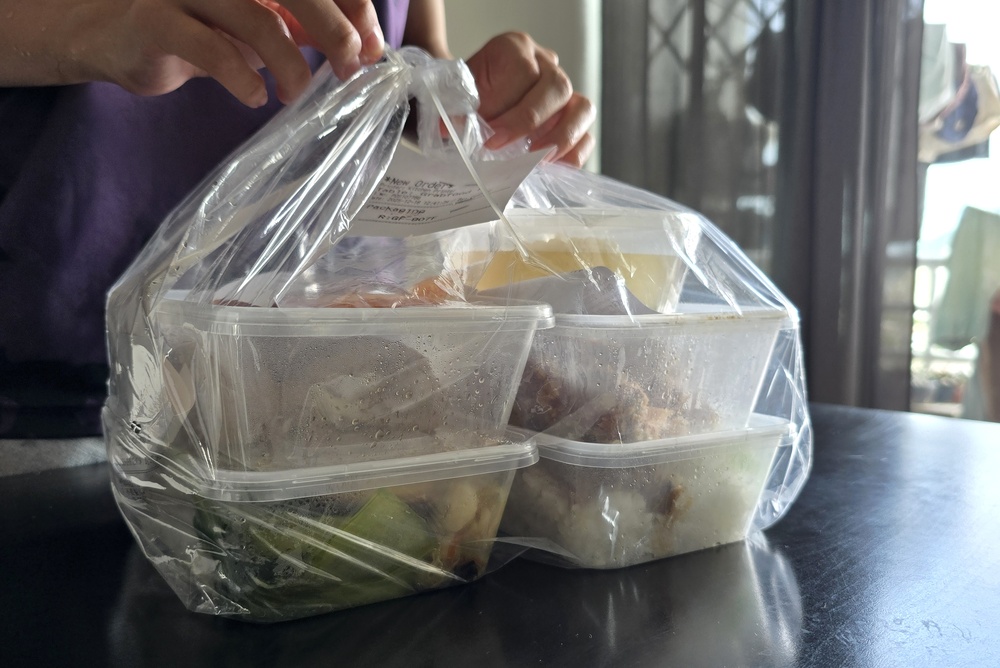
Endocrine-disrupting chemicals can interfere with hormone signals, but what does that mean for cancer risk? From takeaway containers to receipts, here is what deserves attention.
Your lunch arrives in a plastic container. The cashier hands you a receipt. At home, a room spray promises the scent of freshly washed linen.


These ordinary moments can involve contact with chemicals researchers are studying for their effects on hormones. Known as endocrine-disrupting chemicals, or EDCs, some can mimic hormonal messages, block them or interfere with how the body produces and processes hormones.
That sounds unsettling. But encountering a chemical, absorbing it and developing a disease are different things. Understanding those distinctions makes the science more useful, and everyday life considerably less alarming.
TLDR: Some chemicals can disrupt hormone activity, and certain exposures have been linked to cancer. However, the evidence differs between substances. Sensible product use and a few practical changes can reduce avoidable exposure without requiring a household overhaul.
How Do Endocrine Disruptors Affect Your Hormones?
Hormones are chemical messengers that help regulate growth, metabolism, reproduction and many other functions. They work partly by attaching to receptors: think of a key fitting into a lock.
Some EDCs can imitate that key and activate a receptor. Others block the receptor, preventing a natural hormone from delivering its message.
The interference can also happen elsewhere. Researchers have identified mechanisms involving changes in receptor numbers, hormone production and hormone breakdown. Some chemicals can alter how genes are switched on or off without changing the DNA sequence itself. While these mechanisms help scientists identify potential hazards, they do not establish the risk posed by every product containing a particular substance.
Hormones act at very low concentrations, which is why small exposures attract scientific attention. Dose still matters, alongside the substance, exposure duration and life stage. Pregnancy and early development are particularly important periods for research.
The US National Institute of Environmental Health Sciences notes that EDCs may be natural or manufactured, and exposure can occur through food, water, air and skin contact.
Can Endocrine Disruptors Cause Cancer?
For some specific substances and exposure circumstances, the human evidence is clear.
One example is diethylstilbestrol, or DES, a synthetic oestrogen once prescribed during pregnancy. Exposure before birth increased the risk of clear cell adenocarcinoma, a rare cancer of the vagina and cervix, in daughters of women who took it.
However, that does not mean handling a receipt carries a comparable risk. Different chemicals have different properties, and the amount, timing and route of exposure matter.
Why Are Researchers Studying EDCs And Breast Cancer?
Some breast cancers use hormones such as oestrogen to help them grow. This makes chemicals that interfere with hormone activity an important research focus.
A scientific review shows that certain EDCs can affect hormone receptors and gene activity in breast cancer cells. These findings offer clues about possible biological mechanisms, but a response in a laboratory dish does not establish that everyday exposure causes breast cancer in people – a chemical’s ability to affect hormones is not, by itself, proof that a particular product increases cancer risk.
For many chemicals found in consumer products, researchers are still investigating whether everyday exposure contributes to cancer. Human studies face difficulties: exposure changes over time, people encounter mixtures, and cancer can develop years later.
Researchers must also account for other factors that influence cancer risk. An association between chemical exposure and cancer therefore needs careful investigation before they can conclude that the chemical caused the disease.
Where Might You Encounter EDCs At Home?
Food Containers And Can Linings
BPA is used to manufacture polycarbonate plastics and epoxy resins, including coatings inside some food cans. It is not an ingredient in every plastic container.
Chemical migration depends on the material and conditions of use. Temperature can influence BPA migration from polycarbonate products, but it is not accurate to describe all hot takeaway packaging as a source of BPA.

Plastic takeaway containers are safe when used as intended, though one should take note that “single-use” takeaway containers should not be reused for storing or reheating food.
Does BPA-Free Mean Free From Endocrine Disruptors?
“BPA-free” tells you that a product does not contain BPA. It does not establish that every other ingredient has been assessed for potential effects on hormones.
Some manufacturers use related chemicals, including bisphenol S (BPS) or bisphenol F (BPF), as alternatives. Research has identified hormonal activity in both substances, including in cell and animal studies. These findings raise questions about substitutes, but do not establish the risk from using a particular product.
The material, its chemical composition and how it is used all influence exposure and potential risk. Treat the label as one piece of information, rather than a complete safety verdict.
Thermal Receipts
Some thermal receipt papers use BPA or bisphenol S, or BPS, in their heat-sensitive coating. Chemicals can transfer during handling, making repeated occupational exposure more relevant than an occasional shopping receipt.
Choosing an electronic receipt is a straightforward way to reduce unnecessary contact. Receipt formulations vary, so not every paper slip contains the same chemicals.
Fragranced Products
Some fragrances and personal care products contain phthalates, a group that includes chemicals studied for endocrine effects.
However, a strong scent does not prove a product contains phthalates, and “synthetic fragrance” is not another term for “endocrine disruptor”. Formulations matter.
Pesticides
Certain pesticides can interfere with hormone systems, but this does not justify treating every household insecticide as equally hazardous.
For homes in tropical Asia, pest control remains necessary. The practical goal is to prevent infestations and use treatments appropriately, rather than spray routinely without identifying the problem.
How Can You Reduce Exposure Without Overhauling Your Life?
Start with how you use food containers. Use containers for their intended purpose and only microwave plastic labelled suitable for that use. Glass or microwave-safe ceramic offers another option for reheating.

A stainless steel tingkat can also be a convenient choice for takeaway meals. There is no need to replace every item in your kitchen at once.
Choose electronic receipts where available. If fragrances are unnecessary to you, consider fragrance-free alternatives rather than assuming that “natural” products are automatically safer.
For pests, seal entry points, store food securely and remove standing water. The US Environmental Protection Agency recommends combining prevention with targeted treatment, reducing reliance on pesticides while still controlling pests.
So, there is no need to turn every shopping trip into a chemistry exam. Start by incorporating some small, manageable changes: use food containers mindfully, decline unnecessary receipts and take a targeted approach to pest control, to reduce exposure to certain chemicals.

