

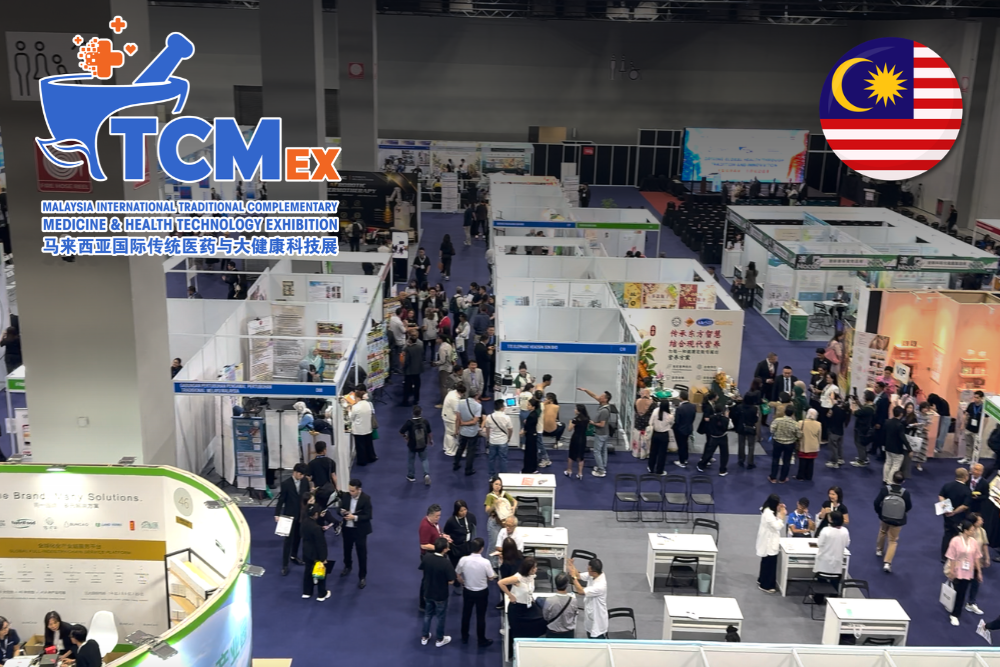
At TCMex 2026 in Kuala Lumpur, a robot demonstrated therapy movements while a herbal brand introduced a ready-to-eat jelly. Both exhibits put a familiar practice in an unfamiliar form.
At the NUSBE booth, a robot demonstrated a series of therapy movements. Part of what made the display interesting was what visitors could see the machine doing. The rest lay in the information guiding each movement, including a three-dimensional map of the body and feedback collected as the demonstration ran.


Elsewhere on the exhibition floor, LAND HERBS had taken a decidedly simpler route to innovation. Its latest herbal product was a monk fruit and pomegranate flavoured jelly that people could eat straight away.
The two exhibits made an unlikely pair at the second Malaysia International Traditional Complementary Medicine & Health Technology Exhibition (TCMex 2026). Held at the Malaysia International Trade and Exhibition Centre (MITEC) in Kuala Lumpur from 25 to 27 November, the event brought together 125 exhibitors across 200 booths. Among them were companies from Malaysia, China, Singapore, Macau and South Korea.
3D Body Mapping to Guide the Therapy Robot
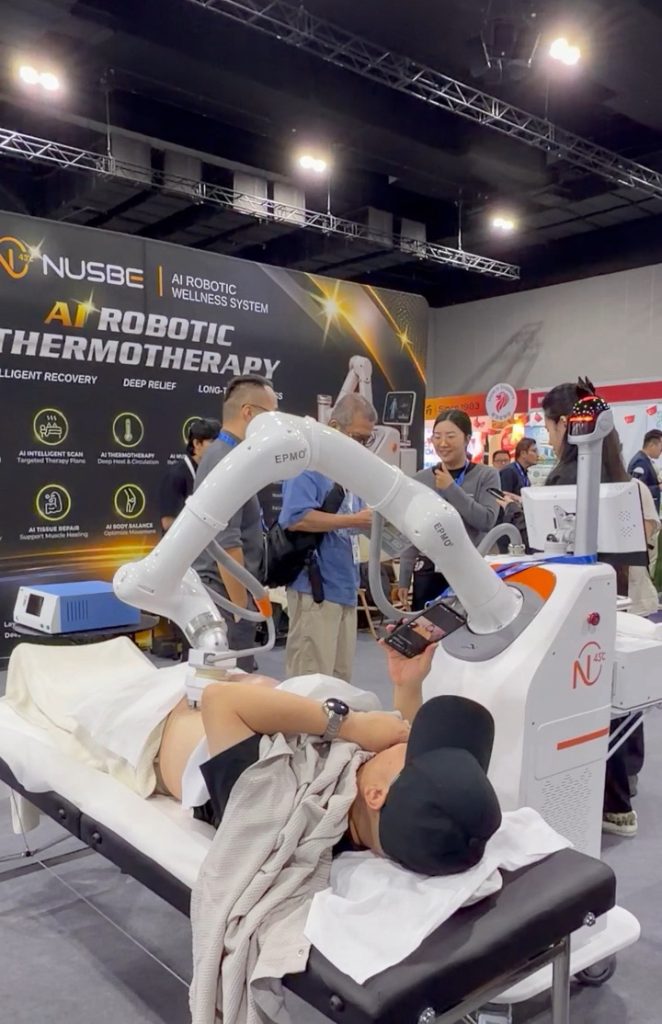
A practitioner can see the contours of a person’s body and adjust a movement as they work. For a machine to follow those contours, it first needs a way to map them. NUSBE’s AI-assisted robotic therapy system used 3D body mapping to give the machine a spatial guide for its movements.
The system also used infrared technology to monitor temperature. As the robot moved, real-time feedback helped guide its actions. By combining robotics with sensor-based monitoring, the system demonstrated how technology could support more consistent treatment practices while allowing healthcare professionals to oversee the process.
It offered a glimpse into how modern technology could complement traditional therapy approaches and potentially help address healthcare manpower challenges.
Making Herbal Wellness More Convenient
Innovation at TCMex 2026 was not limited to robotics. Some exhibitors focused on making traditional herbal wellness products more convenient for modern consumers.
LAND HERBS introduced its MONKÉ Monk Fruit & Pomegranate Flavoured Jelly, which transforms herbal extracts into a convenient, ready-to-consume format.
Rather than requiring preparation, the jelly offers an alternative way to consume herbal wellness products, particularly for people with busy schedules who prefer portable and easy-to-consume options.
The launch reflects a wider shift in the industry towards adapting traditional herbal ingredients into contemporary product formats that better suit changing consumer lifestyles.
Exploring a Wider Healthcare Landscape
TCMex 2026 brought together 125 exhibitors across 200 booths, featuring companies from Malaysia, China, Singapore, Macau and South Korea.
Held at the Malaysia International Trade and Exhibition Centre (MITEC), Kuala Lumpur, from 25 to 27 November, the three-day exhibition covered traditional and complementary medicine (T&CM), medicinal and food homology, functional nutrition, healthcare technology and medical equipment.
The variety of exhibits offered healthcare practitioners opportunities to discover new products and equipment, while distributors and businesses could connect with manufacturers and explore potential partnerships.
The contrast between traditional herbal products and emerging healthcare technologies also reflected the different directions in which the industry is developing.
Advancing Quality and Professional Standards
The industry’s development also depends on quality, research and professional standards.
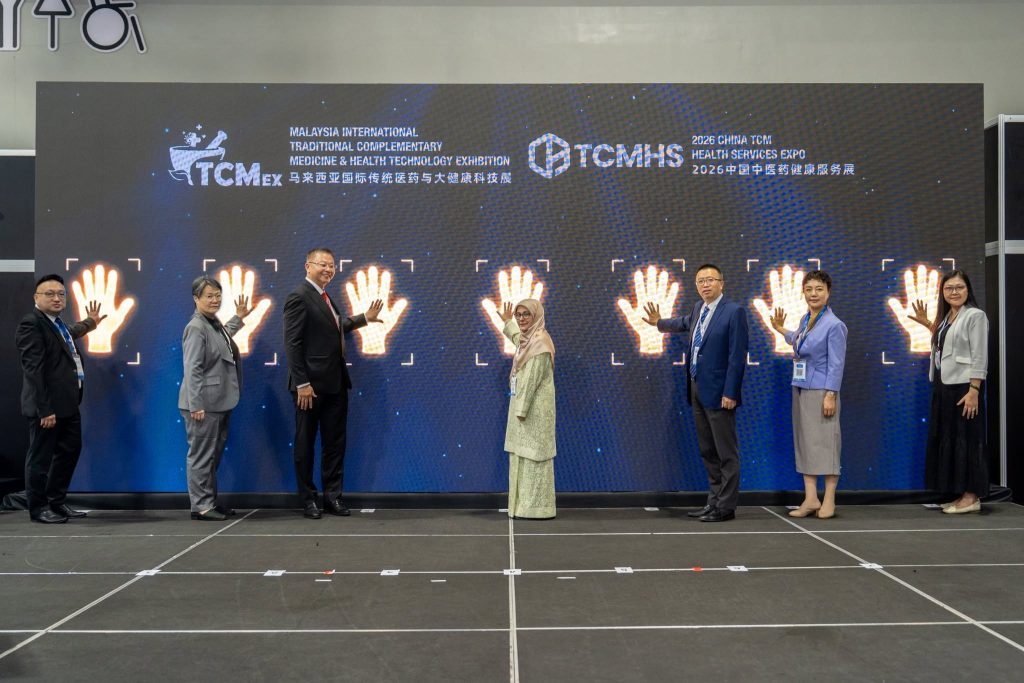
At the opening ceremony, Dr. Suhaila Binti Ismail, Director of the Traditional and Complementary Medicine Division, Ministry of Health Malaysia, representing the Minister of Health Malaysia, graced the event and highlighted TCMex’s role in connecting industry players, researchers and technology suppliers.
She emphasised the importance of strengthening quality, research and professional standards to support the advancement of T&CM.
Malaysia has already taken steps to give researchers a common starting point. Its Ministry of Health introduced a research framework for traditional and complementary medicine alongside guidance for herbal medicinal research. For members of the public considering treatment, the ministry also provides a way to check a T&CM practitioner’s registration.
The ceremony was attended by representatives from government, industry associations, international organisations and academic institutions
Looking Ahead
From traditional medicine practices and treatments to robotic therapy systems and convenient herbal wellness products, TCMex 2026 highlighted how the traditional and complementary medicine industry is embracing innovation to meet evolving healthcare needs.
For practitioners, businesses and technology providers, the exhibition offered a platform to exchange knowledge, discover emerging solutions and explore opportunities for collaboration.
As the industry continues to evolve, the key will be to integrate traditional knowledge with modern innovation while upholding quality, research and professional standards to build greater public confidence in T&CM.
Medical Channel Asia was a media partner of TCMex 2026.

